U.S. Faces Australia: A Crucial Test Without Pulisic
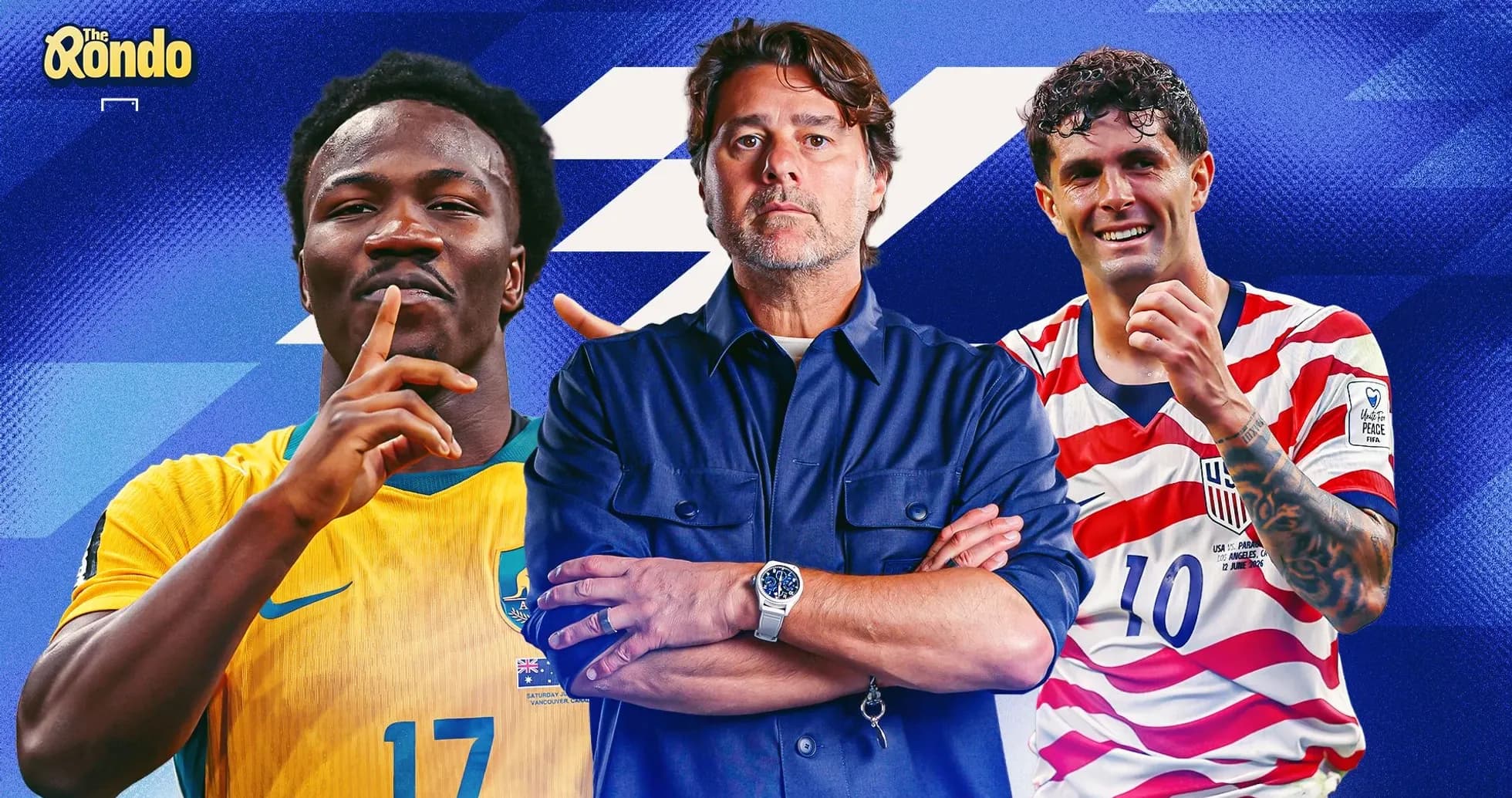
The United States walk into this one as clear favourites. Everyone knows it. The players, the staff, the pundits – even Australia will have felt the ground tilt a little after what the USMNT did to Paraguay.
That 90 minutes wasn’t just a win. It was a statement. High tempo, sharp combinations, relentless pressing. If Mauricio Pochettino’s team hits that level again, this should be their game to lose.
But nothing about this matchup suggests a stroll.
A physical test, decided by gamebreakers
This is likely to be tight, heavy on duels, light on space. Australia will lean into that. They’ll be physical, organised, and perfectly happy to drag the U.S. into a grind.
In that kind of game, it comes down to players who can flip a match with one action. Australia have a few. Nestory Irankunda showed against Turkey that he doesn’t need much to hurt you. Give him grass to run into and he can change the tone of an evening in a heartbeat.
The U.S., though, have more of those difference-makers. That’s where the edge lies. The sense around this group is that they’ve already taken a lesson from Turkey’s arrogance against Australia; they won’t turn up assuming anything, and they won’t be surprised by the intensity of the challenge.
Still, the margin for error shrinks when the game gets clogged and chippy. That’s where the biggest question of all looms.
Life without Pulisic?
Strip away the optimism and one truth sits uncomfortably close to the surface: losing your best player is never just a subplot.
Christian Pulisic is the heartbeat of this team. So much of what the U.S. do in the final third runs through him – the tempo changes, the one‑v‑one threat, the little moments of chaos that unsettle a back line. Take that out, and this attack looks very different.
Pochettino now faces a brutal calculation. Risk Pulisic, chase the win, and then try to protect him later? Or shut him down, trust the depth, and hope the group is still there to be wrapped up in the final game? The temptation to throw him in, grab control of the group, and then “wrap him in cotton wool” for a couple of weeks will be strong.
There’s real concern about what this means beyond Australia. The sense around the camp is that the U.S. might be on the verge of something special in this tournament. That kind of run almost always needs your best player on the pitch, not watching from the bench.
In the short term, though, they should still have enough to get through this test without him. “Should” is doing a lot of work there.
Australia’s wild card: Irankunda and the open field
This Australia side is a strange mix. It doesn’t have the familiar Premier League core that used to define the Socceroos in the global imagination. That doesn’t mean there’s no quality.
Nestory Irankunda is the obvious flashpoint. A livewire off the left, he’ll give Sergiño Dest all he can handle. The U.S. back line has been sloppy at times in recent months, and it’s no secret they can be exposed by raw pace.
If Irankunda ends up in a straight footrace with Tim Ream, there’s only one winner. Chris Richards is still feeling his way back from an ankle issue, and both U.S. fullbacks love to bomb forward. That leaves channels. It leaves space. It leaves exactly the kind of game Irankunda can rip open if the U.S. lose their structure for a moment.
And if this turns into a night where one save swings everything, Australia have another card to play.
Ryan’s experience vs Freese’s unknown
Mathew Ryan has seen just about everything this sport can throw at a goalkeeper. Top‑level European football, major tournaments, pressure nights. He has been quietly confident all week about Australia’s chances.
For all the positives against Paraguay, Matt Freese was never truly stretched. The U.S. dominated so completely that their goalkeeper became almost an afterthought. That won’t be the case if this game stays on a knife edge.
In a tight contest, one reflex stop, one big claim under pressure, one moment of calm when everyone else is losing their heads can tilt the entire evening. Ryan has built a career on those details.
Who decides it for the U.S.?
With Australia likely to sit in a back five and dig deep, this is a game that demands U.S. quality in the final third. All of it.
Pulisic, if he plays, is the obvious focal point. But eyes will also fall on Malik Tillman. His off‑ball work against Paraguay was outstanding – pressing, covering lanes, linking play – yet when the ball came to his feet in attacking areas, he left something on the table. A goal or an assist here would do him a world of good, especially if he continues in that more advanced No. 8 role Pochettino seems to have unlocked for him.
Then there’s Folarin Balogun. Paraguay gave him space to run and combine. Australia almost certainly won’t. If Pulisic is missing or limited, someone has to shoulder that attacking burden. Balogun can be that player, either by finishing the few chances that appear or by knitting the attack together with clever movement and link‑up play. In a low‑margin match, his efficiency in front of goal becomes crucial.
Tillman and Balogun aren’t just supporting cast members in this one. They might be the entire plot.
The stakes: more than just three points
Drop points here, and it’s not a catastrophe in the strict mathematical sense. Three points can still be enough to escape a group. But momentum is currency at tournaments, and voluntarily spending it this early is rarely wise.
From a U.S. perspective, failing to win would likely make topping the group far more complicated – and with that comes the spectre of a possible date with Argentina later on. The path through the knockout rounds can be shaped by what happens in nights like this.
There’s also a deeper layer. For two decades, the U.S. has lurked on the edge of a breakthrough, only to stumble when the next step beckoned. Opportunities to announce themselves have been met too often with underperformance or hesitation.
This tournament is supposed to be different. The investment in Pochettino, the talent in this squad, the sense of a program trying to grow up on the global stage – all of it points toward a team that should not just escape groups, but control them.
Beat Australia, and the U.S. can all but lock up top spot, manage minutes, and shape the rest of their tournament on their own terms. Fail to do so, and the old questions return.
Is this just another promising U.S. team? Or is it finally one that knows how to get it done when it really matters?