Rayo Vallecano vs Girona: A Draw Reflecting Their Seasons
The night in Vallecas ended as it so often feels fated to: tight, tense, and ultimately shared. At Campo de Futbol de Vallecas, Rayo Vallecano and Girona played out a 1–1 draw that mirrored their seasons – Rayo steady in mid-table, Girona clinging to survival hopes on the edge of the relegation zone.
Following this result, Rayo remain the more stable project. They sit 10th in La Liga with 43 points, their overall goal difference of -6 coming from 36 goals scored and 42 conceded in total. The numbers tell of a team that rarely implodes: at home they have played 18, losing only 2, with 6 wins, 10 draws, 22 goals for and just 15 against. Vallecas is not a fortress of dominance, but of friction – opponents get stuck here.
Girona arrive from a very different emotional landscape. They are 18th with 39 points and a total goal difference of -15, their 37 goals for overwhelmed by 52 against. On their travels they have played 18, winning 3, drawing 8 and losing 7, with 18 goals scored and 27 conceded away. This is a team that often competes but rarely controls, forever walking the fine line between resilience and collapse.
I. The Big Picture: Shapes and Seasonal DNA
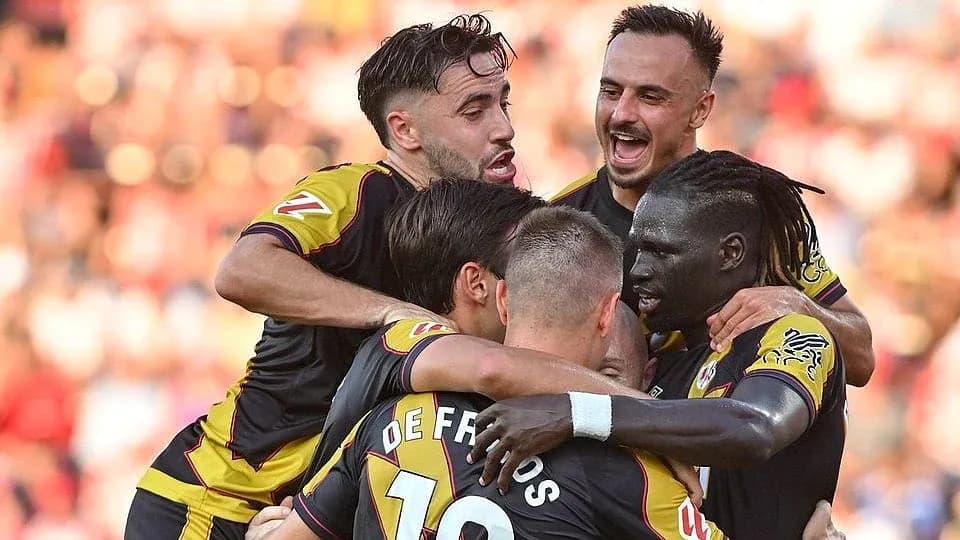
On the night, Inigo Perez leaned into aggression, rolling out a 4-3-3 that pushed Rayo higher than their usual 4-2-3-1 template. A. Batalla sat behind a back four of A. Ratiu, P. Ciss, F. Lejeune and P. Chavarria. In midfield, P. Diaz anchored with O. Valentin and U. Lopez as shuttlers, while the front three of J. de Frutos, S. Camello and F. Perez gave Rayo width, mobility and pressing triggers.
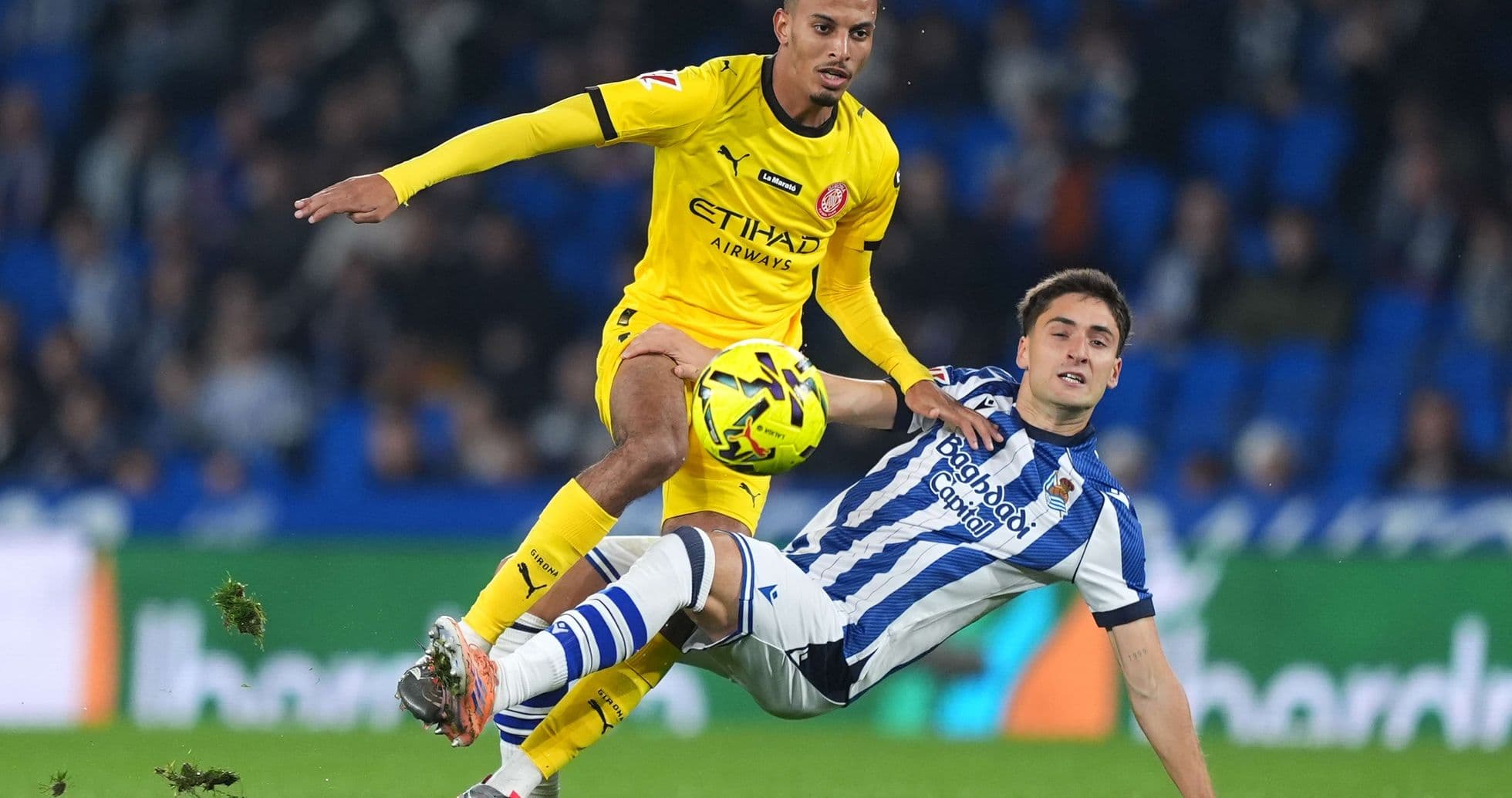
Michel’s Girona, by contrast, stayed closer to their statistical identity: a 4-2-3-1, the shape they have used in 19 league matches this season. P. Gazzaniga was protected by A. Martinez, A. Frances, Vitor Reis and A. Moreno. In front, A. Witsel and F. Beltran formed the double pivot, with V. Tsygankov, T. Lemar and J. Roca supporting lone forward A. Ounahi.
Rayo’s season-long profile is clear: heading into this game they averaged 1.2 goals for at home and only 0.8 conceded, with 7 home clean sheets and just 3 home matches where they failed to score. The plan is simple – keep it narrow, keep it honest, win the duels. Girona’s numbers are more fragile: on their travels they averaged 1.0 goals scored and 1.5 conceded, with only 1 away clean sheet and 4 away games where they failed to score. They can hurt you, but they almost always give you something back.
II. Tactical Voids: Absences and Discipline
Both squads arrived carrying scars. Rayo were without I. Akhomach (muscle injury), Luiz Felipe (injury), D. Mendez (knee injury) and, crucially, I. Palazon, suspended after a red card. Palazon’s absence is not cosmetic. Over the season he has 3 goals, 3 assists and 39 key passes, but more importantly he is their emotional accelerant – 10 yellow cards and 1 red in La Liga underline how often he lives on the edge. Without him, Rayo’s right side lost its natural chaos, shifting more responsibility onto J. de Frutos and the overlapping Ratiu.
Girona’s absentees were just as structural. B. Gil (suspension for yellow cards), Juan Carlos (knee injury), Portu (knee injury), V. Vanat (injury), M. ter Stegen (hamstring injury) and D. van de Beek (Achilles tendon injury) all missed out. It forced Michel to trust depth and youth: Vitor Reis, already a key figure, again became the defensive axis. Across the season he has blocked 38 shots – a remarkable volume that frames him as Girona’s emergency brake in the box.
Discipline shaped the rhythm as much as tactics. Heading into this game, Rayo’s yellow-card profile was spread but intense in the middle and late phases: 19.39% of their yellows arrived between 61–75 minutes, 18.37% between 46–60, and 16.33% between 91–105. Girona, though, are far more volatile late on: a massive 39.19% of their yellows come in the 76–90 window, with another 17.57% between 91–105. It is no coincidence that the closing stages in Vallecas felt stretched and fraught; both teams statistically live on the disciplinary edge when legs are heavy and lines get broken.
III. Key Matchups: Hunter vs Shield, Engine Room vs Enforcer
The headline duel was always going to be “Hunter vs Shield”: Jorge de Frutos against Girona’s leaky defence, anchored by Vitor Reis. De Frutos came into the fixture as Rayo’s premier scorer in La Liga with 10 goals and 1 assist from 33 appearances, supported by 47 shots (26 on target). He is not just a finisher; his 27 key passes and 53 dribble attempts (26 successful) make him a one-man transition machine.
Opposite him, Girona’s defensive record framed the stakes. Overall they concede 1.5 goals per game, both at home and away. On their travels, 27 goals against in 18 matches underlines a line that bends and often breaks. Yet within that fragility stands Vitor Reis, who combines 38 blocks, 30 interceptions and 46 tackles with 91% passing accuracy. He is both shield and launchpad, and much of Girona’s survival bid rests on his ability to step out, block, and still keep possession.
In midfield, the “Engine Room” confrontation was more subtle but just as decisive. For Rayo, P. Ciss is the season’s enforcer-in-chief. Over the campaign he has 49 tackles, 14 successful blocks and 32 interceptions, wrapped in 8 yellow cards and 2 reds – a walking risk, but also the player who breaks opposition rhythm. His partnership with P. Diaz and O. Valentin was designed to crowd the central lanes, cut off passes into A. Ounahi’s feet and limit T. Lemar’s drifting between lines.
Girona countered with the calm of A. Witsel and the industry of F. Beltran. Witsel’s role was to receive under pressure, slide the ball into the half-spaces and prevent Girona from being pinned in their own third, while Beltran’s legs and pressing were tasked with stopping U. Lopez from dictating Rayo’s tempo. The battle there was less about spectacular moments and more about who could string three passes together when the game threatened to break apart.
IV. Statistical Prognosis: xG, Edges and What This Draw Tells Us
Even without raw xG numbers, the season data paints the contours of how this 1–1 unfolded and what it means. Rayo, at home, are built for low-scoring, marginal games: 1.2 goals scored and 0.8 conceded on average in Vallecas, 7 clean sheets, and a biggest home win of 3–0. They rarely blow teams away but almost never collapse; their structure and defensive reliability keep matches within one goal either way.
Girona, by contrast, live in higher-variance territory. Overall they score 1.1 goals per match and concede 1.5, with only 6 clean sheets in total. On their travels, a 1.0 goals-for and 1.5 goals-against profile suggests that most away games tilt towards the opponent on xG and chances, even when Girona manage to scrape a result.
Overlay those numbers on this fixture and the 1–1 feels like the meeting point of two curves. Rayo’s defensive solidity at home dragged Girona’s attacking output down towards their away average, while Girona’s porous back line nudged Rayo slightly above their usual home xG baseline. De Frutos, as the Hunter, likely generated the most dangerous moments for the hosts, while Vitor Reis, as the Shield, did enough to prevent the scoreboard from tilting decisively.
The disciplinary trends also hint at why neither side could force a late winner. Rayo’s card spikes between 61–75 and 91–105, combined with Girona’s huge late yellow surge (39.19% between 76–90), suggest a final phase riddled with stoppages, fouls and broken rhythm – precisely the conditions that suppress late xG spikes and favour the status quo.
Following this result, the trajectories are clear. Rayo remain the La Liga irritant: structurally sound, hard to beat, and capable of leaning on Vallecas to squeeze out points even when their main creators like I. Palazon are missing. Girona, still trapped in the relegation zone, showed enough resilience and organisation – particularly through Vitor Reis and the double pivot – to suggest they can drag opponents into coin-flip games. But with a total goal difference of -15 and 52 goals conceded overall, the underlying numbers warn that they are living on borrowed time unless their defensive xG against drops sharply in the final weeks.
In Vallecas, the draw felt fair. Statistically, tactically, emotionally – it was a night where the Hunter and the Shield cancelled each other out, and where survival, for both projects, will be decided not by one heroic performance, but by how often they can bend the numbers in their favour over the long grind of the season.