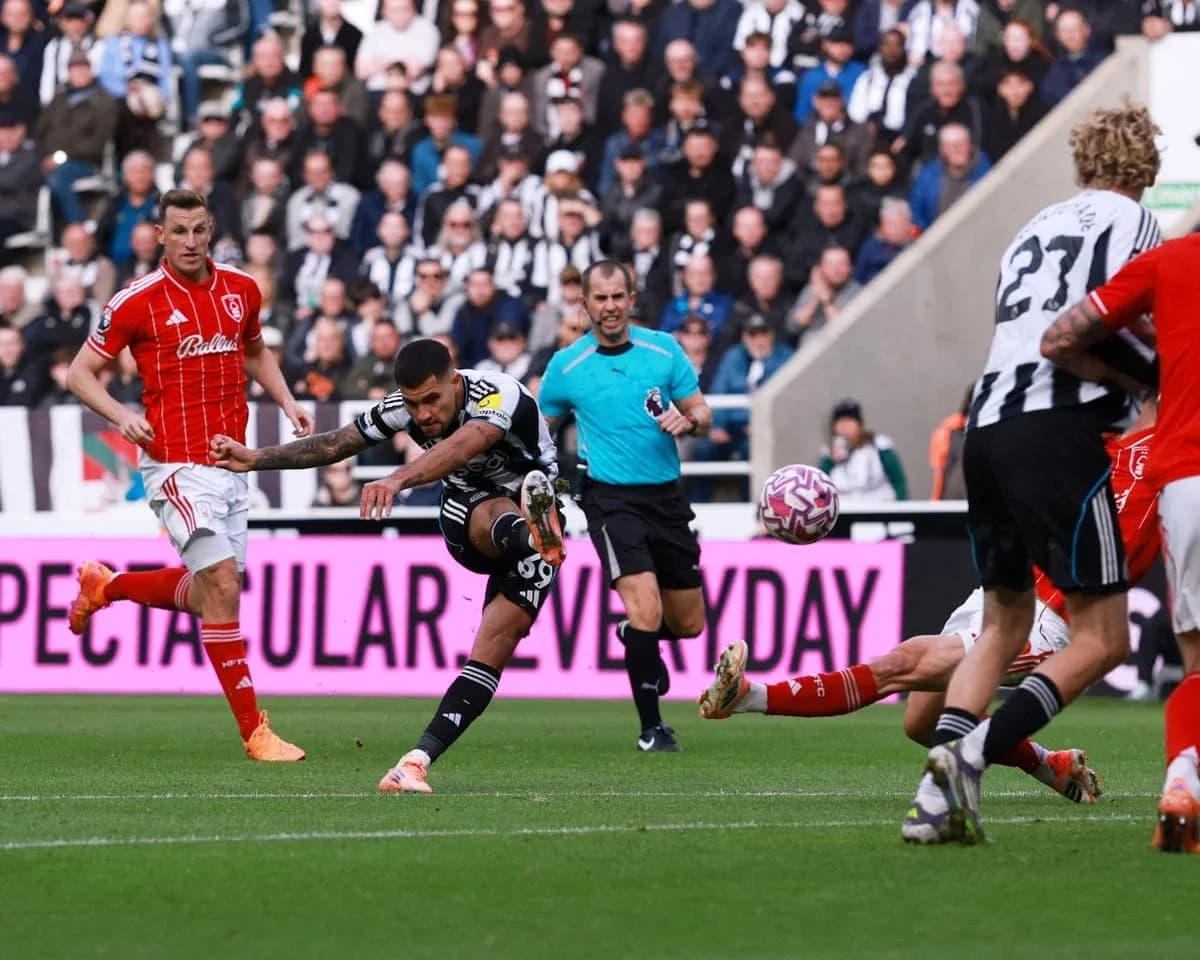
Nottingham Forest vs Newcastle: Premier League Round 36 Preview
In 2026 at the City Ground, this Round 36 Premier League fixture pitches 16th-placed Nottingham Forest (42 points, -2 goal difference) against 13th-placed Newcastle (45 points, -2). With three games left, Forest are still looking over their shoulder, using this home match to push themselves clear of any late relegation drag, while Newcastle need points to stabilise a wobbling campaign and keep a top-half finish within reach.
Head-to-Head Tactical Summary
The recent head-to-head trend is strongly tilted towards Newcastle, with Forest repeatedly competitive but coming up short in key moments.
- 5 October 2025, St. James' Park (Premier League, Regular Season - 7): Newcastle 2–0 Nottingham Forest, after a 0–0 HT. Newcastle controlled the second half and converted their pressure into a clean-sheet win at home.
- 23 February 2025, St. James' Park (Premier League, Regular Season - 26): Newcastle 4–3 Nottingham Forest, after a 4–1 HT. Newcastle’s high-tempo first half created a decisive cushion, with Forest’s late rally falling just short in a seven-goal game.
- 10 November 2024, The City Ground (Premier League, Regular Season - 11): Nottingham Forest 1–3 Newcastle, after a 1–0 HT. Forest led at the break but Newcastle turned the match around with a three-goal response, underlining their capacity to punish lapses over 90 minutes.
- 28 August 2024, The City Ground (League Cup, 2nd Round): Nottingham Forest 1–1 Newcastle after 90 minutes (0–1 HT, 0–0 ET), Newcastle winning 4–3 on penalties. Newcastle edged a tight cup tie via a more composed shootout.
- 10 February 2024, The City Ground (Premier League, Regular Season - 24): Nottingham Forest 2–3 Newcastle, after a 2–2 HT. An open contest with both sides trading blows before Newcastle found the decisive goal.
Across these five meetings, Newcastle have consistently found ways to outscore Forest, including multiple three-goal and four-goal outputs, both home and away. Forest have shown they can create chances and score at the City Ground, but Newcastle’s superior edge in decisive phases has repeatedly swung results in their favour.
Global Season Picture
- League Phase Performance: In the league phase, Nottingham Forest sit 16th with 42 points from 35 matches, scoring 44 and conceding 46 (goal difference -2). Their home record is modest: 4 wins, 6 draws, 7 losses, with 18 goals for and 21 against. Newcastle are 13th with 45 points from 35 matches, scoring 49 and conceding 51 (goal difference -2). Away from home they have 4 wins, 4 draws, 9 losses, with 16 goals scored and 22 conceded.
- All-Competition Metrics: Across all phases of the competition, Forest show a balanced but low-output profile in attack and defense, averaging 1.3 goals scored and 1.3 conceded per match (44 for, 46 against over 35 games). They have 9 clean sheets but have failed to score in 14 matches, indicating a streaky, inconsistent attack. Their disciplinary profile shows yellow cards spread across the match, peaking between minutes 46–75 (26 yellows, 46.42% of their total), and a single red card in the 31–45 range, suggesting occasional loss of control just before half-time.
Newcastle, across all phases, average 1.4 goals scored and 1.5 conceded per match (49 for, 51 against), with a stronger attacking return at home (1.8 goals per game) and a more conservative output away (0.9). They have 8 clean sheets and fail to score in 8 matches, reflecting a more reliable attack than Forest but a looser defense. Their yellow cards spike late (18 yellows in minutes 76–90, 28.13% of their total) and in added time (11 in minutes 91–105, 17.19%), pointing to late-game intensity that can easily tip into indiscipline; they have 3 red cards, all between minutes 46–75. - Form Trajectory: In the league phase, Forest’s form string of WWWDW marks an excellent late-season surge: four wins and one draw from the last five, with no defeats. That run has dragged them away from immediate danger and given them momentum. Newcastle, by contrast, come in on a WLLLL sequence: one win followed by four straight losses in the league phase. That sharp downturn has pulled them back towards the congested mid-table and eroded earlier optimism, particularly with their away vulnerabilities.
Tactical Efficiency
Across all phases of the competition, Forest’s profile is that of a low-margin team: 1.3 goals for and 1.3 against per match, a high number of games without scoring (14), and 9 clean sheets. This points to a cautious, often reactive approach where small details decide results. Their use of 4-2-3-1 in 29 matches reinforces a compact double-pivot structure, designed to protect the back line and manage transitions rather than sustain high-volume attacks.
Newcastle, meanwhile, show a more expansive attacking posture across all phases: 1.4 goals for and 1.5 against per match, with their biggest wins including a 3-1 home result and a 1-4 away victory. The primary 4-3-3 shape (27 matches) underlines their intent to commit numbers forward. However, conceding 51 across 35 games and having suffered heavy away defeats (up to 4-1) exposes a defense that can be stretched, particularly in transition and when their front line fails to press effectively.
Without explicit numerical attack/defense indices from the comparison block, the season data indicates that Newcastle’s attacking ceiling is higher, especially at home, but their efficiency drops away from St. James’ Park, where they average just 0.9 goals per game. Forest’s attack is less potent overall but more stable between home and away (1.1 vs 1.4 goals per game), and their clean-sheet count suggests that when their structure holds, they can grind out results despite limited firepower.
Disciplinary patterns also matter for tactical efficiency: Forest’s single red card hints at relatively controlled aggression, while Newcastle’s three reds between minutes 46–75 show that their high-intensity style can undermine them in the crucial middle phase of matches. In a tight contest with survival or positioning at stake, that difference in risk profile could be decisive.
The Verdict: Seasonal Impact
This match carries asymmetrical but significant seasonal weight for both sides.
For Nottingham Forest, a home win would push them to 45 points in the league phase, effectively locking in safety and allowing them to approach the final two rounds without relegation pressure. It would extend a strong run of form (already WWWDW), reinforce the City Ground as a viable points base despite a modest season-long home record, and provide a psychological breakthrough against an opponent that has consistently beaten them in recent meetings. It would also justify their conservative, structure-first tactical identity across all phases, proving that stability can deliver when it matters most.
A draw would still be valuable for Forest, nudging them further from danger and maintaining their unbeaten run in the league phase, but it would likely leave mathematical doubts lingering into the final two matches. A defeat, by contrast, would halt their momentum, keep them at 42 points, and reopen the door to late-season anxiety if results elsewhere compress the bottom half. Given their narrow goal difference in the league phase (-2) and low-scoring profile across all phases, they are not set up to win tie-breakers on goals, so every point here is disproportionately important.
For Newcastle, three points away from home would move them to 48 in the league phase and sharply improve the narrative of their campaign, transforming a WLLLL slump into a platform for a top-half push in the final two rounds. It would also validate their attacking approach on the road and help offset a weak away return (4 wins in 17). In practical terms, a win here would give them a realistic shot at finishing in the upper mid-table, potentially within touching distance of the European conversation if other results break their way.
A draw would steady the slide but not fully repair the damage of four straight league defeats, likely confining them to a lower mid-table finish. Another loss, especially to a struggling but in-form Forest, would deepen scrutiny on their defensive structure and game management, cementing a narrative of underachievement and making it difficult to sell 2026 as anything other than a missed opportunity.
In summary, this is a late-season leverage game: for Forest, it is primarily about sealing safety and consolidating a strong finish; for Newcastle, it is about halting a damaging decline and preserving the credibility of their project. The result will not decide the title or European places, but it will heavily shape both clubs’ final positioning and the strategic lens through which their 2026 campaigns are judged.