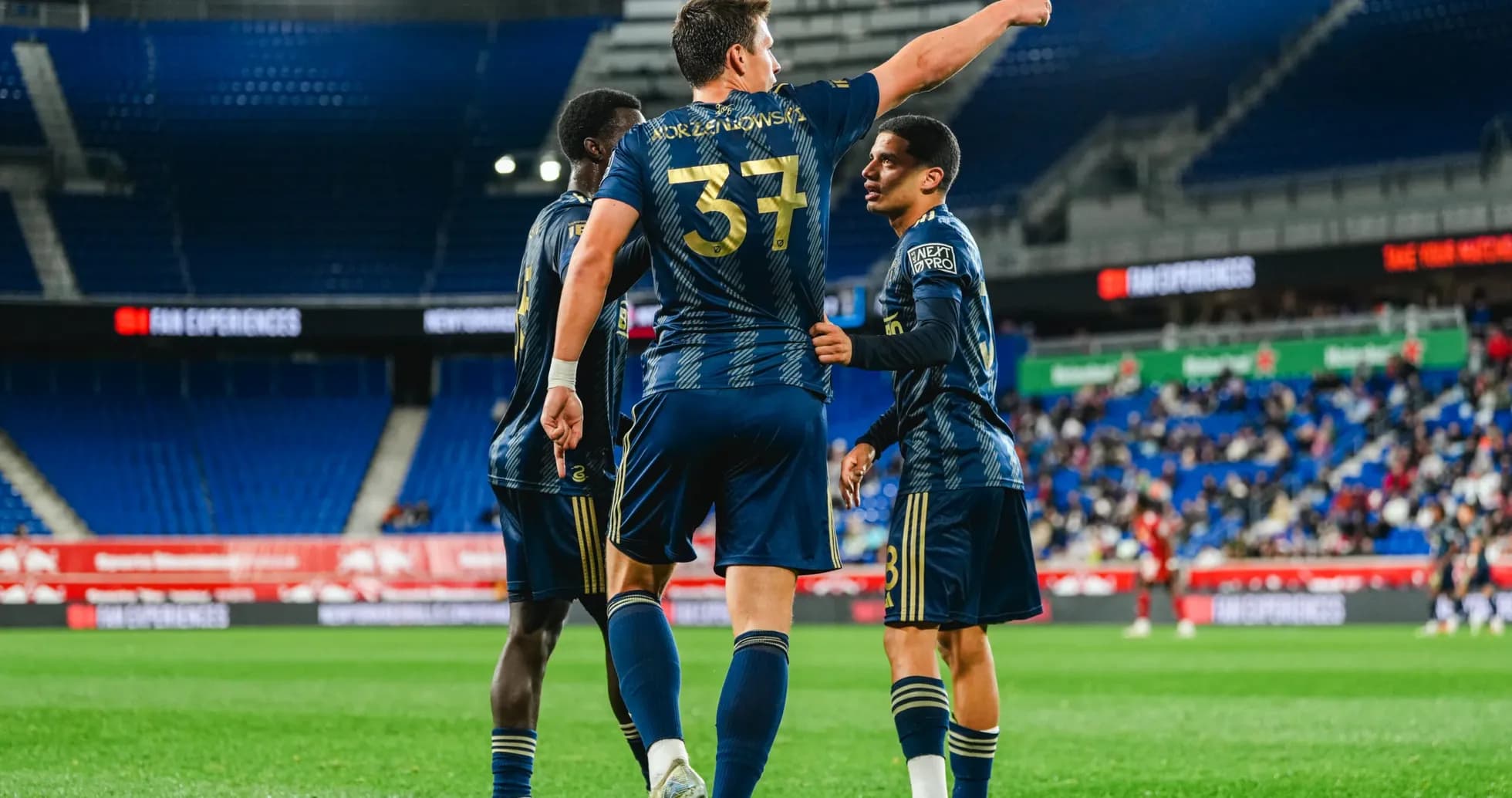
New York RB II Ambushed by Connecticut FC in MLS Next Pro Clash
Under the New Jersey lights at MSU Soccer Park, New York RB II walked into this MLS Next Pro group-stage fixture as the standard-bearers of the Northeast Division, only to be ambushed 3–1 by a Connecticut FC side that has lived most of the season in the shadows. Following this result, the league table still tells of Red Bulls dominance and Connecticut’s inconsistency, but the 90 minutes on the pitch hinted at a tactical story far more nuanced.
I. The Big Picture – A leader exposed, an underdog emboldened
Heading into this game, New York RB II were the benchmark in the Eastern Conference: 7 wins from 11, no draws, and a total goal difference of +8 (25 scored, 17 conceded). At home they had been especially ruthless going forward, averaging 2.6 goals per match with 18 goals in 7 outings, and failing to score in none of their fixtures overall. Their identity was clear: high-risk, high-reward, heavy-metal football.
Connecticut FC arrived from the other end of the narrative arc. In the Eastern Conference they sat 13th, with 11 points from 10 matches, a total goal difference of -4 (14 scored, 18 conceded). On their travels, though, they were quietly dangerous: 3 wins from 6 away fixtures, scoring 11 and conceding 11, an away average of 1.8 goals for and 1.8 against. This was a side that attacked better away from home than at home and was prepared to trade punches.
The first half at MSU Soccer Park reflected that contrast. Despite New York’s status and attacking averages, Connecticut struck twice before the break, taking a 2–0 lead into half-time. For a Red Bulls II team that usually overwhelms opponents early, conceding two without reply before the interval cut straight against their seasonal script.
II. Tactical Voids – Discipline, risk, and structural cracks
Both squads came in without any officially listed absentees; the voids here were tactical rather than personnel-driven. New York RB II’s season-long numbers show a team that lives on the edge. They average 1.7 goals conceded at home, and their card profile underlines how often they flirt with chaos: 37.50% of their yellow cards come in the 76–90' window, with another 20.83% between 61–75'. There is also a solitary red card, shown in the 61–75' range. They tend to become more reckless precisely when game states tighten and legs tire.
Connecticut FC mirror that volatility in their own way. Their total defensive record of 18 goals conceded in 10 matches (1.8 per game) is modest, but their card distribution is similarly back-loaded: 26.67% of their yellow cards arrive in the 76–90' segment, and their only red card of the campaign has also come in that late window. This is a team that pushes the line in closing stages, often paying a disciplinary price to protect or chase results.
In this match, the void for New York was structural: a side built to attack found itself needing to chase a two-goal deficit against an away opponent comfortable in chaos. With no explicit formation data provided, the starters list still tells a story of a youthful, high-energy XI – A. Stokes, D. Gjengaar, A. Sanchez, J. Masanka Bungi and company – but not one that could easily dial the tempo down and manage transitions once the game got stretched.
III. Key Matchups – Hunter vs Shield, Engine Room vs Disruptors
The “Hunter vs Shield” dynamic here was defined more by collective profiles than by named scorers. New York RB II, overall, came in averaging 2.3 goals per match and had not failed to score once this season. Against that, Connecticut FC’s total defensive line of 1.8 goals conceded per game looked vulnerable on paper.
Yet Connecticut flipped that script by leaning into their away identity. Their 11 away goals in 6 matches, at an average of 1.8, matched New York’s away scoring rate and suggested they would not simply sit deep and absorb pressure. Starters like Caua Paixao and B. Tanyi at the sharp end, supported by I. Kasule and S. Sserwadda, gave Connecticut a front line capable of punishing every loose pass in midfield.
In the “Engine Room”, New York RB II’s problem was not a lack of technical quality but control. Players such as P. Sokoloff, C. Faello and N. Worth were tasked with knitting together the phases, yet the season-long pattern of conceding 1.5 goals per match overall – including 12 at home – underlined how often their structure opens up. Connecticut’s central cohort of S. Sserwadda, R. Mora-Arias and D. Lacy were built for this kind of away-day: combative, vertical, and willing to accept a broken game.
The benches only reinforced the contrast. New York RB II had attacking options like M. Odeyinka, M. Sissoko and S. Kone, but the substitution vector – with multiple forwards and attacking profiles among the nine substitutes – hinted at a plan to overwhelm, not to shut games down. Connecticut’s bench, featuring A. Monis, E. Gomez and L. Goddard, offered direct running and counter-attacking threat to exploit spaces once New York committed bodies forward.
IV. Statistical Prognosis – A leader with glass edges
Following this result, the numbers demand a recalibration of expectations. New York RB II remain a top seed in the Eastern Conference picture, and their promotion play-off trajectory is still intact. Their penalty record, with 1 taken and 1 scored this season, stays perfect from the spot. But the defensive trend is creeping in the wrong direction: 17 goals conceded in 11 matches, with home matches averaging 1.7 against, is a fragile platform for knockout-style football.
Connecticut FC, for their part, continue to live on a knife-edge. They still have no draws, with 4 wins and 6 losses, and their total goal difference of -4 (14 for, 18 against) speaks to a team that will not die wondering. On their travels they are now firmly established as a dangerous opponent, with 3 away wins built on that 1.8 goals-per-game attacking output.
If we project this forward into a play-off context, the xG-style prognosis is clear even without explicit Expected Goals data: New York RB II’s attack will almost always generate enough volume to threaten multiple goals, but their defensive openness and late-game disciplinary profile leave them vulnerable to precisely the sort of away performance Connecticut produced. In a 1/8-final scenario, a similarly fearless underdog could turn those glass edges into a real crack.
For now, this 3–1 defeat reads as a sharp tactical lesson for the conference leaders and a statement of intent from Connecticut FC: in MLS Next Pro’s unforgiving landscape, form and rank can be bent by a single night of well-executed away aggression.