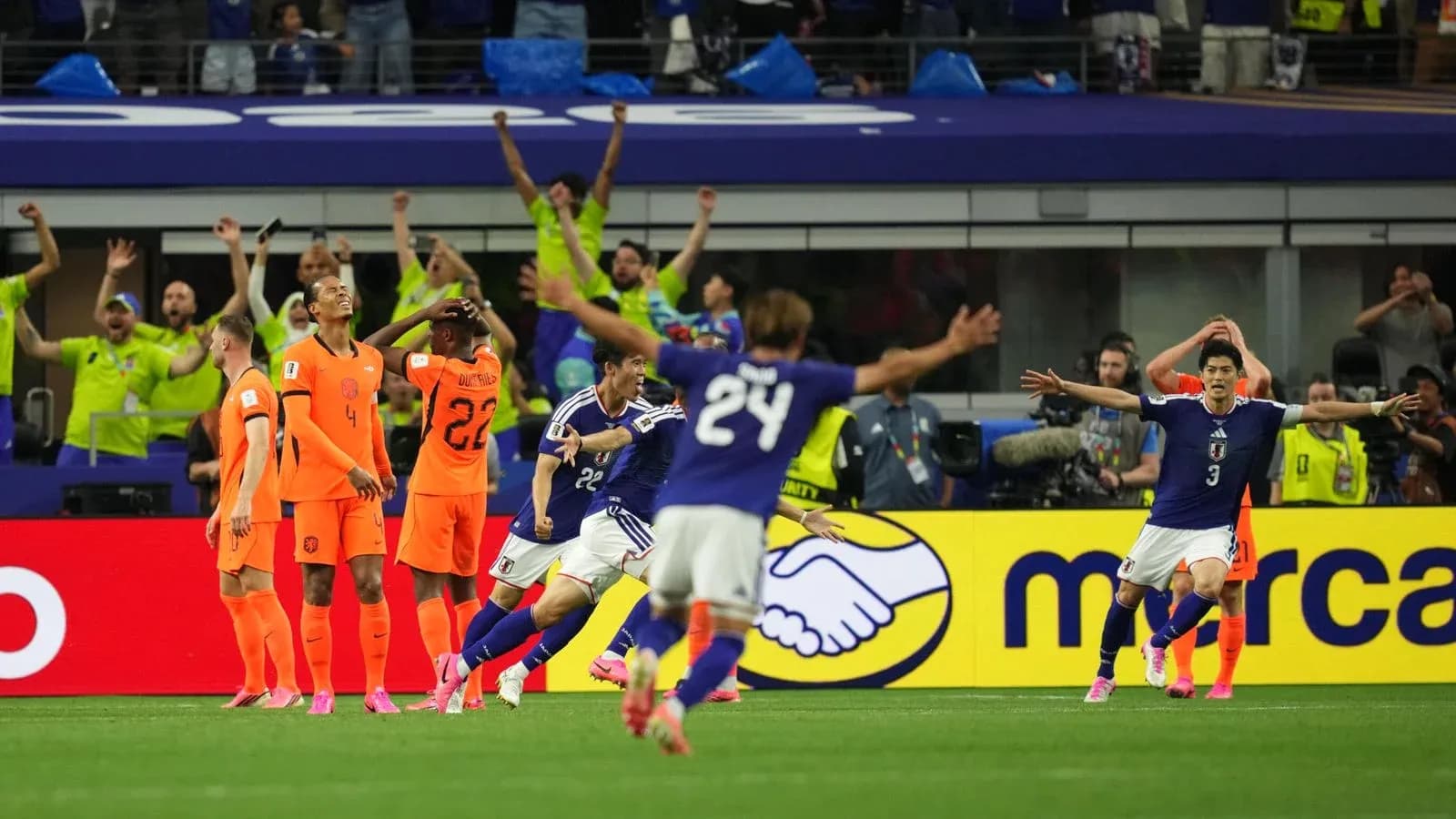
Netherlands and Japan Battle to 2-2 Draw in World Cup 2026
Under the roof of AT&T Stadium in Arlington, Netherlands versus Japan delivered a 2–2 draw that felt less like an opening group game and more like a tactical sparring session between two sides with knockout-round ambitions. Following this result, both sit on 1 point in Group F of the World Cup 2026, each with a goal difference of 0 after scoring and conceding 2 in total. The scoreline mirrored their statistical profiles: adventurous going forward, imperfect at the back, and already revealing the blueprint for how they might evolve through the group.
Netherlands, listed first in the standings snapshot, leaned into their traditional 4-3-3 under Ronald Koeman. The shape was clear and symmetrical: Bart Verbruggen behind a back four of Denzel Dumfries, Jan Paul van Hecke, Virgil van Dijk and Micky van de Ven; a midfield trio of Ryan Gravenberch, Frenkie de Jong and Tijjani Reijnders; and a front three of Crysencio Summerville, Donyell Malen and Cody Gakpo.
Japan, under Hajime Moriyasu, countered with a 3-4-2-1 that was compact without the ball and fluid in possession. Zion Suzuki started in goal, shielded by a back three of Takuma Watanabe, Shogo Taniguchi and Hiroki Ito. The wing and central lanes were patrolled by Ritsu Doan, Katsuya Sano, Daichi Kamada and Koki Nakamura, with Takefusa Kubo and Daizen Maeda supporting Ayase Ueda at the tip.
There were no listed injuries or suspensions, so both coaches had access to their full squads. Yet discipline already looms as a subplot, particularly for the Netherlands. Heading into this game, their season card profile showed a notable late-game trend: all recorded yellow cards clustered from 61-75, 76-90 and 91-105 minutes, each band accounting for 33.33% of their cautions. That pattern aligned with the individuals: Memphis Depay and Crysencio Summerville both carry 1 yellow card in total, with Summerville’s aggression part of what makes him so effective in duels but also a risk if matches get stretched late.
Japan, by contrast, have no yellow or red cards registered in their World Cup campaign so far. Moriyasu’s side walked the disciplinary tightrope cleanly in Arlington, an important detail for a team that relies on collective pressing and quick tactical fouls to stop transitions. Maintaining that balance will be crucial as group stakes rise.
The “Hunter vs Shield” duel in this fixture was embodied by Summerville and the Japanese back line. Summerville’s World Cup numbers are already sharp: 1 goal in total from 1 shot on target, 29 passes at 86% accuracy, and 7 duels contested with 5 won. Operating from the right of the Dutch front three, he repeatedly tested the channels around Ito and Watanabe, attacking the half-space where Japan’s back three naturally stretches.
Japan’s defensive record so far is deceptively symmetrical: on their travels they have conceded 2 goals, an average of 2.0 away and 2.0 in total. Netherlands at home have also conceded 2, with the same 2.0 home and total average. That parity set the stage for a game in which neither “Shield” looked fully secure. Dumfries’ high positioning left space behind him that Kubo and Maeda could exploit, while Japan’s wide centre-backs were often dragged into uncomfortable territory by the rotations of Gakpo and Malen.
In the “Engine Room”, the duel was between Gravenberch and De Jong on one side and Kamada on the other. Gravenberch arrives from this matchday as one of the competition’s leading creators: 2 assists in total, 25 passes at 88% accuracy and 2 key passes. His role as the advanced number eight, drifting between the lines, repeatedly found seams between Japan’s midfield four and back three. De Jong, more metronome than headline act, provided the platform for Gravenberch’s surges.
Japan’s answer lay in Kamada’s positioning and Kubo’s intelligence. Kamada tried to sit in the passing lanes, denying straight balls into Malen’s feet, while Kubo’s 1 assist in total and 16 passes at 75% accuracy underlined his importance as the transition outlet. When Japan broke, they often did so by bypassing De Jong’s zone entirely, hitting early diagonals into Kubo and Maeda to run at Van de Ven and Van Dijk.
From the bench, the profiles of the impact players added another layer to the tactical story. Depay, with 20 minutes played, 7 passes at 100% accuracy and 1 key pass, gave Koeman a different reference point up front, dropping between the lines rather than running beyond. His 1 yellow card in total, however, reinforces the sense that late-game Netherlands can be both more dangerous and more combustible. For Japan, Koki Ogawa is already a quietly important figure: 1 assist in 15 minutes, 1 key pass from just 1 total pass. He is the archetypal late-game poacher and link-man, ideal when Moriyasu shifts from the starting 3-4-2-1 into a more direct, striker-heavy configuration.
Statistically, both teams emerge from this 2–2 with mirrored identities. Netherlands at home have scored 2 and conceded 2, an average of 2.0 for and 2.0 against. Japan on their travels have the same totals and averages. Neither side has kept a clean sheet; neither has failed to score. Penalties offer no edge yet: both have taken 0 in total, with 0 scored and 0 missed, so there is no evidence of a spot-kick advantage or weakness.
In xG terms, while the raw numbers are not provided, the pattern of chance creation points to a relatively balanced Expected Goals profile. Netherlands, with their structured 4-3-3 and high-usage wide forwards, likely generated a steady stream of medium-quality opportunities rather than a barrage of clear-cut chances. Japan, more selective but incisive, appear to have produced fewer shots but higher-value ones through quick counters and set rotations around Kubo and Ueda.
Following this result, the tactical prognosis for the group is clear. Netherlands look like a side whose ceiling will be defined by how quickly their back four tightens up while preserving the creative freedom of Gravenberch and Summerville. Japan, sitting on the same 1 point and 0 goal difference, project as a team that will live on fine margins: disciplined, vertical, and reliant on the interplay between Kubo, Kamada and their late-game substitutes.
If this 2–2 in Arlington is the baseline, the next fixtures in Group F are likely to be decided not by sweeping structural changes, but by which coach better manages discipline, late-game substitutions, and the small tactical adjustments around their already well-defined identities.