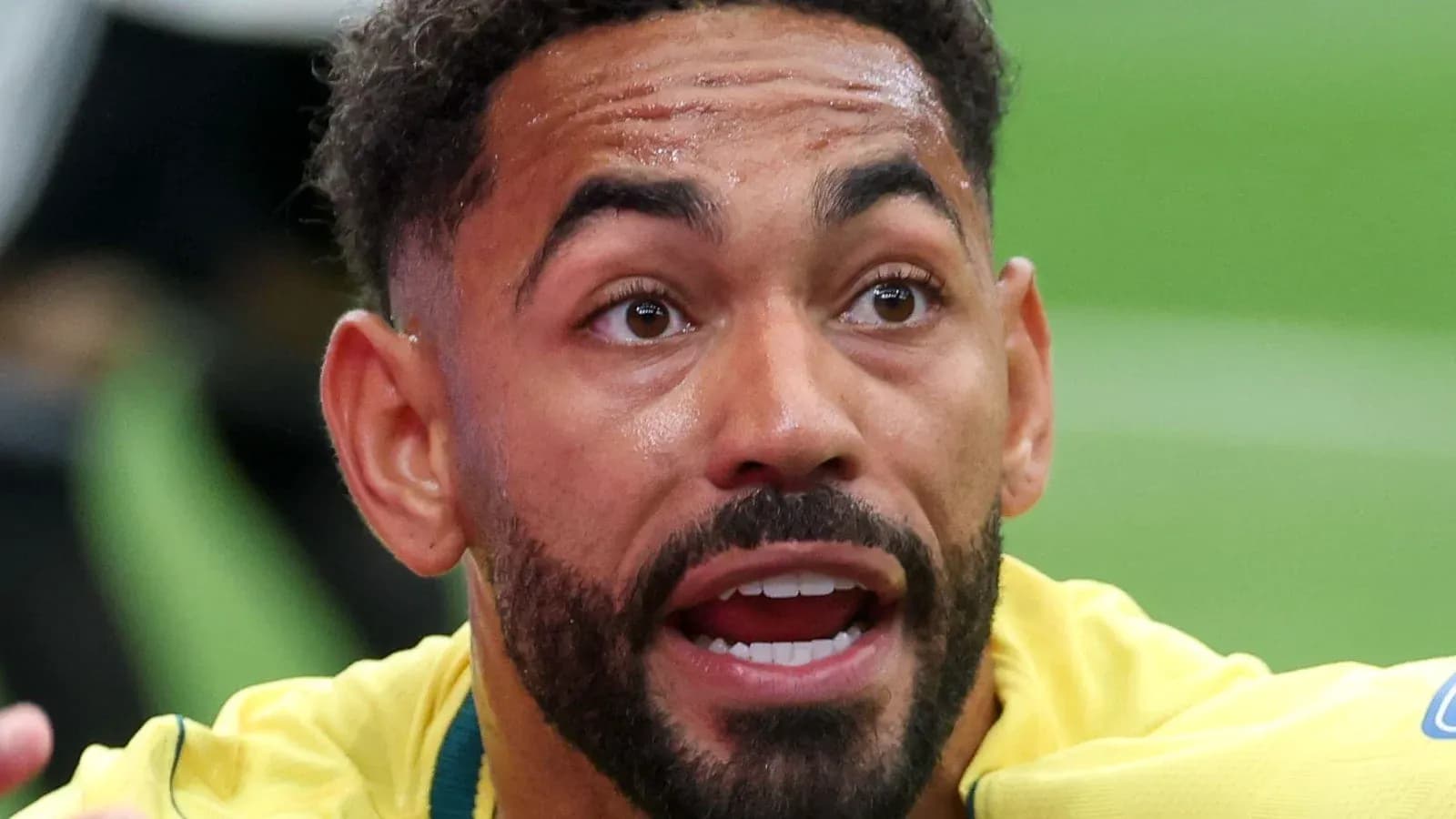
Matheus Cunha, Harry Kane and the Obsession With Niceness
Somewhere between Brazil edging past Japan, Germany crashing out to Paraguay and Harry Kane’s future being psychoanalysed from afar, a strange theme has crept into the coverage: niceness. Or, more specifically, the idea that being “nice” is now a tactical flaw.
Matheus Cunha, we are told, will never replace Vinicius Junior for Brazil and is “presumably” destined to fail at Manchester United because he is… too nice. Not not clinical enough. Not tactically ill-suited. Too nice.
It’s a bizarre hill to die on.
Kane: Humble Superstar or Carefully Curated Narrative?
Craig Hope in the Daily Mail paints a picture of Harry Kane that tries to have it both ways. Kane, he writes, “does not have an ego in a traditional sense – he is the humblest of superstars – but he does not score the goals he does without a stubborn streak of high self-regard.”
So which is it? No ego “in a traditional sense,” yet armed with a “stubborn streak of high self-regard.” That’s not analysis; that’s a branding exercise.
It jars even more when you remember the same writer has happily labelled Jude Bellingham a “divisive soloist,” a “poster boy for moodiness,” “brand ambassador for petulance” and “an angry young man.” Kane’s self-belief is framed as a charming quirk of a humble superstar. Bellingham’s edge is weaponised as a character flaw.
The double standard is hard to miss.
Hope also takes time to explain, in painstakingly literal fashion, that “Bayern is not Barca and the Bundesliga is not LaLiga. Der Klassiker is not El Clasico. Der Klassiker is Bayern versus Dortmund, by the way.”
By the way indeed. As if anyone following Kane’s career needs that footnote.
He then leans into the notion that Bayern are the sensible, “stable” choice while Barcelona are “irresistible,” all romance and glamour. That would be more convincing if Bayern hadn’t gone further in the Champions League last season and lifted more trophies. Stability is not a synonym for small-time.
Brazil, Japan and a Curious England Angle
Over at the Daily Mirror, Matty Hewitt watched Brazil’s win over Japan and concluded it “looked as though the Three Lions were going to be given a major boost” when Japan took the lead, with the Canarinho at risk of going out.
A “major boost”? England lost to Japan three months ago. England have beaten Brazil more recently than they’ve beaten Japan. If you’re picking a side to fall for your convenience, recent history doesn’t exactly scream that Japan are the soft touch.
The football reality is one thing. The narrative being forced around it is another.
Cunha, Compassion and a Convenient Myth
From that same game came Jeremy Cross’s piece on Matheus Cunha: “Matheus Cunha’s classy World Cup act can’t hide uncomfortable Brazil truth for Man Utd star.”
The “classy act” in question? Cunha taking a moment to console Japan’s Ao Tanaka before joining the Brazilian celebrations. A small, human gesture in a high‑stakes World Cup tie. The kind of thing that usually gets clipped and shared as an example of respect between professionals.
For Cross, it becomes Exhibit A in a broader “awkward narrative”: that Cunha “lacks the grit to go with the guile needed to become a great footballer, instead of a good one.”
This supposed “general feeling” appears out of thin air. Cunha, remember, once served a ban after removing an Ipswich security guard’s glasses in what could only be described as A Fracas. You don’t excuse that, but you can safely say this is not a man short on edge or aggression.
Yet now, because he comforts an opponent, he’s filed under “too nice.”
The final flourish is that when Neymar eventually steps away from the Seleção, “the chances are he will hand [the baton] to Vinicius Jr – not Cunha.” Of course he will. Vinicius is already Brazil’s attacking talisman and one of the world’s elite forwards. That succession plan has nothing to do with Cunha’s empathy in a single post‑match moment.
There’s a real conversation to be had about Cunha’s ceiling, his consistency, his role at Manchester United. Reducing it to an armchair diagnosis of his personality does neither player nor reader any favours.
Nagelsmann, a “Snap” and a Loaded Headline
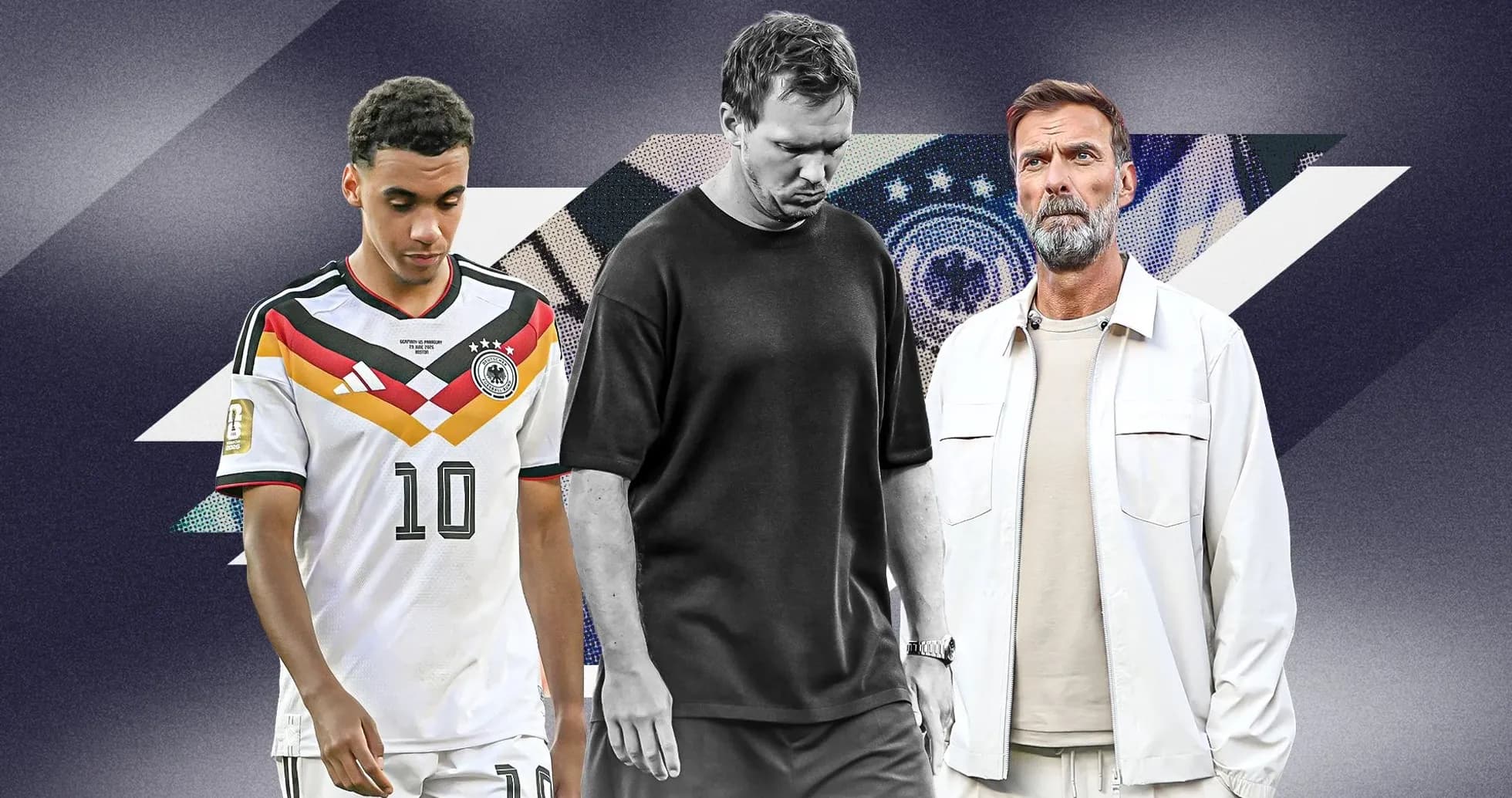
In Germany’s case, the result is brutal enough: eliminated on penalties by Paraguay. MailOnline decided the real hook was that Julian Nagelsmann “snaps at female reporter’s questioning” after the exit, while Jürgen Klopp is already being loosely attached to his job.
Two things leap out. First, the insistence on labelling Lili Engels as a “female reporter” in the headline, even though she’s just “reporter” in the copy. It’s not a neutral descriptor. It’s there to change how the exchange lands, to add an extra charge to the interaction and to justify the prominent photo.
Second, the word “snaps.” Watch the clip and you don’t see a manager losing control. You see a coach under pressure, engaging in a slightly tense, but controlled back‑and‑forth with a journalist doing her job. That’s not a meltdown; it’s a standard post‑mortem after a major failure.
If that qualifies as “infuriated” in the Mail newsroom, you wonder what they’d call an actual dressing‑room bust‑up.
The Shape of the Story
Thread it all together and a pattern emerges. Kane’s ego is rebranded as humble steel. Bellingham’s fire is framed as a problem. Cunha’s decency is twisted into a weakness. Nagelsmann’s composure under strain is sold as a “snap” at a “female reporter.”
The football is dramatic enough. Brazil clinging on. Germany out. England watching it all and calculating their path. Yet too often, the coverage veers away from tactics, form and decisions into personality caricatures built on a single gesture or a loaded adjective.
Cunha’s future at Manchester United will be decided on the training ground and in the penalty area, not in the few seconds he spent with a heartbroken Ao Tanaka. Kane’s next move will hinge on footballing ambition, not on a tortured definition of humility. Nagelsmann’s job prospects will rest on results, not on a clipped interview doing the rounds online.
The game keeps raising the stakes. The question is whether the stories around it can keep up without reducing complex professionals to one-word labels: humble, petulant, nice.