Germany's World Cup Woes: Nagelsmann's Struggles and Future
Germany have been here before. That is precisely the problem.
When the world champions crashed out of the 2018 World Cup in the group stage, undone by Mexico and South Korea, the inquest was brutal and the conclusion obvious: Joachim Löw’s era had run its course. Twelve years, a World Cup, countless semi-finals – and then a collapse so stark it demanded a clean break.
The break never came.
The DFB chose sentiment over steel. Löw stayed, Germany drifted, and three years later England bundled them out of Euro 2020 in the last 16. Only then did Löw walk away. The federation had waited too long, and the team paid the price.
Hansi Flick arrived on a tide of optimism and fresh ideas. He stormed through qualifying for Qatar 2022, talked about intensity and pressing, and briefly convinced a sceptical nation that the reset had finally begun. Then Japan turned a 1-0 deficit into a 2-1 win in Germany’s opening game, and the old fragility returned overnight. Another group-stage exit. Another coach expected to be sacked.
Again, the DFB hesitated. Flick clung on until the autumn of 2023, as poor results piled up and belief drained away. Only then did they move for Julian Nagelsmann.
The pattern is now impossible to ignore.
From golden hope to Foxborough failure
Nagelsmann’s appointment in September 2023 felt like a generational moment. Young, sharp, tactically inventive, with big-club pedigree from Bayern Munich and RB Leipzig, he seemed tailor-made to drag Die Mannschaft into a new era.
At Euro 2024 on home soil, he delivered what Germany had been craving: a functioning tournament team. The football was bold, the atmosphere transformed, and the quarter-final exit to eventual champions Spain carried more pride than regret. For the first time in eight years, there was a sense of connection between players, coach and fans.
Nagelsmann leaned into that mood. Almost immediately, he set the bar higher: the 2026 World Cup would be his next great target. At that moment, he was the most popular national coach since peak Löw. It felt like the start of something.
Two years on, that idea looks almost absurd.
Nagelsmann has burned through his credit at astonishing speed. The World Cup campaign that ended with a limp defeat to Paraguay in Foxborough was not a sudden collapse. It was the inevitable conclusion of a long, visible slide.
Germany have gone backwards since the Euros. The performances have been flat, the structure unclear, the progress non-existent. The DFB cannot afford to make the same mistake for a third time and wait until the project is beyond rescue.
A coach who would not stop talking
Nagelsmann’s undoing has not been tactical alone. He talked himself into trouble.
Every few weeks, press conferences and interviews became stages for detailed, public critiques of his own players. Not the sharp, pointed observations of a demanding coach, but sprawling monologues that often felt more about him than them. He chased attention, made statements that ranged from clumsy to simply untrue, and repeatedly went back on promises about roles and status within the squad.
When confronted with critical questions, his composure slipped. Rather than disarming the room, he slipped into a patronising tone that grated, especially during the World Cup. The image of the cool, modern tactician gave way to something more brittle and self-involved.
On the pitch, his big calls told a similar story.
Toni Kroos’ return for Euro 2024 had been a masterstroke, restoring control and authority to Germany’s midfield. That success seemed to embolden Nagelsmann. For this World Cup, he reached even further back, hauling 40-year-old Manuel Neuer out of international retirement despite repeatedly insisting he would not.
The decision cut deep. Oliver Baumann, excellent and dependable throughout qualifying, lost his place in a move that was mishandled and, in the end, unnecessary. Neuer did nothing in this tournament that Baumann could not have done. There was no game-saving performance, no defining moment to justify the U-turn.
The handling of Joshua Kimmich told its own tale. Nagelsmann never settled on a role for his captain, shifting him between right-back and central midfield – even within the same match, as in the defeat to Paraguay. It symbolised a broader uncertainty. Germany’s supposed leader looked like a piece in a tactical experiment rather than the anchor of a clear plan.
A campaign with nowhere to hide
Germany’s World Cup performances left no room for interpretation. The failure was comprehensive – and predictable.
Apart from a brief second-half surge against minnows Curaçao, this team never found a convincing level. They lacked creativity in attack, they looked fragile at the back, and they struggled badly against opponents they should have controlled: Ivory Coast, Ecuador, Paraguay. The football was cautious without being secure, adventurous without being coherent.
By the time Paraguay finished the job in Foxborough, it felt worse than 2022. Back then, Germany at least clawed a draw against Spain and showed flickers of their old competitive edge. This time, there was nothing of the sort. Just a slow, joyless slide out of the tournament.
Inside the dressing room, the players did what players often do. They stepped forward, took collective responsibility, and publicly shielded their coach. Nagelsmann was explicitly absolved of blame by his squad, with Rudi Völler also standing by him in his role as sporting director.
But international football is unforgiving. The coach’s primary task is to provide a workable game plan, a framework in which elite talent can thrive. Germany’s squad is not short on quality. It looked short on ideas. Nagelsmann’s in-game management only sharpened the focus on him: questionable substitutions against Ecuador, and the decision to start super-sub Deniz Undav against Paraguay instead of unleashing him from the bench where he is most dangerous.
The tactical edge he was hired for never truly appeared when it mattered most.
Klopp in the studio, Klopp in the air
If there was a cruel twist for Nagelsmann, it sat in a television studio.
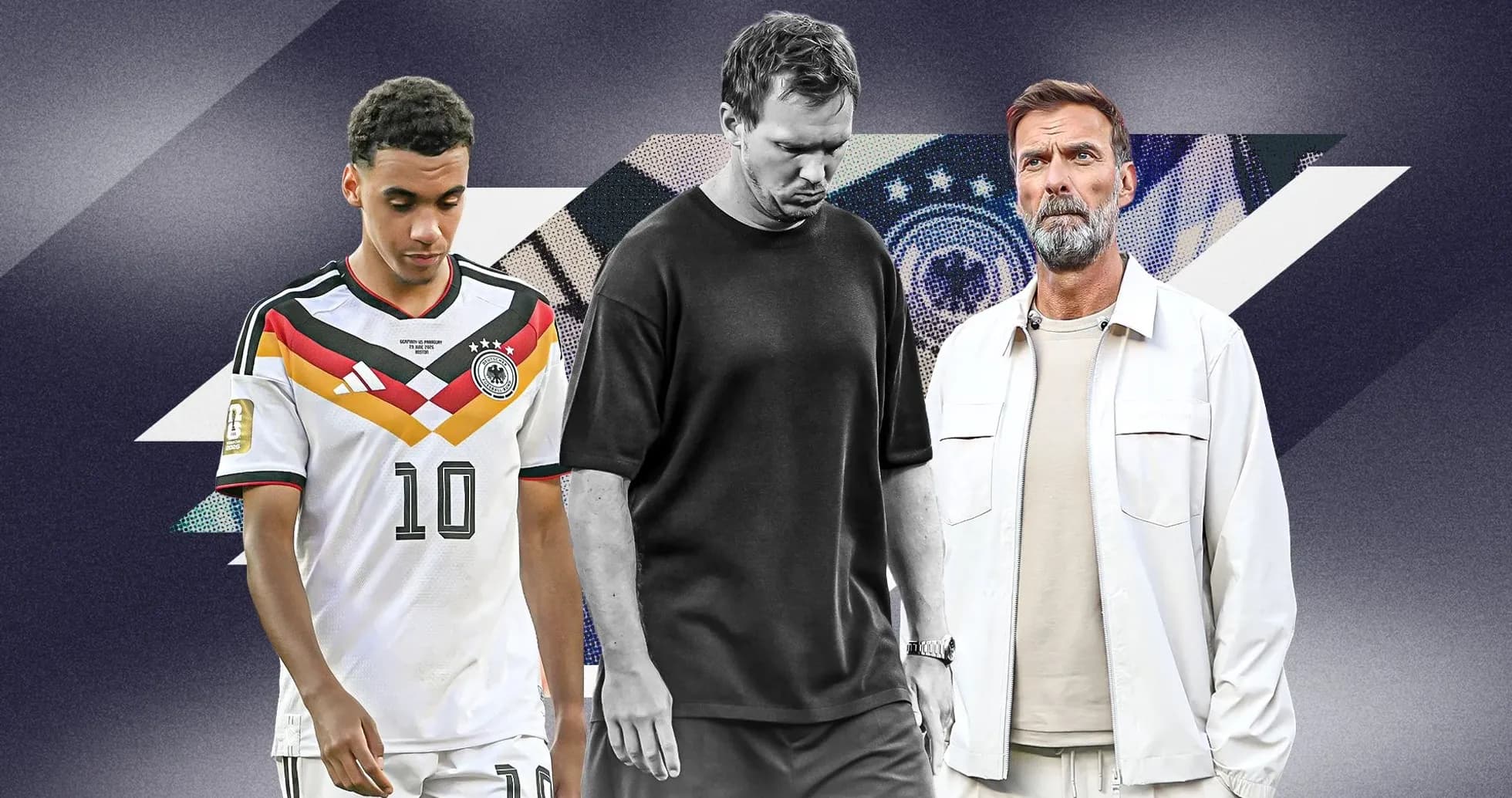
Jurgen Klopp, the man many in Germany now see as the ideal successor, spent the tournament dissecting the national team’s flaws on air. His analysis on Magenta TV after the elimination cut straight to the heart of the problem.
“You have to attack down the wings. There’s no alternative,” he said. “We all know how well these guys can play, but they didn’t bring that to the pitch. In three months, we’ll be raving about [Florian] Wirtz and [Jamal] Musiala again about how great they are, but not now.
“Paraguay had the opportunity to achieve something, Germany was under pressure to achieve something. Everyone in the stadium thought: Now they’ll turn it around! But we didn’t. We let them off the hook... We can talk about the DFB. We absolutely have to change a few things.”
Those words landed with force. Not only because Klopp was right, but because he sounded like the man already outlining his own blueprint.
For a growing section of the fanbase, the solution is obvious: Klopp leaves his role as Red Bull’s head of soccer and leads Germany into Euro 2028 and the 2030 World Cup. The idea of the former Liverpool and Borussia Dortmund coach in the national-team dugout has an almost intoxicating pull. It promises energy, identity, belief – and a clean break from the drift of the last eight years.
Klopp, though, refused to bite when asked in Boston.
“I haven’t thought about that yet. I understand that when the national coach position is discussed, my name is mentioned in some form. But it’s not the moment to really talk about it. There’s nothing to say about it. I have a job that I enjoy very much. As far as I know, it’s not a part-time job.”
He neither ruled it in nor out. He simply left the door ajar and the pressure squarely on the DFB.
A decision that can no longer wait
The pattern is clear. After 2018, the DFB waited. After 2022, they waited again. Each time, the next cycle began under a cloud, with a coach already fighting to recover lost trust.
They cannot afford to repeat that mistake.
Public backing from the players and from Völler does not change the reality of this World Cup: Nagelsmann failed to give a talented group a convincing structure or identity on the biggest stage. His authority with fans has eroded, his tactical decisions are under heavy scrutiny, and his relationship with parts of the squad has been strained by his own words.
The federation faces a simple, brutal choice. Act now, or drift into another tournament cycle with a coach the country no longer truly believes in.
Klopp may not wait forever. Nor will the chance to reset the direction of German football.