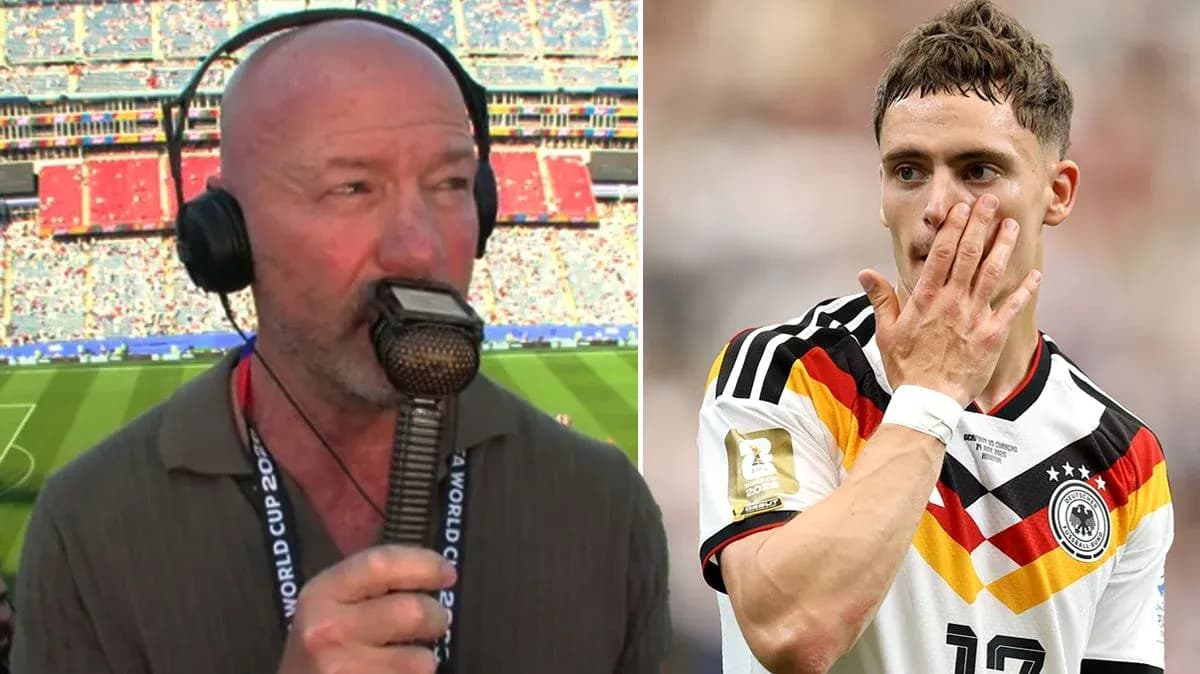
Germany’s World Cup Collapse in Boston: A Historic Defeat
Germany’s World Cup crash in Boston will live long in the country’s sporting nightmares. Not just for the result, a 4-3 penalty shootout defeat to Paraguay, but for what it revealed: a heavyweight with big reputations and bigger fees, unable to deliver when the tournament finally bit back.
At the heart of the storm sits Florian Wirtz.
The Liverpool midfielder, signed for £116million and billed as the next great German playmaker, left the field with an assist on the stat sheet but a target on his back. In a game that demanded a leader, he drifted instead of dictating. The fallout has been brutal.
A giant falls in Boston
Paraguay arrived as the World Cup underdogs, ranked 41st in the world and expected to be a footnote in Germany’s recovery story. Instead, they wrote their own chapter.
Julio Enciso struck first, punishing Germany in the opening half and turning a routine evening into a test of nerve. The goal rattled Julian Nagelsmann’s side. The swagger that had produced seven goals against Curacao vanished. Suddenly every misplaced pass carried weight, every touch felt heavy.
Germany did respond. Wirtz finally found a moment of quality, teasing in a superb cross that Kai Havertz glanced into the net. It was the kind of delivery Liverpool thought they were buying, the kind that should have settled him into the contest. It didn’t.
The drama escalated late on. Jonathan Tah thought he had completed the escape act, bundling in what looked like a winner for the 2014 champions. Celebrations were cut short. VAR intervened, the officials ruling that goalkeeper Orlando Gill had been fouled in the build-up. The goal was wiped out, the tension ramped up, and Germany’s grip on the tie loosened again.
Extra-time came and went. Penalties would decide it.
A perfect record shattered
Germany had never lost a penalty shootout at a World Cup. Not once. Not in all their years of tournament brinkmanship and big-moment nerve.
That aura disappeared in a few brutal minutes.
Havertz stepped up first for Germany and saw his effort saved by Gill, who grew with every kick. Nick Woltemade followed, the Newcastle forward also denied by the Paraguayan goalkeeper. The South Americans twice had the chance to finish it, only for Antonio Sanabria and Fabian Balbuena to miss from the spot.
Germany were still alive. Just.
Then came the final twist. Tah, already the nearly hero of normal time, blazed his kick over the bar. It handed Jose Canale the chance to etch his name into Paraguayan football folklore. He didn’t blink. Paraguay 4-3 Germany on penalties. A seismic upset sealed with one swing of the boot.
For Germany, it was more than a defeat. It was a historic rupture: their first-ever World Cup shootout loss, and their first penalty heartbreak in international football since 1976.
Wirtz under fire
As the inquest began, Wirtz found himself in the crosshairs.
On Netflix’s The Rest is Football, Alan Shearer did not spare the Liverpool man. The former England captain cut straight to the point: Germany’s big names, he argued, simply didn’t turn up.
“They've got the quality in names and on paper, but they just didn't deliver,” Shearer said, before running through the list. Leroy Sane, a poor season. Denis Undav, brought in late to try and inject life into a blunt attack. And Wirtz, who he described as having “a terrible season at Liverpool” and failing again on the biggest stage.
The numbers back up the criticism: one assist on the night, but little control, few decisive moments, and no sense that he could bend the game to his will when it started to slip away.
Micah Richards pushed back, pointing to Wirtz’s transfer fee as proof of his talent. “He's a superstar,” Richards insisted, agreeing that the Liverpool man has underwhelmed but refusing to accept the idea that he lacks quality.
Richards broadened the defence. Havertz, scorer in Champions League finals in 2021 and 2026 and now a Premier League winner. Tah, newly of Bayern Munich. Antonio Rudiger, a consistent rock at Real Madrid. Young Nathaniel Brown emerging with credit. The talent, he argued, is undeniable.
The problem? It stayed on paper when Germany needed it on grass.
Nagelsmann stands his ground
If Wirtz has become the symbol of underperformance, Nagelsmann has become the lightning rod.
This exit, in the round of 32 and to a side ranked far below them, follows a grim pattern. Germany have now failed to reach the last 16 at three consecutive World Cups. For a nation that once measured success in semi-finals and trophies, the slide is glaring.
Nagelsmann, though, refused to walk away.
“When you exit the World Cup after you play Paraguay it is very bitter. It is very hurtful,” he admitted. “This is the third elimination in a row, so we are not part of the first-class teams any more.”
He knows the mood back home. “If we're going to do a survey today in Germany, people are not going to speak about me positively obviously,” he said. He acknowledged the anger, the doubt, the calls for change. But he also nailed his colours to the mast.
“I'm not going to step back only because we are eliminated. If the DFB want me to continue, I am going to continue. I know how the industry works and a lot of people now want me to leave. I want to continue if the German FA wants me to.”
His one moment of warmth came for the supporters. He praised the German fans in the stadium, impressed by the way they backed the team even after the defeat. Inside the ground, at least, there was no mutiny.
Outside it, the knives are out.
Legends lose patience
Two former Germany internationals, Thomas Hitzlsperger and Arne Friedrich, did not hide their concern.
Speaking on BBC One, Hitzlsperger labelled the situation “unacceptable” and questioned how Germany had arrived at the tournament with so many issues. “It doesn't look good for Nagelsmann,” he said, arguing that the 38-year-old has struggled to manage key moments in recent months. With an expanded World Cup making early exits even more damning, he believes this failure will be particularly hard to stomach.
Friedrich went further. On BBC Radio 5 Live, he described the defeat as “deserved” when viewed across the whole tournament. Germany’s performances, he argued, simply did not merit survival. His verdict on the coach was stark: “Nagelsmann has to face the consequences. It is very disappointing, but that is sport. I would definitely say the journey continues without Nagelsmann.”
A team at a crossroads
The contrast is jarring. A 7-1 demolition of Curacao in the opening game suggested a reborn powerhouse. A tight 2-1 win over Ivory Coast kept the optimism alive. Then came a 2-1 defeat to Ecuador, and now this collapse against Paraguay.
The pattern is clear: when the opposition stiffened, Germany’s structure and mentality crumbled.
That is why Wirtz, Nagelsmann and the rest of this squad now stand at a crossroads. The names still carry weight. The clubs on their CVs still impress. The transfer fees still make headlines.
But on a cold night in Boston, against a team ranked 41st in the world, all that counted for nothing.
The question now is brutal and simple: does this generation have the courage and clarity to turn reputations back into results, or will Germany have to tear it up and start again?