Marcus Rashford's Journey: From Manchester United to Barcelona
Marcus Rashford used to be the story. The academy jewel, the hometown finisher, the forward who dragged Manchester United through grim afternoons almost by force of will. Then it all seemed to fall apart.
Less than two years ago, after a clash with Ruben Amorim and a very public insistence that he was “ready for a new challenge”, Rashford looked closer to a cautionary tale than a cornerstone. A loan spell at Aston Villa flickered with promise but never truly caught fire. It was obvious: he needed a clean break, a new permanent home, not another temporary escape.
Barcelona offered something in between. A loan, yes, but with a €30m option that felt more like an invitation than a barrier. The competition was fierce – Lamine Yamal, Raphinha, Robert Lewandowski, Ferran Torres – yet the move handed Rashford what he craved most: a fresh start and a manager who believed in him.
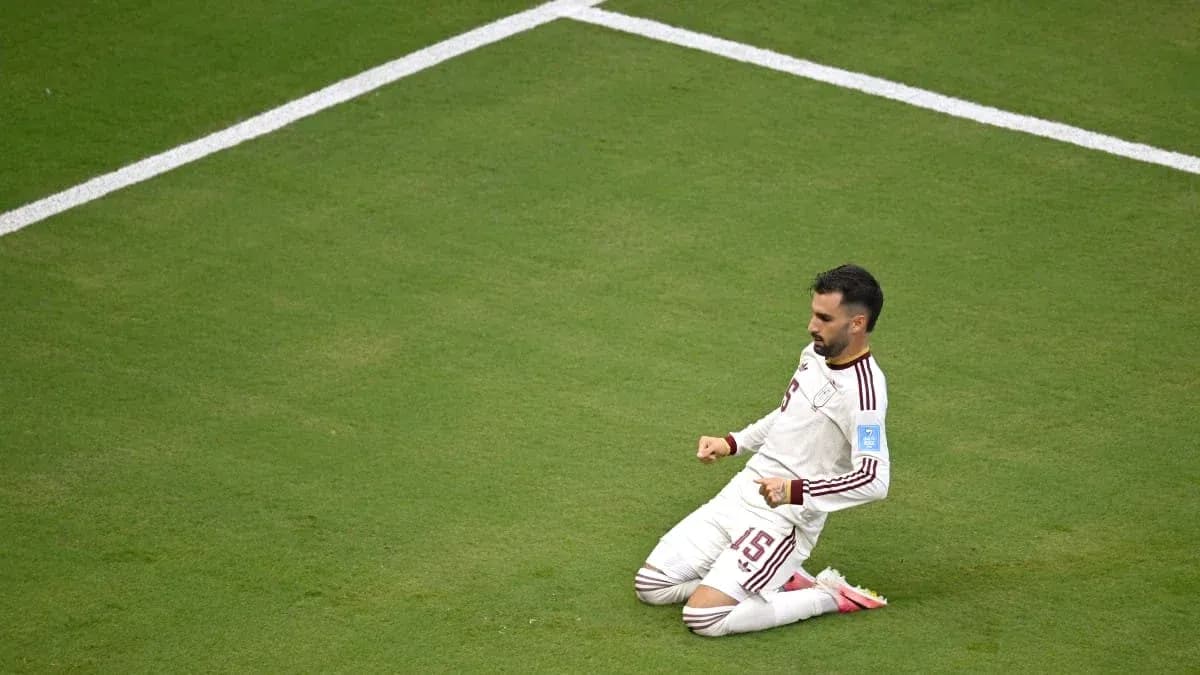
Hansi Flick did more than that. “[Barca sporting director] Deco and I, we spoke before the season about what we need. We need a player like him. I'm so happy to have him here in Barcelona,” he said back in September. Rashford answered with numbers and moments, not noise: 14 goals, 11 assists, and that outrageous free-kick in May’s Clasico, a strike that helped seal the Liga title and felt like a personal redemption arc drawn in one swing of his right foot.
No wonder he has spoken openly about wanting to stay at Camp Nou. No surprise that team-mates have pushed the club to make the deal permanent. His resurgence has kept alive the lifeline Thomas Tuchel threw him in March 2025, carrying him all the way to what will be his fifth major tournament with England.
And yet, for all that, he may have to watch this one begin from the bench.
The runner Tuchel cannot ignore
The numbers say Rashford is back. The system says Anthony Gordon starts.
What Gordon brings doesn’t sit neatly in a goals-and-assists column. It lives in the gaps between touches, in the constant hum of movement that modern international football feeds on. This is an era of structures, of rehearsed patterns and synchronised pressing, not just of gifted soloists. National teams, with limited time on the training pitch, lean heavily on players who obey the system and then push it to its limits.
Gordon is built for that world.
He runs. Then runs again. With and without the ball. He drags full-backs into the channels, offers for through-balls that never arrive, and still makes the same sprint the next time. His relentlessness stretches defences and creates space for others, even when his name doesn’t touch the scoresheet.
Off the ball, he turns into something nastier. A harrier. A nuisance. A winger who treats opposition build-up play as a personal insult. One sequence from the 2023-24 season captured it perfectly: Gordon mugged Trent Alexander-Arnold, surged past three Liverpool defenders, and finished with the composure of a No.9. It was the kind of goal that starts with desire and ends with technique.
The data backs up the eye test. Last season, he covered more ground per game than Rashford – 7.43 kilometres – and the advanced metrics only sharpen the picture. Statsbomb had him in the 96th percentile for defensive actions, 98th for pressures, 94th for counter-pressures in the Premier League. Those are elite pressing numbers, the kind coaches build game plans around.
Tuchel is one of those coaches.
Built around Kane, powered by Gordon
England under Tuchel revolve around Harry Kane. That much has not changed. What has shifted is how the captain is allowed to roam.
Kane now drops into deeper pockets with the manager’s blessing, turning into a creator as much as a finisher. Tuchel’s condition is simple: if his No.9 vacates the box, someone must attack it. Someone must sprint into the spaces Kane leaves behind, over and over again, without needing an invitation.
Gordon is that someone.
Although he has occasionally played as a central striker for Everton and Newcastle, and could yet do the same for Barcelona depending on how they replace Lewandowski, his football education is that of a traditional wide man. A touchline winger. The type who repeats the same diagonal run until the defence finally breaks. Or breaks down.
That profile fits England’s structure perfectly. With the ball, Gordon’s movement dovetails with Kane’s wandering. Without it, his work-rate lets the captain conserve energy in a tournament likely to be played in draining North American heat. The partnership is not just theoretical either. The pair have already logged 528 minutes together across 12 games for England, winning nine of them. One of those was a 5-0 demolition of Latvia, with both Kane and Gordon on the scoresheet.
This is why Phil Foden and Cole Palmer, dazzling though they are, are watching from home. They are superior technicians to Gordon, but they do not slot into Tuchel’s blueprint as cleanly. The German has chosen the system over the star turn, again.
Lessons from Southgate, and a different gamble
England know what it looks like when selection is driven by reputation, not function. The failures of Gareth Southgate’s side at Euro 2024 still hang in the air. He clung to certain names long after their performances stopped justifying automatic inclusion. Loyalty became a weight.
Tuchel operates at the other extreme. He has never been afraid to sideline big names if they do not serve the collective idea. Dropping Rashford for Gordon would be entirely in character: a statement that the shirt belongs to the player who best fits the plan, not the biggest profile.
That doesn’t mean Gordon is some joyless worker bee. He completed more take-ons per 90 minutes than any other Newcastle player last season. He can beat a man, he can light up a game. But it is the unglamorous parts – the pressing, the running lanes, the constant availability – that make him the better fit for this England side as constructed.
Rashford remains the more explosive, the more unpredictable. He can tilt a game with one moment of inspiration. Tuchel’s calculation is that England will go further if that chaos is introduced on his terms, not from the first whistle.
The bench weapon and the €80m answer
Tournament football is brutal on legs. With the temperatures England expect in North America, Tuchel will have to rotate aggressively or risk watching his starters wilt. That is where Rashford’s value spikes again.
With Foden, Palmer and others not in this squad, there are precious few genuine game-changers waiting in reserve. Rashford is one of them. If England need something different late on – a direct runner against a tired backline, a set-piece threat, a player who can score from nothing – he is the obvious card to play.
Flip the roles, and it is harder to imagine Gordon arriving cold from the bench and having the same instant impact in a game England are chasing. His gifts are at their sharpest when he can shape the rhythm from the start, not when he is thrown on for a 20-minute rescue job.
The club subplot only adds spice. Barcelona must still decide whether to trigger the option and make Rashford’s move permanent, potentially putting him in direct competition with Gordon for minutes at Camp Nou down the line. For now, though, Tuchel’s decision is more immediate, and far clearer.
England paid €80m for Anthony Gordon. They did not spend that kind of money on a luxury rotation piece.
He has to start.