Spain Edge Past Disjointed Uruguay in World Cup Clash
Uruguay arrived as a proud, battle-hardened World Cup force. They left the group stage as its highest‑ranked casualty, beaten, bruised and broken by internal strife and a soft Spanish goal that summed up their tournament.
Marcelo Bielsa’s side needed a statement. What they produced was a whimper.
A king in the stands, a damp squib on the pitch
Spain against Uruguay, two former world champions, under the eyes of King Felipe. On paper, a heavyweight occasion. In reality, it never came close.
The atmosphere in Guadalajara waited for a spark that never truly caught fire. Spain, already qualified and yet to concede, shuffled the ball with familiar control but little incision. Uruguay, carrying the weight of a week of damaging headlines about dressing-room revolt and tactical disputes, looked flat and unsure of themselves.
The backstory mattered. Draws with Cape Verde and Saudi Arabia had already left Uruguay on the brink and ripped open tensions within the camp. Senior figures, among them Real Madrid’s Federico Valverde, had reportedly clashed with Bielsa over his methods. By kick-off, this felt less like a contender’s campaign and more like a slow-motion collapse.
Muslera’s nightmare continues
If one player personified Uruguay’s World Cup unraveling, it was Fernando Muslera.
A hero of the 2010 run to the semi-finals, the 40-year-old came into the game already under scrutiny after errors in the 2-2 draw with Cape Verde. Here, his tournament went from worrying to disastrous.
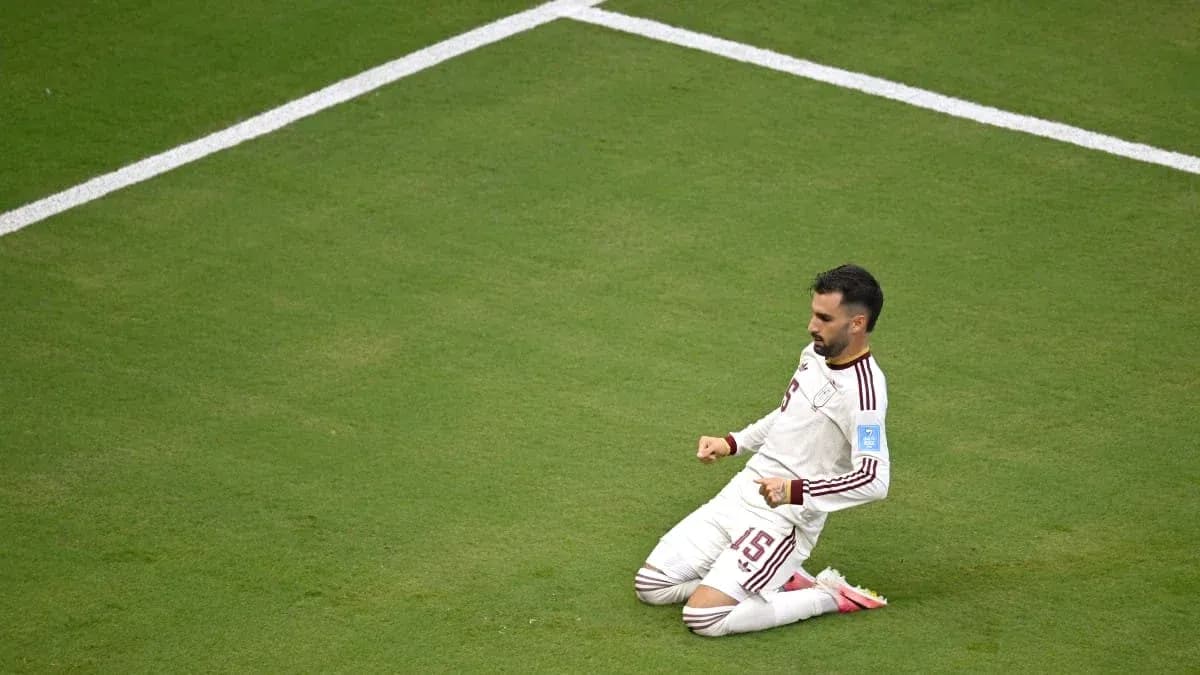
Spain had barely laid a glove on Uruguay when the breakthrough came on 42 minutes. Marcos Llorente swung in a cross from the right, Baena met it with a tame effort, and Muslera somehow allowed the shot to dribble over the line. A routine save turned into a calamity, the ball squirming past him as Spanish players almost looked surprised to celebrate.
The damage ran deeper than the scoreline. In the build-up to the goal, Manchester United midfielder Manuel Ugarte went down and stayed down. He left on a stretcher, clutching his knee, his face telling its own story. Uruguay lost their defensive anchor and then, seconds later, their composure.
It was the kind of one-two blow that can end a campaign.
Bielsa’s bold calls, no reward
Bielsa reacted at the break. Muslera was hooked, Sergio Rochet sent on in goal. The decision felt inevitable, but also symbolic. Uruguay were not just changing their goalkeeper; they were admitting that the old guard had failed them.
The Uruguay coach went further. On the hour mark, with his team chasing the game and their World Cup lives, he replaced Valverde. One of the leaders reported to have challenged his tactical approach, one of the few capable of driving the team forward, gone.
It was a brave call. It did not change the rhythm of the night.
Uruguay rarely threatened to drag themselves back into contention. The passing was laboured, the pressing disjointed, the belief visibly draining away. For a side built on defiance and edge, they looked strangely resigned.
Spain win, but questions linger
Spain’s own performance did little to silence doubts about their attacking edge.
Luis de la Fuente’s team came into the game on the back of a 4-0 dismantling of Saudi Arabia, sparked by the return of Lamine Yamal to the starting XI. That display had hinted at a more ruthless La Roja after a flat, goalless opener against Cape Verde.
Here, the spark flickered rather than roared.
Yamal showed flashes – a feint here, a dart there – but Spain’s movement in the final third lacked the sharpness of genuine contenders. The ball moved, Uruguay shuffled, and for long stretches nothing much happened.
De la Fuente turned to his bench, and at last the tempo lifted. Dani Olmo and Fabian Ruiz added urgency and angles, dragging Uruguay’s tiring midfield out of shape. Olmo, though, failed to capitalise when it mattered, spooning a shot over after a brilliant burst and cut-back from Yamal, a chance that should have killed the contest earlier.
Yamal’s minutes remain carefully managed after the hamstring injury that cut short his club season, and he made way with 15 minutes left. His replacement, Ferran Torres, had the game on his boot five minutes from time, racing clear with only the goalkeeper to beat. He lifted his shot beyond Rochet but saw it crash off the bar. A finish to match the move would have finally matched Spain’s control with a scoreline to underline it.
Instead, the margin stayed narrow, the doubts stayed alive.
A red card to sum up a collapse
Uruguay’s exit did not even get the dignity of a quiet ending.
Deep into stoppage time, Agustin Canobbio lunged wildly at Pau Cubarsi. The tackle was reckless, late and needless. The referee had no choice: straight red. One more black mark on a campaign that had already veered into farce.
As Canobbio trudged off, the picture was complete. A team tipped by many as dark horses had stumbled out of the group stage winless, their internal rifts laid bare, their discipline gone.
Spain, by contrast, march on with numbers that look immaculate. Thirty-four competitive games unbeaten. No goals conceded at this World Cup. A defensive record to rival anyone.
Yet the contrast with the free-flowing, ruthless attacks of France, Argentina and the Netherlands is hard to ignore. Where others slice teams open, Spain still often prod and probe without conviction.
They advance as serious contenders on paper. On the pitch, they still have to prove they can turn control into cutting edge when the stakes rise and the margin for error disappears.