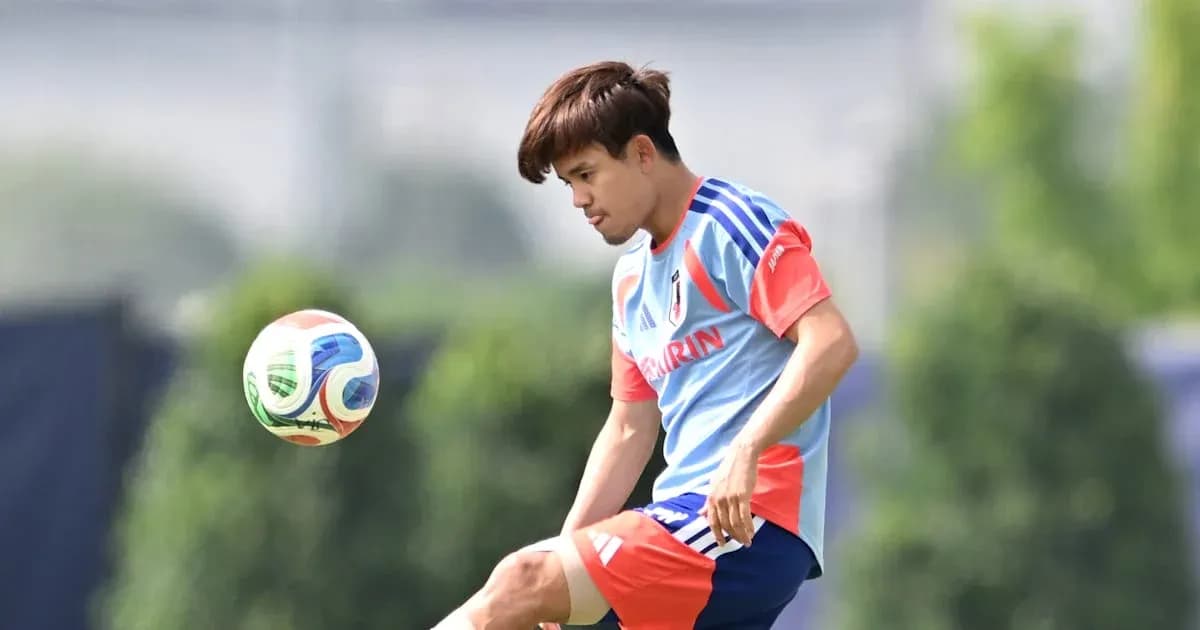
Kubo's Injury and Japan's World Cup Challenge Against Brazil
On the eve of the biggest night in Japanese football since… well, possibly ever, Kubo Takefusa offered just two words on the injury wrapped around his left knee like a question mark over a nation.
“I’m good.”
He said it with the easy confidence of a 25-year-old who has spent the last year dazzling La Liga defences for Real Sociedad. But the tape tells a different story. Since going down in Japan’s tournament-opening draw with the Netherlands, Kubo has barely touched a ball in anger. Rehab, running on his own, more rehab. No real football.
And now, no Brazil.
Japan coach Moriyasu Hajime ended the suspense on Sunday, the day before the round of 32 clash that will keep the country awake until well past midnight.
“Kubo will not play,” came the verdict, wrapped in the more diplomatic language of a pre-match press conference. Moriyasu spoke of a “speedy recovery” and praised his playmaker’s effort to regain conditioning, but the message was clear: the man with the magic left foot will watch this one like everyone else.
From the bench. From home. From somewhere other than the pitch.
A nation’s “what if?”
The absence cuts deep. Kubo isn’t just another name on the team sheet; he’s the one who can tilt a tight game with a feint, a pass, a shot that nobody else sees. With Mitoma Kaoru, captain Endo Wataru and Minamino Takumi already ruled out, he had started to emerge as a new kind of leader in this patched-together Japan — not the loudest voice, but the one everyone turned to when the ball needed a brave owner.
His influence had seeped through the camp. Training sessions bent around his touches. Game plans subtly leaned towards his orbit. Then came the injury, the strapping, the lonely running.
So does Kubo’s absence spell doom for a team that has not only talked openly about beating Brazil, but has gone a step further and declared they are here to win the World Cup?
Maybe. Maybe not.
Japan, more than most, have built their campaign on the idea that no single player defines them. Moriyasu has used 23 of his 26-man squad already, with only the two backup goalkeepers and one outfield player yet to taste action. The drop-off when he rotates is minimal. That’s not a slogan. It’s how they’ve survived the injuries that would have broken previous generations.
The “next man up” mantra that gets thrown around in dressing rooms all over the world? In this squad, it has teeth.
Fearless talk before a giant
Which brings the story back to Brazil — the old giant, the old fear, the old standard.
When the J.League kicked off 33 years ago, Brazil were the dream and the blueprint rolled into one. Brazilian stars lit up Japanese stadiums. Japanese kids copied Brazilian step-overs in schoolyards. The Selecao and Joga Bonito sat on posters and bedroom walls. Facing Brazil back then was an event, and usually a lesson.
Listen to the current group and you hear something very different.
Asked who he considered the strongest teams at this World Cup, Wolfsburg striker Shiogai Kento didn’t hesitate. He named France. He named Argentina. He did not name Brazil.
“You don’t really hear about Brazil lately,” he said, as if talking about a once-great band that hasn’t topped the charts in a while.
Neymar? The same Neymar who has scored nine goals in five previous games against Japan?
“That’s Neymar of the old,” Shiogai replied. “I think we’re OK right now.”
In another era, comments like that would have been unthinkable from a Japanese international. Too bold. Too disrespectful to the yellow shirt that once towered over Japanese football’s imagination.
Now they sound like something else: belief.
Life without Kubo
None of this erases what Japan lose without Kubo. His left foot brings a flair and unpredictability that no one else in the squad quite matches. He drifts between the lines, draws defenders, makes space where there isn’t any. Against a team like Brazil, that kind of invention can be the difference between clinging on and landing a punch.
But Japan’s identity at this World Cup has not been built around one creator. It has been forged in the collective, in the willingness of the 15th man to perform like the 5th, of the 23rd to step in as if he had been starting all along.
Moriyasu has trusted his depth. The players have responded by erasing the usual hierarchy between star and squad player. That is why, even with Kubo in the stands and three other key figures already lost to injury, no one in the Japanese camp is talking about damage limitation.
They talk about opportunity. They talk about a Brazil side that no longer sits on a pedestal. They talk about a World Cup not just to be enjoyed, but to be taken.
The country will stay up until 1am to watch, hearts split between hope and that quiet, nagging thought: what if Kubo were out there?
What if that heavily strapped left knee were free, if the ball dropped to him 25 yards out with the game in the balance?
Japan will have to live without that fantasy. They will walk into Brazil without their most gifted playmaker, but with something previous generations never truly had against this opponent: the conviction that the name on the other shirt no longer decides the story.
Whether the result finally changes, we’re about to find out.