Kasper Schmeichel Retires: A Warrior Keeper's Journey
Kasper Schmeichel has never been one to step away from a fight. For years he hurled himself at boots, bodies and impossible angles, a goalkeeper who seemed to thrive on chaos. In the end, it was a damaged shoulder – not a striker’s finish or a manager’s decision – that finally told him his time was up.
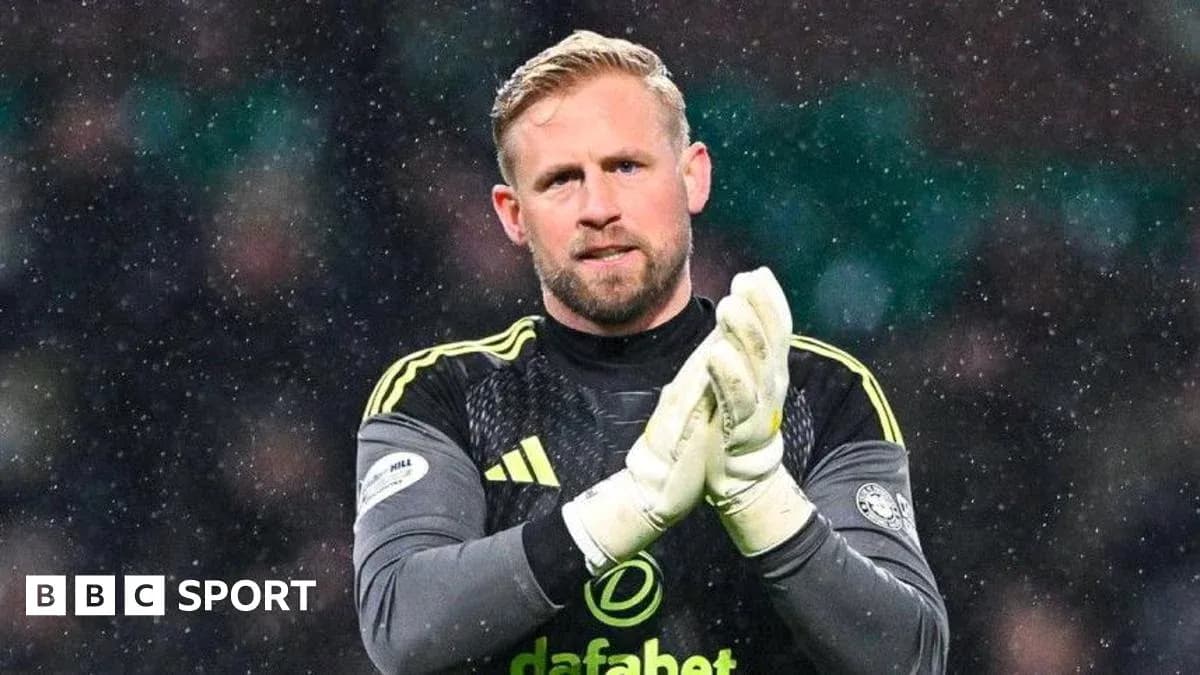
At 39, the Celtic and Denmark goalkeeper has retired, unable to recover sufficiently from a serious shoulder injury that has kept him out since February.
Out of contract at Celtic this summer and facing a brutal rehabilitation schedule, Schmeichel sought every opinion he could. Surgeons and specialists delivered the verdict he least wanted to hear: top-flight football was no longer a realistic destination.
“I believe that now is the right time,” he told TV2, a line that sounded less like a choice and more like acceptance. He admitted the decision had effectively been taken out of his hands. “This is a decision that has been made for me.”
A shoulder that wouldn’t heal
The damage traces back to March 2025, to a Nations League quarter-final defeat against Portugal. Denmark had used all their substitutes when Schmeichel suffered the injury. He stayed on. Of course he did. Playing through pain was part of his identity.
He later conceded he had no idea how serious it was at the time. Only when he landed awkwardly again in February, during Celtic duty, did the full scale of the problem become clear.
“I didn't realise how bad it was back in March. It's been a long process. When I landed on it in February, I could tell straight away that something was seriously wrong,” he said.
The shoulder was then aggravated in Celtic’s Europa League defeat to Stuttgart, 11 months after that original blow against Portugal. From there, the spiral accelerated. Consultations. Scans. Second and third opinions. All pointing in the same direction.
“I have consulted with various surgeons and experts regarding my shoulder, and they have told me that I should not expect to return to playing top-flight football.”
He had been ready to commit to up to a year of rehab if there was a route back. In the end, there wasn’t one.
A career built on defiance
Schmeichel walks away with a body of work that stands on its own, far beyond the shadow of his father, Peter, the Manchester United great whose name followed him everywhere.
He began at Manchester City, carving his own path the hard way, through loans and lower-league graft, before Leicester City became his stage. Over 10 seasons there, he turned into one of the defining figures of the club’s modern history.
The 2015-16 Premier League title remains the miracle that will always be attached to his name. Schmeichel was the voice, the organiser, the last line of resistance in a season that defied every logic the sport supposedly obeys. The FA Cup win in 2021 added another layer, proof Leicester’s rise wasn’t just a one-off storybook run.
After Leicester, he took his gloves to Nice, then Anderlecht, before landing in Glasgow with Celtic. Even in the twilight of his career, he refused to coast. This season alone he featured 39 times, anchoring a title-winning campaign and collecting a second Premiership winners’ medal from his two years in Scotland.
On the international stage, the numbers are equally weighty. Schmeichel bows out with 120 caps for Denmark, a pillar of his national side across more than a decade. He played at the World Cup in 2018 and 2022, and stood in goal during Denmark’s stirring run to the semi-finals of Euro 2020, a tournament seared into the country’s memory.
The goodbye he never got
If any player earned the right to choose his own farewell, it was Schmeichel. Football rarely grants such luxury.
“I think everyone dreams of saying goodbye on the field, but you don't always get what you want,” he said. There was no final walk around a packed stadium, no choreographed substitution to a standing ovation. Just the quiet conclusion of medical advice and a shoulder that would not cooperate.
Yet there was no bitterness in his words, only perspective.
“I've had so much else along the way, so football doesn't owe me anything. I've had so many opportunities, so many experiences.”
What he will carry most, he says, are not the medals or the caps, but the people.
“What stands out most are the friendships and connections I've made. The moments I've shared with them – for better or worse.”
A career that began in the shadow of a giant ends on its own terms, if not quite in the way he imagined. Schmeichel leaves as a Premier League champion, a title-winning captain, a 120-cap international and a goalkeeper whose resilience defined him as much as any save.
The gloves are off now. The question is not what he has left to prove – that list is empty – but where a figure of such presence chooses to leave his mark next.