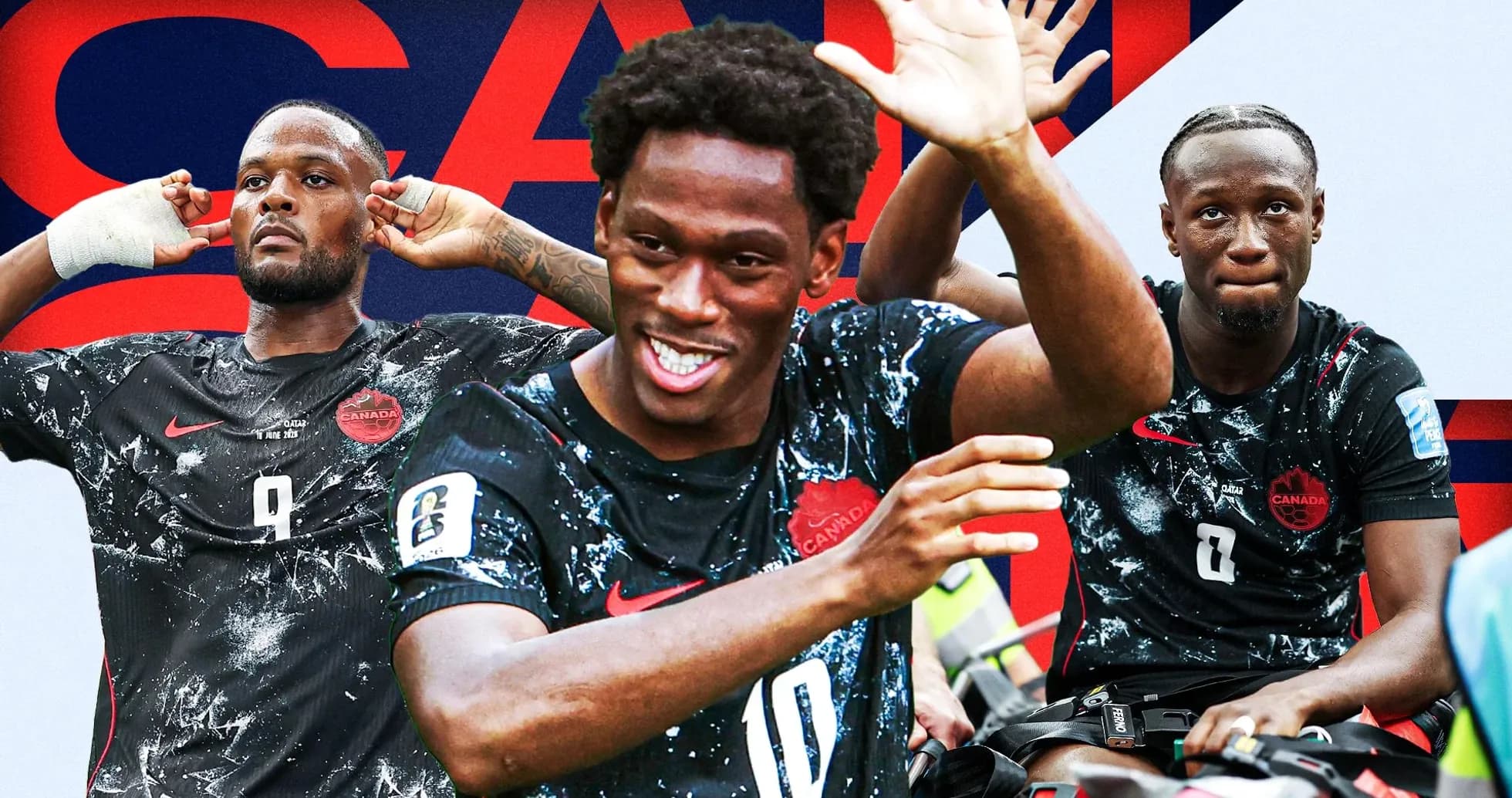
Jonathan David's Hat-Trick Sparks Canada’s World Cup Victory
Jonathan David walked into this World Cup week with questions swirling around him and walked out of Thursday night with the loudest answer of his career.
Pulled before the hour in the opening draw against Bosnia and Herzegovina, dissected for a flat display, the Juventus striker spent days being talked about. He chose to talk back the only way he ever really has: with goals.
Against Qatar, he tore into the game from the first whistle. His pressing set the tone, his runs unsettled defenders who suddenly looked short of ideas and even shorter of composure. Every loose ball in their third seemed to find him first. The noise around him didn’t just quieten. It vanished.
David detonates, Larin feeds off the chaos
The breakthrough came early. In the 16th minute, David uncorked a vicious right-footed volley that the goalkeeper could only spill. Cyle Larin, already off the mark in this tournament, reacted first and rammed in his second goal of the World Cup. One-nil to Canada, but the real story was the man creating the chaos.
The pressure didn’t relent. Qatar’s back line, so dogged in their opening draw with Switzerland, suddenly looked trapped in a match being played at a different speed. Canada sensed it and went again down the right.
A few minutes later, a slick triangular move sliced Qatar open. Tajon Buchanan, Alistair Johnston, David: touch, pass, movement. The ball came back to David on the edge of the box. One touch to set, one to guide it unerringly into the corner. His first World Cup goal. The release was almost visible on his face.
The pattern repeated after the break. Larin took on the initial shot this time, David again alive to the rebound, crashing it home. The Juventus forward was now everywhere: dropping off to combine, spinning in behind, hunting for mistakes that kept coming.
And he wasn’t done.
In the dying moments, with Qatar already beaten and the scoreline bruising, David burst through again and buried Canada’s sixth. Hat-trick complete. History made. No Canadian had ever scored three in a World Cup match before. He did it on a night that had started with doubts about whether he could deliver on this stage at all.
“It was amazing. After every goal, it got louder and louder,” David said of the crowd. “It gave us motivation to get the next goal and the next goal.”
Canada’s all-time leading scorer now sits on 42 goals, but this performance felt different. This was the night he finally imposed himself on the biggest tournament of all, the night millions back home had been waiting for.
Head coach Jesse Marsch never pretended to share the outside anxiety.
“That’s a player, that's a striker, that's a goal scorer. I never had any doubts in Jonny, and the one thing I said is, for us to really be successful as a team, we need Jonny driving what we do in the attacking part of the pitch,” Marsch said. “He set up the first goal with the shot, then he obviously scored the hat trick, but I thought he was fantastic in general.”
A brutal cost: Koné’s injury changes everything
The scoreline was emphatic. The mood in the dressing room was not.
Canada lost their most important midfielder in the middle of this statement win. Ismaël Koné, the elegant fulcrum of their transitions, went down in a moment that silenced the stadium far more than any Qatari attack ever managed.
Koné’s ability to glide through pressure, slip passes between lines, and carry the ball with total assurance had underpinned much of Canada’s success in the middle of the pitch. When he crumpled, so did a big part of the team’s tactical identity.
There has been no official medical bulletin, but the outlook is grim. The expectation is that Canada will have to go on without him for the rest of the tournament and potentially well beyond it. They simply do not have another midfielder with his blend of vision, line-breaking passing, and fearless composure on the ball.
“You could hear the bone snap,” Marsch said, explaining that Koné had gone to hospital for surgery. “Your heart goes out to him. Everybody’s shaken for him.”
This group has lived with injuries for months. The “next man up” mantra is no marketing slogan; it has been survival. Alphonso Davies is on his way back, a huge boost. And there were flashes of hope in the response: Saliba came on for Koné and promptly scored from a free kick, a reminder that there are still weapons in this squad.
But none of them are Koné.
“For us to be at our best, he's a big part of it. But, look, it's given us now something else to play for," said fullback Alistair Johnston. “That's what this team is all about, it really is a brotherhood. So it's really difficult to see one of your brothers go down. But, look, if we needed any extra motivation for this tournament, we got it now.”
Johnston walks the tightrope, then takes over
Johnston himself spent the night on a knife edge. One more yellow card and he would have missed the Group B finale against Switzerland. Lesser players shrink in that situation. He went the other way.
The Celtic defender played with controlled fury down the right, stepping into midfield, overloading the flank, and constantly linking with Buchanan, Koné, and David. He was not hiding from duels or drifting into safe zones. He was in the thick of it.
He finished with the assist on Canada’s second goal, four accurate crosses, and six big chances created – a staggering output for a fullback in a World Cup match. Crucially, he did it all without picking up that dreaded caution. He will be available when the group’s top spot is on the line.
“We knew that the idea was kind of to build up against the Akram Afif. He's a maverick; you could see some of the quality he had on the ball. Defensively, though, the idea was to play against him, make him defend, because we didn't think he was going to,” Johnston explained of the right-sided plan. “We're trying to find that balance of me being in the defensive three in a build-up, but then also give me the license, as I have with my club, to really join in and help Tajon.”
When Koné went down, Johnston’s role shifted again. One of the loudest voices in the dressing room, he moved quickly to console rattled teammates, his eyes flicking anxiously back to the stricken midfielder. It was a small window into his importance beyond chalkboards and heat maps.
Qatar unravel as Canada rise
On the other side, Qatar endured a night that cut deeper than the scoreline.
They had scrapped to a draw with Switzerland, snatching a late equaliser that looked like a platform. Against Canada, that resolve evaporated. This was a step up in intensity and quality, and they never truly caught up.
Julen Lopetegui, a coach with a résumé built at some of the game’s grandest addresses, could not steady his team. Canada’s tempo, their aggression, and their clarity of plan down the flanks rattled Qatar into errors they had largely avoided so far in this World Cup.
By the time David completed his hat-trick, Qatar looked like a side not just losing a game, but losing their grip on the tournament. They are now almost certain to exit Group B and will have to play their final match without two starters. If this is the level they bring to future qualifying campaigns, a return to this stage may be a long way off.
Doubters silenced, stakes raised
This Canadian campaign has been shadowed by debates about its forwards. Before Bosnia, the spotlight fell on Larin, his starting place questioned so sharply that Marsch dropped him for Tani Oluwaseyi. Larin responded with goals in back-to-back matches.
As soon as he did, the noise shifted to David. Was he really the man to carry this attack in the tightest of games? Could he translate club form to the World Cup? Those questions look badly dated now.
With this demolition of Qatar, Canada did more than keep their tournament alive. They showed they can impose themselves on the World Cup stage, not just hang around and hope. They did it without Davies, too, buying their captain and superstar another week to sharpen up before a showdown with Switzerland that will decide the top of the group.
The task now is stark. They must rebuild the midfield without Koné, rewire a structure that had quietly grown around his gifts, and do it in the pressure cooker of a group decider and a looming knockout phase.
They have their goal scorer back in full voice. They have a dressing room that talks openly about brotherhood and plays like it. The question is no longer whether Canada belong here.
It’s whether they can carry Ismaël Koné’s absence with them and still push this story into the tournament’s biggest nights.