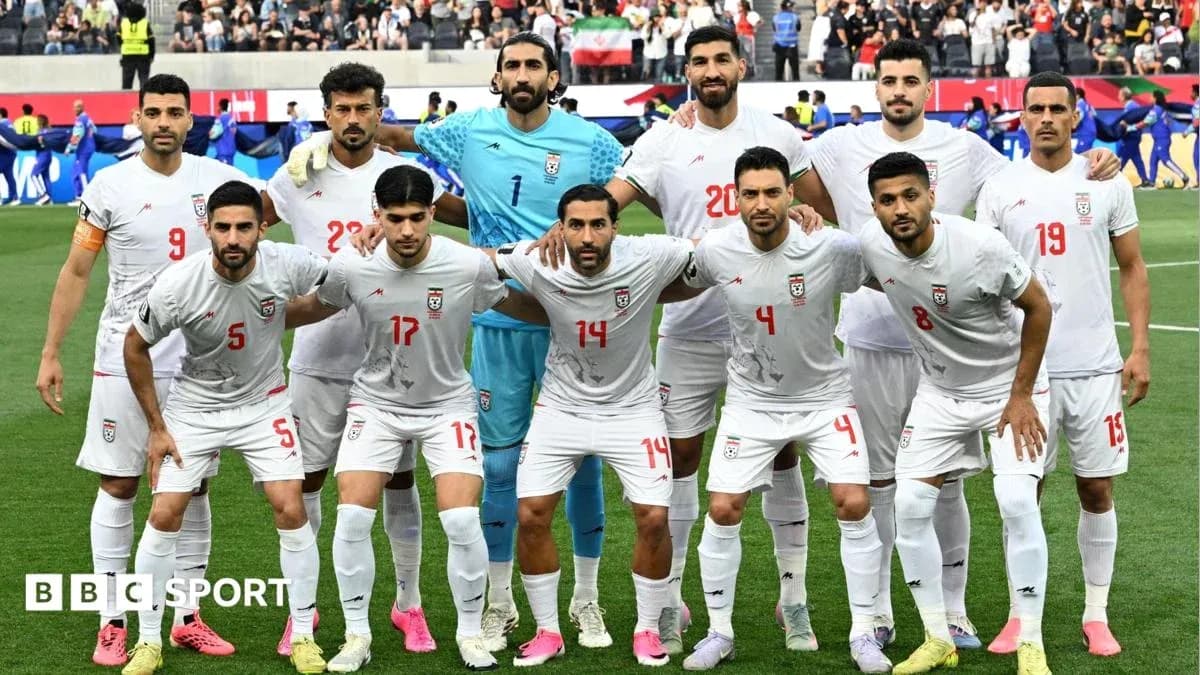
Iran Files Fifa Complaint Over US World Cup Travel Rules
Iran’s World Cup campaign is being fought on two fronts: on the pitch, and at the border.
The country’s football federation has confirmed it will lodge an official complaint with Fifa over stringent US visa conditions that severely limit the team’s time on American soil during the 2026 tournament.
Under the current rules, Iran are only permitted to enter the United States – co-hosts alongside Canada and Mexico – the day before each match and must leave the country on the same day the game is played. There is no allowance for an extra day’s acclimatisation or recovery.
The impact has already been felt. After a 2-2 draw with New Zealand in Los Angeles in their opening group match, head coach Amir Ghalenoei described Iran as the “most oppressed” team at the tournament, a pointed phrase that captured the frustration around the camp.
In a strongly worded statement, the Football Federation of the Islamic Republic of Iran (FFIRI) said the restrictions are “inconsistent with the principle of providing equal conditions for all participating teams and may negatively affect teams’ preparation processes”. The federation added it “will formally express its dissatisfaction and lodge an official complaint with Fifa through the appropriate channels”.
This is not a minor logistical gripe. Iran argue that the conditions cut directly into the core of elite tournament preparation: training rhythm, recovery windows, and adaptation to local conditions.
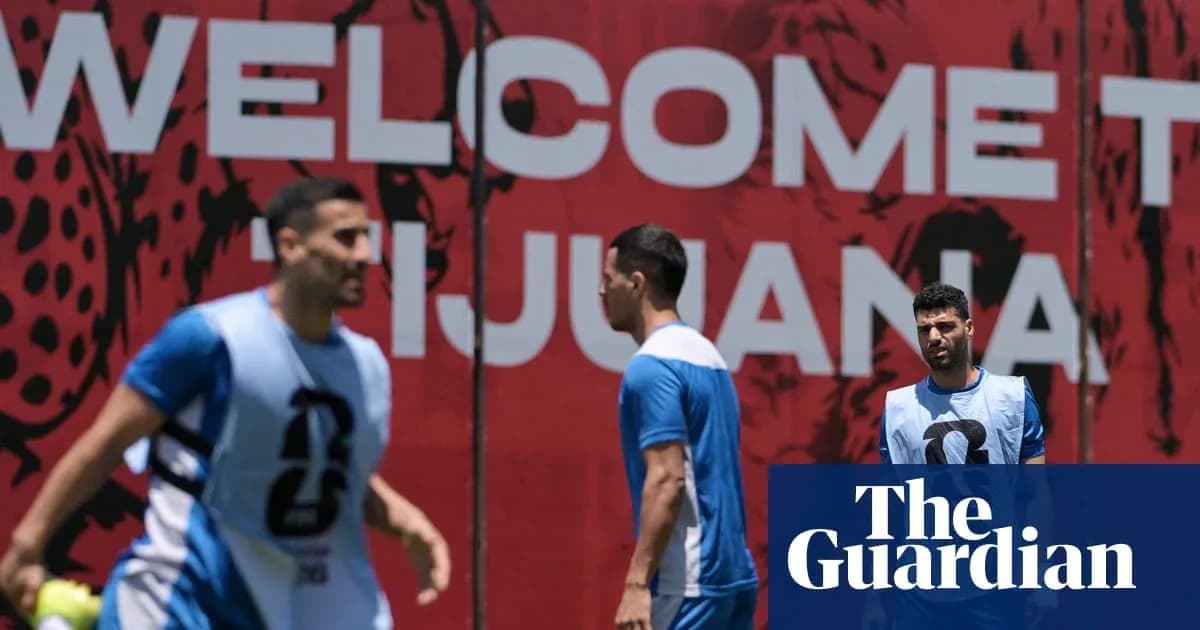
The backdrop is even more charged. Iran’s participation at this World Cup has been shadowed by uncertainty linked to the war in the Middle East and associated security concerns. Their original base camp was set for Arizona in the US, but the team switched to Tijuana in Mexico as tensions escalated.
Inside the stadium, the politics followed them. After the draw with New Zealand in Los Angeles, Fifa president Gianni Infantino went into the Iran dressing room, a rare and telling visit at a moment when pressure around the team is rising.
Outside it, the problems are stacking up. Multiple “integral” members of Iran’s backroom staff were denied US entry visas, stripping Ghalenoei of key personnel at a World Cup. On top of that, FFIRI say their ticket allocation was revoked on the eve of the tournament, prompting a public appeal for Fifa to “uphold the principles of neutrality, fairness, and established regulations”.
The United States government insists Iran knew what it was signing up for. “The Iranian national football team agreed to these terms,” a Department of Homeland Security spokesperson told the BBC when asked about Ghalenoei’s comments.
Andrew Giuliani, executive director of the White House Fifa Task Force, spelled out the arrangement to CBS News: “The team will be allowed to come in, match day minus one, so the day before the match. They’ll be asked to leave the day that the match wraps up, so the evening of the match. And they’ll be able to do that again in Los Angeles.”
For Iran, that is nowhere near enough.
The FFIRI say they “needed to arrive in each host city two days before every match and return to its base camp the day after the game in order to achieve optimal technical and physical preparation”. That request was rejected for the New Zealand match. The federation now says “the same situation has now been repeated” ahead of their second group game, against Belgium in Los Angeles on 21 June (20:00 BST).
This time, the kick-off time sharpens the complaint. “Given that the game will be played at 12:00pm local time in Los Angeles, the Football Federation of Iran requested that the team be allowed to travel to Los Angeles two days before the match,” the statement continued. The goal was clear: extra time to adapt to conditions, complete a final training session in the host city, and fine-tune preparations.
“Despite the technical reasons presented by the federation, the request was once again denied.”
So Iran will again fly in late, play early, and leave quickly. Then do it all over again. Their final group match, against Egypt in Seattle on 27 June (04:00 BST), is also on US soil, under the same travel constraints.
All this unfolds against a fragile diplomatic thaw. The presidents of the US and Iran have signed an initial peace deal aimed at ending the war in the Middle East, yet the World Cup has become an arena where that fragile détente is tested in real time.
On paper, this is a football story about visas, flight schedules and training plans. In reality, it is a collision of geopolitics and sport, played out over 90 minutes and a single stamped passport.
Iran now wait to see how Fifa responds – and whether the world governing body will treat this as a mere logistical dispute or a question of competitive integrity at its flagship tournament.