Houston Dynamo FC II Dominates Portland Timbers II in 3-0 Victory
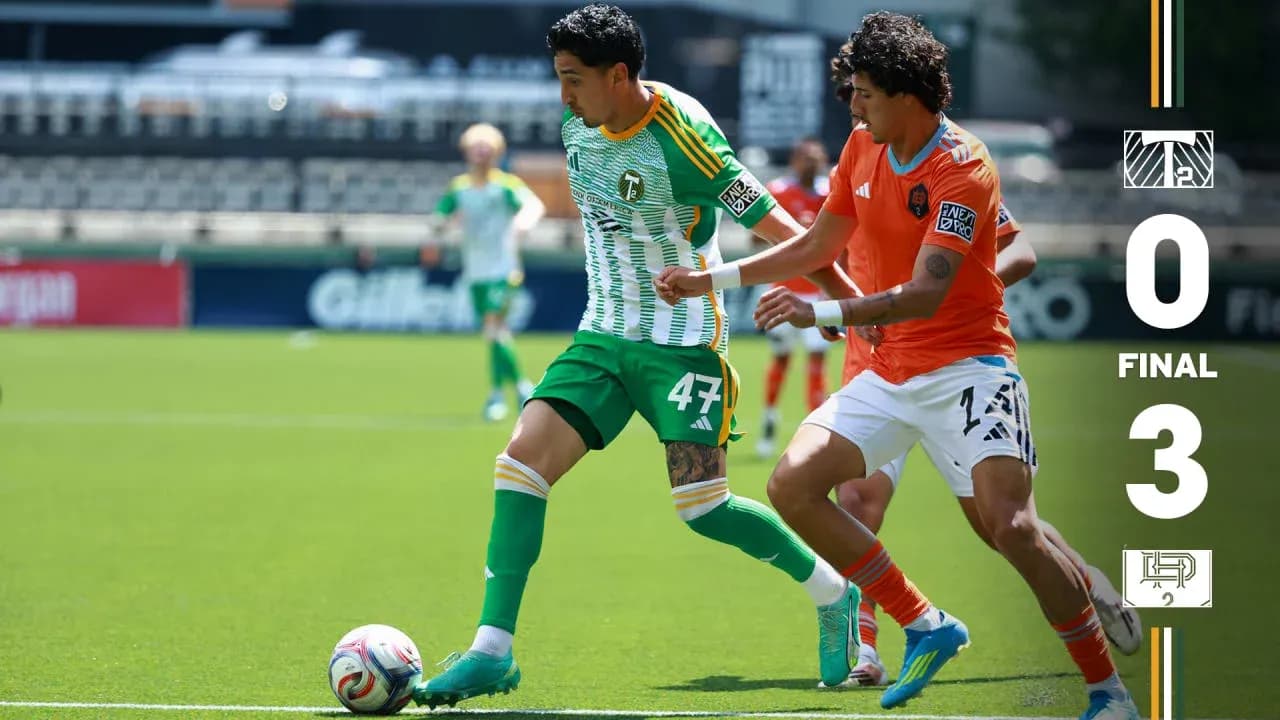
Providence Park under the late-May lights staged a meeting between two very different MLS Next Pro identities. Portland Timbers II, second in the Pacific Division and fifth in the Eastern Conference group with 20 points from 11 matches, came in as a volatile, punchy side: six wins, five defeats, no draws, and a goal difference of -1 overall (15 scored, 16 conceded in the standings block; 15 for and 18 against in the detailed stats snapshot, reinforcing the same story of fragility). Across from them stood the league’s juggernaut. Houston Dynamo FC II arrived top of the Frontier Division and top of the Eastern Conference group with 31 points from 11 matches, 11 wins from 11, and a towering overall goal difference of +23 (28 for, 5 against in the standings; 30 for and 5 against in the detailed stats). The final scoreline – a 3–0 away win for Houston, after leading 1–0 at half-time – felt like the purest expression of those season-long trends.
Heading into this game, Portland’s seasonal DNA was one of risk and volatility. At home they had played 7, winning 3 and losing 4, scoring 10 and conceding 13. That gave them an attacking return of 1.4 goals for at home on average, but with 1.9 goals against at Providence Park – a side that opens the game up and lives with the consequences. On their travels, they were more balanced (5 scored, 5 conceded, 1.3 for and 1.3 against on average), but at home the emotional energy of the crowd often seemed to push them into chaos.
Houston, by contrast, brought a ruthless, almost machine-like profile. Overall they had 30 goals for and just 5 against, averaging 2.7 goals scored per match and only 0.5 conceded. At home they were suffocating (13 scored, 0 conceded), but even away they were dominant: 17 goals on their travels, only 5 conceded, for a 2.4 goals-for and 0.7 goals-against away average. Seven away matches, seven wins. The trip to Portland was never going to scare them; it was another test of whether their structure and efficiency could impose itself on a wild, high-variance opponent.
Jack Cassidy’s Timbers II XI had a youthful, experimental feel. S. Joseph, S. Jura, A. Bamford and N. Lund formed the backbone in front of goal, with C. Ondo and E. Izoita offering legs and aggression. V. Enriquez, L. Fernandez-Kim and N. Santos were tasked with knitting transitions into something coherent, while G. Guerra provided a reference point up front. The presence of Colin Griffith, both in the starting lineup and as the club’s statistical leader across multiple league categories, underlined his symbolic status: a forward still searching for his first league goal but clearly central to the project.
On the bench, Cassidy had a mix of like-for-like options and energy shifters – M. Deisenhofer, C. Ferguson, C. Cruthers, D. Cervantes, B. Barjolo, D. Nunez, B. VanVoorhis, M. Kissel and H. Mueller – but the core question was whether the starting group could live with Houston’s relentless tempo long enough for those substitutes to matter.
Houston’s XI, even without a listed coach name, read like a fully formed unit. Pedro Cruz in goal fronted a back line anchored by N. Betancourt, I. Mwakutuya, V. Silva and R. Miller, a group whose season-long record – only 5 goals conceded in 11 matches – spoke of superb spacing and anticipation. In midfield, Gustavo Dohmann, M. Arana and M. Dimareli offered control, with S. Mohammad, J. Bell and A. Brummett providing the attacking thrust. On the bench, the likes of Arthur Sousa, D. Gonzalez, D. Herrera, D. Garcia, M. Gardner, G. Wolff, R. Vedishchev, Alan and E. Hata meant Houston could change the rhythm and profile of the front line without sacrificing intensity.
From a disciplinary and emotional-control perspective, the contrast was just as sharp. Heading into this game, Portland’s yellow-card distribution showed a side that heated up as matches wore on. Only 11.11% of their cautions came in the opening 15 minutes, but there was a pronounced spike between 61–75 minutes (29.63%) and a further late-game surge between 76–90 minutes (22.22%). This is a team that, when the game stretches and fatigue bites, starts to foul more often and take more risks. Houston’s pattern was steadier but still trended late: 7.14% of their yellows in the opening quarter-hour, rising to 17.86% between 61–75 minutes and peaking at 21.43% in the 76–90 window. Both sides, then, tend to become more combustible in the final half-hour, a detail that dovetailed ominously with Houston’s habit of killing games late and Portland’s tendency to chase them.
In the “Hunter vs Shield” matchup, the story was brutally one-sided. Houston’s attack, averaging 2.4 goals on their travels, was set against a Portland home defence conceding 1.9 per match. Portland’s biggest home defeat of the season – a 0–3 scoreline – was already on their record heading into this fixture, and Houston’s best away win was a 4–1. The parameters of possible damage were clear: if Houston scored early, they had the tools to turn a narrow lead into a statement victory. Portland’s own attack at home, averaging 1.4 goals, faced an away defence that had conceded only 5 times in 7 matches. For Timbers II to take anything, they needed to punch above their attacking weight and deliver an almost flawless defensive display.
The “Engine Room” duel centred on how Portland’s ball-carriers and connectors – Enriquez, Fernandez-Kim, Santos and Guerra – could navigate Houston’s midfield block of Dohmann, Arana and Dimareli. Houston’s season-long numbers suggested that this trio, supported by an aggressive back line, excelled at compressing space between the lines, forcing opponents into hurried passes and low-quality shots. Portland’s own season offered few signs of sustained control; their form line (WWLLWLWLWWL) was a patchwork of surges and collapses rather than a narrative of dominance.
Following this result, the 3–0 score felt less like an upset and more like the statistical expectation made flesh. Houston’s attacking volume and efficiency translated into three unanswered goals, perfectly in line with their away average of 2.4 goals scored and Portland’s home concession rate of 1.9. Portland’s failure to score echoed another seasonal theme: they had already failed to find the net in 2 home matches and 3 overall. Houston, who had not failed to score in any league game, again found a way through.
From an Expected Goals perspective, even without raw xG numbers, the profiles are clear. Houston’s 30 goals from 11 matches suggest a side consistently generating high-quality chances and possibly even outperforming a strong xG baseline. Portland’s 15 goals in the same span, coupled with their defensive leakage, point to a team whose xG balance is likely negative, especially at home. When you overlay Houston’s structural solidity, depth and discipline onto Portland’s volatility and late-game card spikes, the 3–0 away win looks like the logical convergence point of all available data.
The tactical lesson for Portland is stark. Against the league’s most complete unit, they needed controlled aggression, compactness and a willingness to suffer without the ball. Instead, the match unfolded along the season’s familiar grooves: Houston’s machine humming, Portland’s chaos punished.