Harry Kane's World Cup Journey: Triumphs and Missed Opportunities
For an hour in New Jersey, England went toe-to-toe with the world champions and did not blink. Thomas Tuchel’s team did not dominate Argentina, but they did not bow to them either. The game felt level, edgy, alive. When Anthony Gordon crashed in the opener on 55 minutes, it did not feel like a robbery. It felt like the first clean punch in a heavyweight bout.
Everyone inside the stadium knew another was coming. From someone. From somewhere. England looked built to trade.
They never did.
Once ahead, England shrank. The line dropped, the passes grew timid, and the fear seeped in. Argentina, by contrast, smelled opportunity. Lionel Scaloni spoke of “blood in the water”. Tuchel’s England responded by tossing in more.
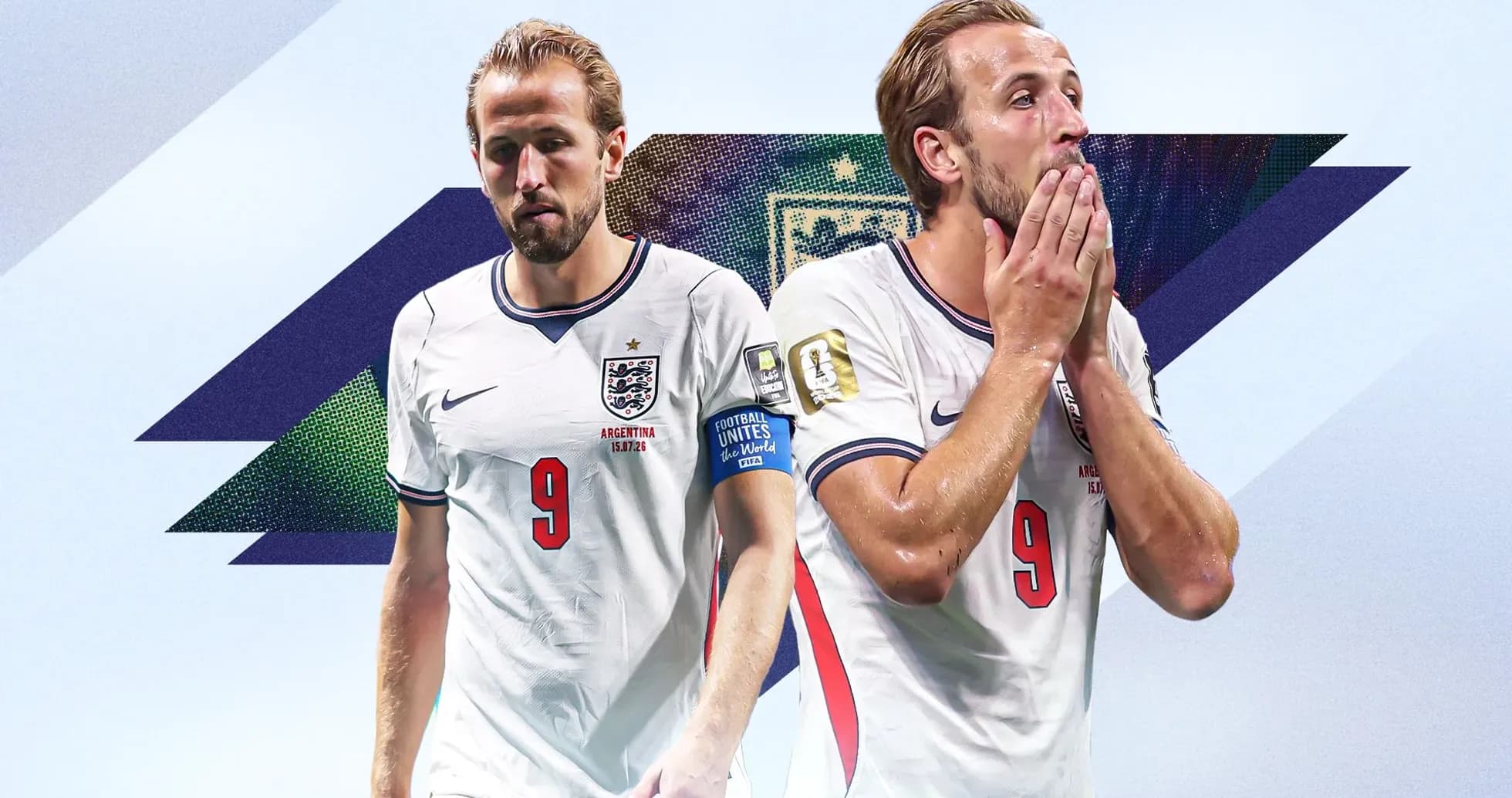
And in the middle of it all, Harry Kane drifted through the chaos like a man trapped between roles.
His numbers are brutal: 26 touches, nine completed passes, a single blocked shot, not one touch inside Argentina’s box. On paper, it reads like a ghost performance. It wasn’t quite that. This was a messy, attritional semi-final, and Kane was up for the mess.
In the first half he fought. He chased lost causes, clattered into duels, and threw himself into challenges with a recklessness that would have horrified Bayern Munich’s medical staff. He attempted more duels than Lisandro Martínez and Alexis Mac Allister. For 45 minutes, when there was barely any football to be played, that edge had value.
Then the game changed. England scored. Argentina had to chase. England had to decide what they wanted to be.
They chose to cling on.
Tuchel’s dilemma after Gordon’s goal was real. England had survived a siege at the Azteca days earlier, pulling off a heroic defensive stand to edge Mexico. Kane had slogged through 89 minutes that night, scrapping, pressing, fouling, doing the ugly work a star striker rarely gets credit for. His manager trusted that version of him again.
Kane still wanted more. “For one reason or another, we struggled to be on the ball, we struggle to put pressure on the ball and it allowed them to create more momentum and created more attacks for them in our final third,” he said afterwards.
The irony is that he was part of that problem.
England needed an escape route. A forward who would pin one of Argentina’s heavy-legged centre-backs, hold the ball, win fouls, buy time. Kane is almost the complete centre-forward. Almost. He does not have the pace to spin in behind and force defenders back. So he did what he always does when the game starts to run away: he dropped deep, tried to help, tried to stem the tide.
He couldn’t. The waves kept coming, breaking just in front of him, then crashing into England’s penalty area.
This was no longer his game. Tuchel should have taken him off, gone for legs and chaos and space. Instead Kane stayed, watching the collapse unfold from a vantage point that grew further and further from the penalty box where he has built his career.
Set against his club season, the ending feels harsh, almost cruel. Kane has just completed a campaign for Bayern Munich that would normally define a Ballon d’Or year. He scored 58 goals in all competitions, a single-season record for a Bundesliga player. No one in Europe’s top five leagues matched his 36 league goals. He became the fastest Bayern player to reach 100 goal contributions. Bayern won the league by 16 points, easing off the throttle in the final weeks.
These are numbers Robert Lewandowski never hit in Munich. They dragged Kane into the conversation with Lionel Messi and Cristiano Ronaldo at their most relentless. On statistics alone, there was a solid case for him to become the first English Ballon d’Or winner since Michael Owen.
But Bayern’s failures in the biggest moments dulled the shine. They went punch-for-punch with eventual Champions League winners PSG, but could not overturn the deficit in the second leg and slipped out 6-5 on aggregate in the semi-finals.
The World Cup was supposed to wipe that slate clean. Kane admitted it himself: a dominant tournament would shove him back to the front of the Ballon d’Or queue.
“I’d be one of the favorites, definitely,” he said before a ball was kicked. “Given the trophies I’ve won this season and the number of goals I’ve scored, I’d be in the running. Especially as, should England win the World Cup, one could imagine the trophy going to an English player.”
For five games, he played like a man chasing history. Two goals against Croatia, one against Panama, two more against Congo, plus an assist at the Azteca. He and Jude Bellingham drove England forward; everyone else simply had to keep pace.
The Golden Boot was within reach. Heading into the semi-final, Kane trailed Messi and Kylian Mbappé by two. If England were going to reach the final, logic said he would have to be at the heart of it. He looked perfectly placed to strike.
He didn’t. And in that silence, the Golden Boot almost certainly slipped away. Even if he were to score a hat-trick against France in a third-place play-off he should probably sit out, it would be a brave soul who bets against Messi finding the net against Spain in the final.
Kane will fly back to Germany without a Golden Boot, without a World Cup, and without the individual crown his season at Bayern deserved. The window has closed, at least for now.
The bleak question is whether it has closed for good.
His move to Bavaria felt like a rebirth. In hindsight, he stayed at Tottenham too long. He was magnificent there, year after year one of the Premier League’s finest, but forever surrounded by flaws he could not fix and budgets he could not control. Only now, as he thrives abroad, have Spurs decided to spend heavily.
His first two seasons at Bayern have been a statement of legitimacy. Kane can do it at the very top, in a new league, under different pressures. He has spoken often about studying other sports, learning from athletes who have extended their primes by obsessively caring for their bodies. He wants to outlast time. At club level, he looks like he might.
International football is a different beast. There is no long runway to build rhythm, no gentle patch of fixtures in November, no managed minutes in a midweek cup tie. A World Cup is a sprint at the end of a marathon. England stretched their camp as far as they could, but it still came down to a few brutal weeks after a draining season. When the bell rang for the final rounds, Kane could not land the decisive blows.
If this is his last real shot at international glory, his England legacy becomes one of the strangest in modern football. On one hand, he is almost certainly the country’s greatest ever striker. If he stays fit, he will breeze past 100 international goals. Peter Shilton’s 125-cap record is within range; Kane already sits on 121. He has scored more World Cup penalties than anyone in history. He owns a Golden Boot from 2018.
On the other hand, the empty space on his CV grows louder. He was ineffective at Euro 2024. He missed that penalty in Qatar in 2022. In 2018 and at the delayed Euro 2021, he played in sides that were not as stacked as this one, yet he never quite dragged England over the line in the way a player of his numbers suggests he should. The great scorers at this level – Messi, Ronaldo, Pelé, Diego Maradona, Thierry Henry – all have a major trophy to hold up. Kane does not.
England’s problem is that they still need him. Look at the depth chart at centre-forward and the picture is grim. Tuchel brought a 30-year-old Ollie Watkins and a 30-year-old Ivan Toney to this World Cup. Behind them, there is no young heir, no obvious successor ready to take the shirt and the burden. For all the frustration, Kane will be incredibly difficult to move aside.
So the most likely scenario is stasis. England will roll into Euro 2028 with Kane still leading the line. They will probably be one of the favourites again. By then he will be 34, perhaps 35 by the final. The risk is obvious: a once-great striker edging past his peak, still undroppable, still central, because there is no one else.
Kane has no intention of walking away. “The national team is my pride and joy,” he said. “It's what I love to do most more than anything. Obviously four years is a long way away, I'm 33 this summer but it never ended with Leo [Messi] there, he's still performing at the highest level. I never want to put a limit on these things.”
But belief and professionalism cannot guarantee another chance like this. He has stood on this stage before with the chance to define his career and watched it slip. This time, with a Ballon d’Or in sight and England a goal from the World Cup final, the miss feels bigger than all the others.
It feels like the one that might never come back.