Group J: Messi's Last Dance and Dangerous Outsiders
Anyone expecting Argentina to stroll through Group J would do well to rewind to Lusail, 2022. Two goals overturned by Saudi Arabia, a stunned world, and a reminder that World Cups do not respect reputations, even those built by Lionel Messi himself.
Argentina recovered back then, of course, grinding past Mexico and Poland with second‑half goals on their way to the title. But that opening shock still hangs in the air as they arrive in North America, defending champions now, hunted rather than hunting.
Around them in this group, there is nothing soft. Jordan, debutants but fearless. Austria, reborn under Ralf Rangnick. Algeria, back after a painful absence, still fuelled by the memory of taking Germany to extra time in 2014. This is not a procession. It is a minefield.
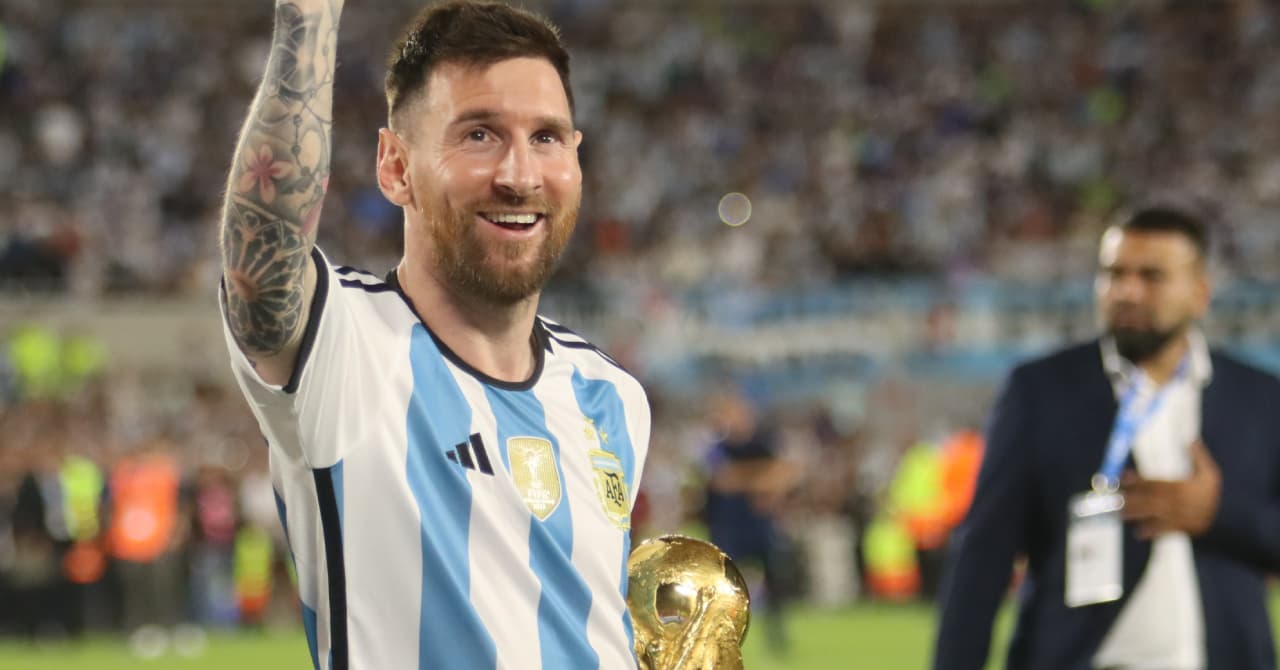
And at the heart of it all, one story dominates: Messi, 38 years old, chasing a final World Cup in a country where he now plays his club football, trying to bend one more tournament to his will.
Algeria: Petkovic’s Pragmatists With a Familiar Maestro
Algeria return after missing the last two editions, and they do so with a clear target: reach the last 16 again, as they did in Brazil in 2014. Back then, a young Riyad Mahrez watched Germany survive them in extra time. Twelve years on, he leads them as captain.
Vladimir Petkovic is the architect now. The Bosnian and Herzegovinian coach has been here before, guiding Switzerland to the Euro 2020 quarter-finals, beating Turkiye and France along the way before falling on penalties to Spain. He knows tournament football, knows how to build a team that can suffer and still find a way through.
Qualification from CAF Group G was handled with authority. At the centre of it stood Mohamed Amoura, a striker who tore through the campaign with 10 goals, seven more than anyone else in Algeria’s group. A hat-trick against Mozambique underlined his instincts. His club form for Wolfsburg told a different story: eight goals in his first 19 league games, then a barren run of 11. Algeria need the qualifying version.
Around him, there is a spine of experience and European polish. Houssem Aouar, once capped by France, brings Roma and Lyon nous to midfield. Amine Gouiri, back fit and sharp, reminded everyone of his quality with two goals in a 7-0 friendly dismantling of Guatemala in Genoa in March. Nabil Bentaleb, now at Lille, offers the kind of control and bite that managers trust when the margins narrow.
At the back, the narrative is compelling. Luca Zidane, son of Zinedine, arrives at his first World Cup after recovering from a broken jaw and chin with Granada. On the flank, Anis Hadj Moussa comes off a sparkling season for Feyenoord: 14 goals, seven assists, the kind of numbers that turn a winger into a match plan.
Rayan Ait-Nouri’s campaign at Manchester City was stop‑start, reduced to a peripheral role after an early run of starts, an ankle injury and AFCON duties. Yet Pep Guardiola still trusted him with seven consecutive starts in February and March. That rhythm could matter.
And then there is Mahrez. Still the reference point, still the leader. Now at Al-Ahli in the Saudi Pro League, he sits eight goals shy of becoming Algeria’s all-time leading scorer. His record is already imposing: 38 goals, 43 assists, 113 caps, an AFCON title in 2019, a key role in Leicester City’s miracle in 2016, African Footballer of the Year, and a treble with Manchester City in 2023. He scored three times in two games as Algeria swept their AFCON 2025 group. He remains the player opponents fear most when the ball is on his left foot and the clock is running down.
Petkovic’s side will likely see their fate come down to the final group game against Austria. Both should expect to beat Jordan. With eight third-placed teams also progressing, Algeria have every right to believe this will be the second time in their history that they step into the knockout rounds.
Argentina: The Champions, the Target, and the Weight of History
No team has defended a World Cup title since Brazil did it in 1958 and 1962. Argentina arrive intent on ending that drought, armed with continuity, scars, and a manager who has already rewritten their modern story.
Lionel Scaloni has presided over an era that would have sounded like fantasy a decade ago. Copa America 2021. World Cup 2022. Copa America 2024. He is the only Argentina coach to have lifted both the Copa and the World Cup, the man who finally delivered a third star after a 36-year wait.
Crucially, the spine of that Qatar-winning team remains. Emiliano Martinez still guards the goal, forever associated with that save against France and the penalty heroics that followed. Cristian Romero and Lisandro Martinez anchor a defence that mixes aggression and composure.
In midfield, the trio of Rodrigo De Paul, Alexis Mac Allister and Enzo Fernandez gives Argentina balance and bite. De Paul runs and snarls and knits everything together. Mac Allister drifts into spaces, makes angles, finds passes. Fernandez drives the game forward, a modern all-rounder with the engine to match.
Up front, Scaloni is spoiled for choice. Julian Alvarez, capable of playing wide, centrally or as a second striker, gives him tactical flexibility. Lautaro Martinez leads the line, a relentless presence who stretches defences and finishes ruthlessly when in rhythm.
There are absences. Angel Di Maria, one of the defining figures of the 2022 triumph, has retired from international duty, taking with him that trademark big‑game aura. Franco Mastantuono, the teenage Real Madrid midfielder many expected to see in the squad, did not make the final cut, a notable omission in a group otherwise built on familiarity.
The main concern has hovered over Messi himself. A hamstring issue with Inter Miami in May sent a shiver through Argentina’s plans. Scaloni’s public assessment stayed calm, describing the early reports as “not that bad”, and the expectation is that Messi will be ready for the opener against Algeria in Kansas City.
His presence is bigger than tactics. This is his sixth World Cup, a record. No one seriously believes there will be a seventh. He finished CONMEBOL qualifying as top scorer with eight goals, still the central figure in everything Argentina do in the final third.
His every touch in North America will feel like a moment. A last dance in the country where he now plays, a final attempt to bend the World Cup to his story one more time.
Argentina should control this group. If they do, nobody will be surprised. The real questions will come later, in the knockout rounds, when history starts to lean on their shoulders.
Austria: Rangnick’s Relentless Pressers
Austria arrive with something they have not had at a World Cup in nearly three decades: genuine expectation.
They have waited 28 years for this stage. In that time, their football has been reshaped, and no one has had a bigger hand in that transformation than Ralf Rangnick. Since taking charge, he has imposed an aggressive, pressing style that suits both his philosophy and the profile of his players.
The results have followed. At Euro 2024, Austria reached the round of 16 and, more impressively, finished ahead of France and the Netherlands in their group. That run changed the way people talked about them. World Cup qualification confirmed it. The squad heading to North America may be the strongest they have assembled since finishing third in 1954.
The backbone is pure Bundesliga. Fourteen of the 26 players ply their trade in Germany, a league whose intensity mirrors Rangnick’s demands. At RB Leipzig, Christoph Baumgartner, Xaver Schlager and Nicolas Seiwald form a midfield triangle shaped by the Red Bull model that Rangnick helped create. They know the system, the triggers, the distances. They are the embodiment of his footballing vision.
Marcel Sabitzer, with 95 caps, brings experience and versatility from Borussia Dortmund. Konrad Laimer, now at Bayern Munich, provides an inexhaustible engine in wide midfield areas, able to press high, recover deep and still contribute in possession.
David Alaba, at 33, captains the side, the calm at the back who has seen everything at club level. Around him, a new generation is emerging. Carney Chukwuemeka has chosen Austria over England, a statement in itself. Paul Wanner, 20 years old and developing at PSV Eindhoven, is another who could use this stage to announce himself.
Up front, Marko Arnautovic remains a central figure. At 36, Austria’s all-time record scorer with 47 goals in 132 caps travels as vice-captain, fully aware this could be his last major tournament. His personality, as much as his goals, still sets the tone.
The star, though, is Baumgartner. He arrives in the form of his life. Thirteen goals and ten assists in the Bundesliga this season place him among the most productive central midfielders in Germany. His ability to find space between the lines, time his runs and finish in tight areas gives Austria a cutting edge that can unsettle any defence in this group.
Austria open against Jordan in Santa Clara, a fixture that offers a platform. Win there, and the path to the top two becomes clear. Rangnick’s structure, their depth, and that relentless pressing make them the most likely candidates to join Argentina in the knockouts. Their showdown with Algeria may decide how they get there.
Jordan: The Debutants Carrying a Continent’s Dream
Jordan arrive as newcomers, but not as tourists.
This is their first World Cup. They earned it the hard way, finishing second in their AFC third-round group behind South Korea and ahead of Iraq, Oman, Palestine and Kuwait. Every step has added to the sense that this is a team on an upward curve rather than a side just happy to be invited.
Coach Jamal Sellami knows what it means for an Arab nation to shock the world. The Moroccan guided his country’s local-national team to the 2018 African Nations Championship and has spoken openly about wanting to emulate Morocco’s run to the World Cup semi-finals in Qatar, when they became the first African and Arab nation to go that far.
Thirteen of his 26 players are based in Jordan. That domestic core brings cohesion and familiarity, the kind of understanding that can take other nations weeks to build in a tournament environment. It is a subtle advantage, but a real one.
There has been pain too. Striker Yazan Al-Naimat, a key figure, suffered an ACL injury in December and misses out. His absence strips Jordan of an important outlet and goal threat.
Defensively, they lean on captain Ehsan Haddad, who leads the backline from Al-Hussein. Yazan Al-Arab, one of the few players based outside the Middle East, adds experience from FC Seoul, a reminder that this squad is not entirely insular.
The spotlight, though, falls on Mousa Al-Tamari. The Rennes forward is widely regarded as the best player Jordan has produced. He became the first Jordanian to play in Ligue 1 and has earned the nickname “Jordanian Messi” at home. It is a heavy tag, but it speaks to his importance.
If Jordan are to shock this group, it will almost certainly be through him. His dribbling, his pace, his willingness to take responsibility in the final third – all of it will be central to any upset they can engineer.
Their schedule offers a sliver of opportunity. The opener against Austria in Santa Clara is their most realistic chance of taking points. A draw there would send a message that they have not come just to make up the numbers. Anything from Algeria would be historic. And then, at the end, Argentina at AT&T Stadium in Dallas: the biggest night in Jordanian football, regardless of what comes before it.
Group J may yet fall to the established order: Argentina on top, Austria and Algeria scrapping for the next spot, Jordan fighting for a moment to remember. But World Cups have a habit of tearing up scripts.
Messi’s last stand. Mahrez chasing records. Rangnick’s machine. Al-Tamari’s dream.
One of them will define this group. The only question is who seizes their moment when the lights go up.