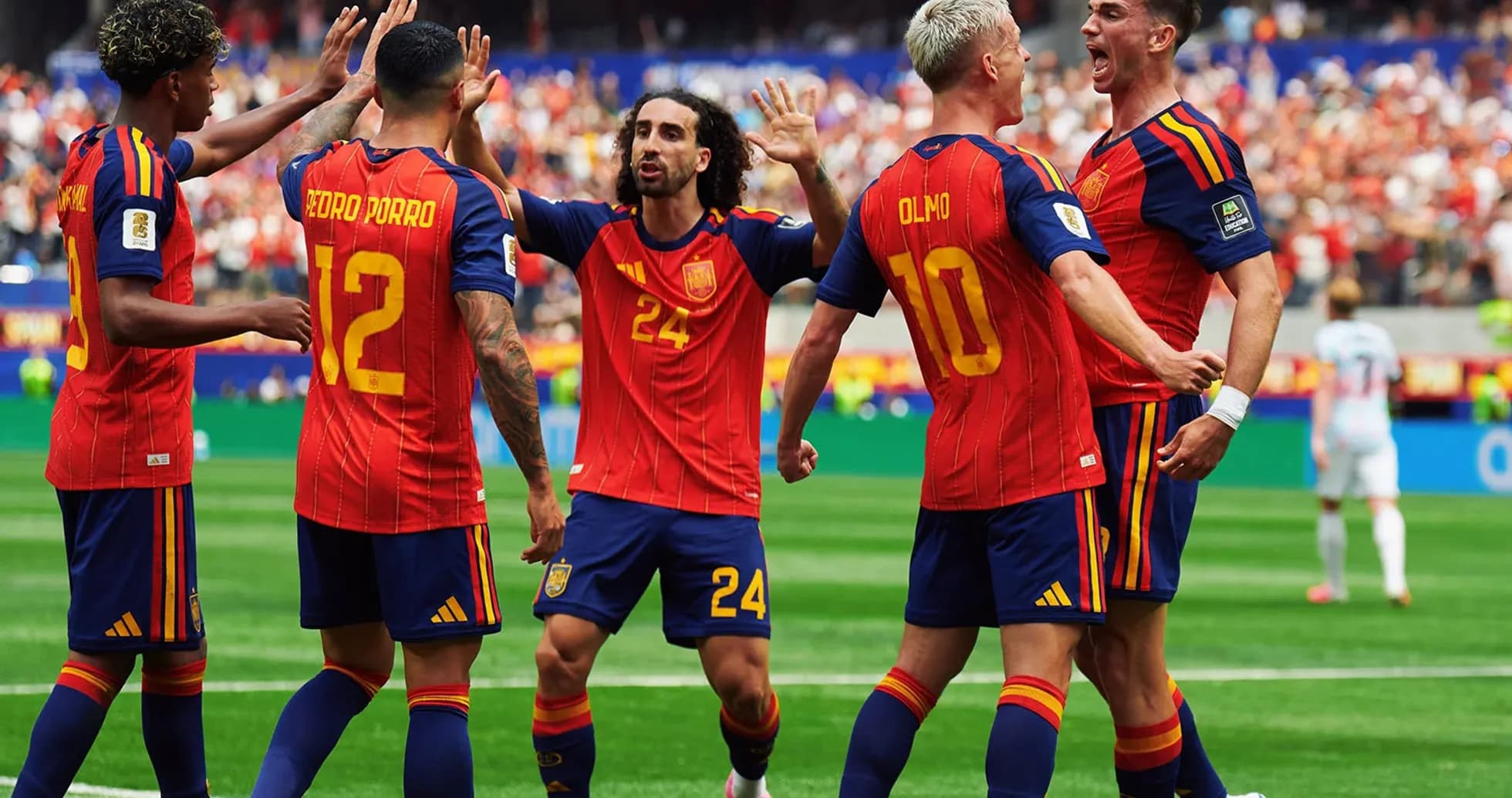
France vs Spain: World Cup Semi-finals Tactical Showdown
France and Spain meet at a neutral venue in the World Cup Semi-finals in 2026, a heavyweight clash where the winner moves into the final and the loser sees a title bid end one step short. Both arrive as group winners and unbeaten, so this game is season-defining for their World Cup campaigns and for the broader narrative of European dominance on the global stage.
Head-to-Head Tactical Summary
Recent history between these sides is rich with high-stakes encounters and contrasting tactical stories. On 5 June 2025 in Stuttgart at MHPArena in the UEFA Nations League Semi-finals, Spain hosted France and won 5–4, having led 2–0 at half-time. That match underlined Spain’s capacity to overwhelm early with aggressive possession and vertical runs, but also exposed defensive volatility as France scored four after the break.
On 9 July 2024 in München at Fußball Arena München in the Euro Championship Semi-finals, Spain again as the home side beat France 2–1, leading 2–1 at half-time and then managing the game with controlled possession and compact pressing. This showed Spain’s ability to protect a narrow lead against elite opposition in a knockout setting.
Going back to 10 October 2021 at Stadio Giuseppe Meazza in Milano in the UEFA Nations League Final, Spain were nominal hosts but lost 2–1 to France after a 0–0 first half. That match highlighted France’s transition strength and capacity to decide tight finals with clinical moments despite Spain’s territorial control.
On 28 March 2017 at Stade de France in Paris in a friendly, France at home lost 2–0 to Spain after a 0–0 first half, a game that underlined Spain’s structural control and defensive solidity once they broke the deadlock. Further back, on 23 June 2012 at Donbass Arena in Donetsk in the Euro Championship Quarter-finals, Spain as home side beat France 2–0, leading 1–0 at half-time, demonstrating a classic Spanish pattern: early control, patient probing, then suffocating game management once ahead.
Global Season Picture
- League Phase Performance: In the group stage, France topped Group I with 9 points from 3 matches, scoring 10 goals and conceding 2, a goal difference of +8 and a perfect record that reflects both firepower and control. Spain won Group H with 7 points from 3 games, scoring 5 and conceding 0, combining slightly lower attacking output with flawless defensive numbers and a goal difference of +5.
- Season Metrics: In the tournament, France have played 6 matches, winning all 6, with 16 goals scored and only 2 conceded. Their attacking average is high, around 2.7 goals per game, while defensively they allow roughly 0.3 goals per match, supported by 4 clean sheets and no failures to score. Their most common structure is a 4-2-3-1 used in all 6 games, indicating tactical continuity. Discipline-wise, yellow cards are spread through the middle and late phases of matches, suggesting intensity peaks as games progress but without red-card issues. Spain have also played 6 matches in the World Cup, winning 5 and drawing 1, with 11 goals scored and just 1 conceded. Their attacking output is slightly lower at about 1.8 goals per game, but they have an even more restrictive defence at roughly 0.2 goals conceded per match and 5 clean sheets. Spain have alternated mainly between 4-2-3-1 (4 games) and 4-3-3 (2 games), showing tactical flexibility to adjust midfield density and pressing height. Their disciplinary profile is similarly controlled, with yellow cards clustering late in games but no red cards.
- Form Trajectory: In the group stage, both teams posted perfect form strings of five consecutive wins, pointing to sustained dominance rather than short-term spikes. France’s broader tournament form extends to six wins from six, underlining momentum and confidence in knockout play. Spain’s overall run is five wins and one draw, combining stability with a defensive platform that has rarely been breached. Both trajectories suggest two sides approaching the Semi-finals at or near their performance ceiling, with no obvious recent dip to exploit.
Tactical Efficiency
France’s attacking efficiency in this World Cup has been defined by volume and variety: a high scoring rate, the ability to win by multiple goals, and no matches without scoring. Their defensive record—only 2 goals conceded across 6 games—indicates not just individual quality at the back but also effective protection from midfield and strong control of transitions. Spain’s tactical efficiency leans more toward control and suppression: fewer goals scored than France but with a defensive structure that has allowed just 1 goal in 6 games and produced 5 clean sheets. Their use of both 4-2-3-1 and 4-3-3 shows they can either match France’s double pivot for stability or overload central zones to suffocate French progression. In pure efficiency terms, France may carry a marginally higher attacking ceiling, while Spain’s defensive consistency and clean-sheet frequency suggest a slightly stronger baseline at the back. The balance of those profiles points toward a match where France seek to stretch and accelerate transitions, and Spain aim to compress space, control tempo, and turn small advantages in territory and possession into decisive chances.
The Verdict: Seasonal Impact
This Semi-final is pivotal for both nations’ 2026 trajectories. For France, a win reinforces their status as a generational tournament side, turning an already dominant World Cup run into a platform for another final and potential title, and validating a high-risk, high-reward attacking blueprint. A defeat, after a perfect record and such defensive numbers, would frame the campaign as technically excellent but ultimately underachieving, raising questions about in-game management against elite control sides like Spain.
For Spain, victory would confirm that their post-2024 evolution from a possession-heavy but sometimes blunt team into a more balanced, defensively elite tournament side is complete. Reaching the World Cup final off the back of strong group and knockout performances would reposition them at the very top tier of international contenders for the coming years. A loss, especially if they again dominate phases but fail to convert against France, would reinforce a narrative of structural strength but occasional attacking insufficiency in the very biggest games.
Beyond immediate qualification for the final, the result will shape tactical benchmarks for international football in the late 2020s: whether the model to emulate is France’s high-powered, direct, and clinical approach, or Spain’s control-first, defensively immaculate structure. In that sense, this Semi-final is not only decisive for the 2026 title race but also influential for how leading nations will build and adjust their national-team projects going forward.