Pedri's World Cup Dilemma: Balancing Role and Expectations
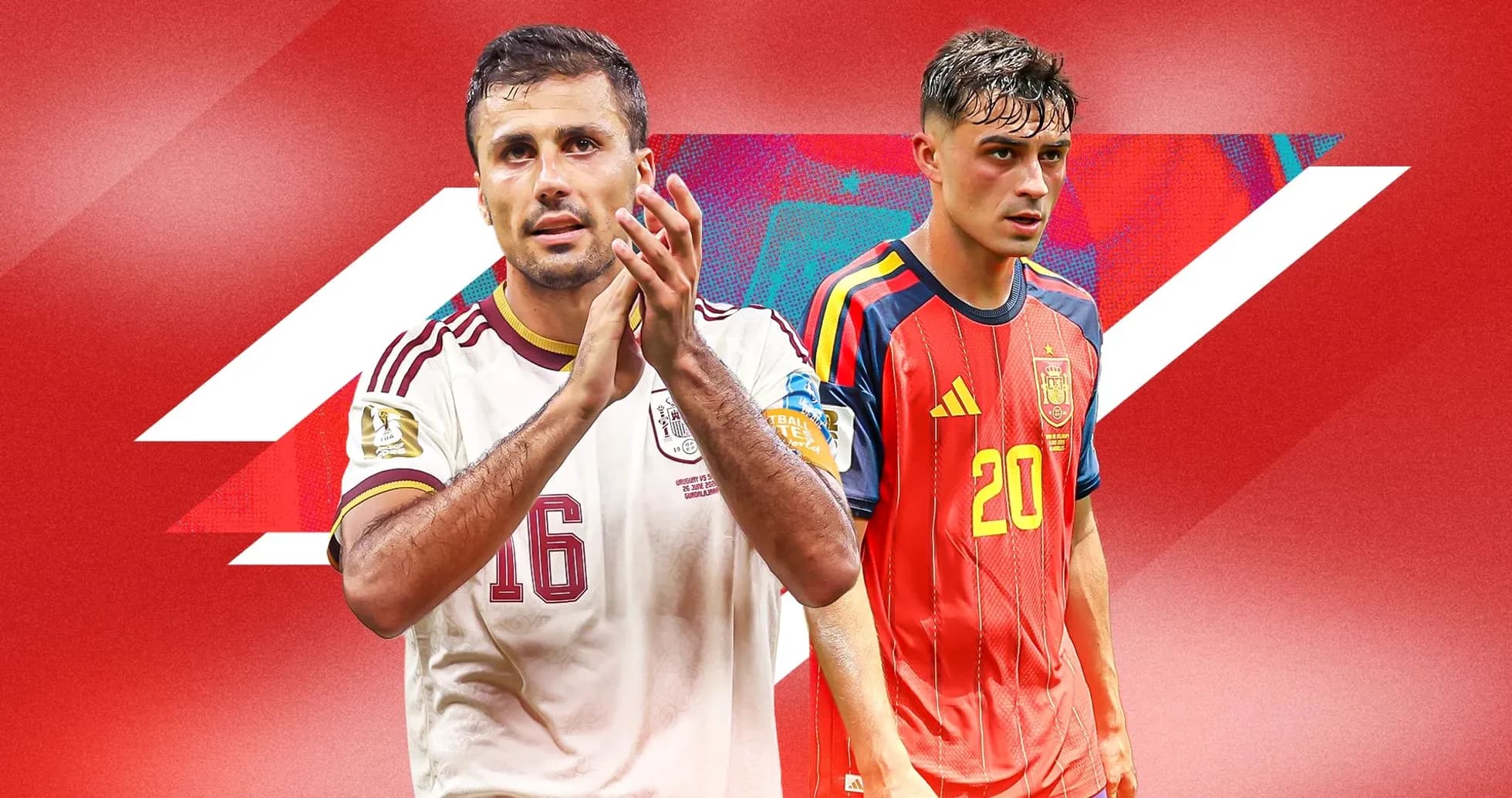
Rodri has roared back to his Ballon d'Or-winning best at this World Cup. Pedri, his supposed perfect foil, has instead become Spain’s great dilemma.
Two years ago in Germany, the idea of Rodri and Pedri anchoring a new Spanish dynasty felt inevitable. The midfield pairing was supposed to be the foundation on which La Roja would stack a European title and then a world crown. In North America, only half of that equation is working.
Pedri’s tournament began with numbers that usually silence critics. Against Cape Verde, the Las Palmas academy product created five chances – more than any other player on the pitch. On paper, that is a playmaker doing his job. Back home, it was framed as a failure.
Spain’s goalless draw was branded flat, lifeless, short of inspiration. The standards around Pedri are now so absurdly high that anything short of decisive brilliance is treated as a disappointment. Cape Verde’s subsequent results have softened the view of that opening stalemate, but not the scrutiny on the 21-year-old’s lack of goals and assists.
While Pedri has laboured in a deeper role, Jude Bellingham has been tearing through the same tournament like a wrecking ball. Real Madrid fans have not missed the opportunity. Every Bellingham surge, every goal, every assist, has been gleefully contrasted with Barcelona’s golden boy, who is neither scoring nor creating.
The comparison is crude. The roles are different, the systems too. It does not matter. In modern football, the bottom line rules. Bellingham is deciding games. Pedri is not.
So when Luis de la Fuente finally dropped him, it still jarred. This was a player who had started five consecutive games at this World Cup, and nine in a row on this stage going back to Qatar. Yet the coach, armed with a European Championship and a stacked squad, chose the moment to flex his depth.
De la Fuente made a point of highlighting another midfield story: Mikel Merino. The Arsenal man had scored a late winner against Portugal, then found himself back on the bench. He did not sulk. He came on against Belgium and did it again, another decisive contribution in a 2-1 victory.
“It’s unfair that Mikel doesn’t play from the start, but it would also be unfair if someone else were left out,” De la Fuente said. “Only 11 can play, and they understand that – the role they have to play at any given moment. When they take to the pitch, they know what they have to do; that’s why it’s a pleasure to be their manager.
“What matters is the team. It doesn’t matter who starts the match. Everyone is important, even those who haven’t played.”
The message was clear: reputations do not start games. Roles do.
There has been no sign of Pedri railing against that reality. Unai Simon, speaking after the Belgium win, painted a picture of a squad that has bought into the hierarchy.
“He’s taken it well,” the goalkeeper said. “We all want to play but, in the end, there isn’t room for everyone.
“How must David (Raya) and Joan (Garcia) feel knowing they’re world-class goalkeepers? Everyone wants to play, but everyone wants to win the World Cup. So, when it’s your turn to accept that role, you do it.”
The question now is what that role looks like against France.
Pedri did himself few favours in Los Angeles. Thrown on as Spain chased control and clarity, he squandered a late breakaway with a strangely loose pass, the kind of detail he usually nails in his sleep. At the same time, Fabian Ruiz, who opened the scoring against Belgium and has been described by Simon as “an immense talent” with “two Champions Leagues in a row” behind him, strengthened his case to keep his place.
On Pedri’s best days, the ball seems magnetised to him. He wins it back with sharp, anticipatory pressing, then moves it with a precision that cuts through lines and egos alike. Those days have not appeared often enough at this World Cup, and De la Fuente has his own explanation: there is a Spain version of Pedri, and a Barcelona version.
“Pedri is a class player, one of the best in the world, if not the best,” the 65-year-old said. “But Fabian is also one of the best players in the world if not the best.
“But Pedri can’t play like he does for Barca, because we play differently. We have similarities, but it’s not the same. We don’t have the same players either.
“We have Rodri, so of course his partner in midfield is different. For me, Pedri could play as a 6, 8, or 10, but we have to make decisions that are always very elaborate, very analysed, very tailored to the opponent.”
France are that opponent now, and they tilt every calculation.
Spain’s one clear advantage lies in the middle of the pitch. There is a scenario in which De la Fuente unleashes his full technical arsenal, lining up Rodri with both Fabian and Pedri, as he did against Cape Verde. Three elite ball-players, all comfortable under pressure, would give La Roja a real chance of starving Didier Deschamps’ devastating front four.
The trade-off is brutal. To do that, someone like Dani Olmo probably sits. Olmo has made the No.10 role his own in the knockout rounds, finding pockets, linking play, irritating defenders. His end product still flickers rather than burns, but he has given Spain a vertical edge that the more methodical Pedri does not always bring in that zone.
De la Fuente has never hidden what he thinks Pedri is, or where he wants him.
He calls him a “special talent” and prefers him “closer to the opposition box”, where his feints, flicks and quick one-twos can shred compact blocks. He has also praised the way Pedri “always sets a very good tone, whether he’s in top form or not”, a nod to his rhythm-setting influence even when the highlights are missing.
Yet the coach’s recent comments hint at a different plan for this semi-final. He spoke after Belgium about Pedri “benefiting from Fabian’s work”, a line that sounded very much like a blueprint: Fabian to soften opponents, Pedri to exploit the gaps.
That would mean Pedri again watching the start from the bench, waiting for the hour mark, waiting for legs to tire and spaces to appear. Waiting to change the game rather than define it from the first whistle.
Spain’s greatest strength right now is not a single star but a collective mindset. Big names accept smaller minutes. Match-winners accept rotation. The debate around Pedri’s place would once have felt unthinkable. Today, it is simply the logical consequence of a squad brimming with options.
De la Fuente knows what is coming. “France have already shown some extraordinary, exceptional potential, but we have too, so I think the game is very open,” he said. “It will require fresh, energetic players, and it will require us to be the best version of ourselves.”
The open question is whether that best version includes Pedri from the start – or whether the world finally sees the Barcelona version of him when it matters most.