The Art of Interceptions in Football: Dayot Upamecano's Mastery
An interception barely exists in time. A pass leaves a boot, a defender twitches into life, and in less than a second the ball is gone again, stolen mid-flight. Yet inside that sliver of action, the brain has already run a complex calculation: speed, angle, distance, body position, the opponent’s intent. The legs only carry out a decision the mind has already made.
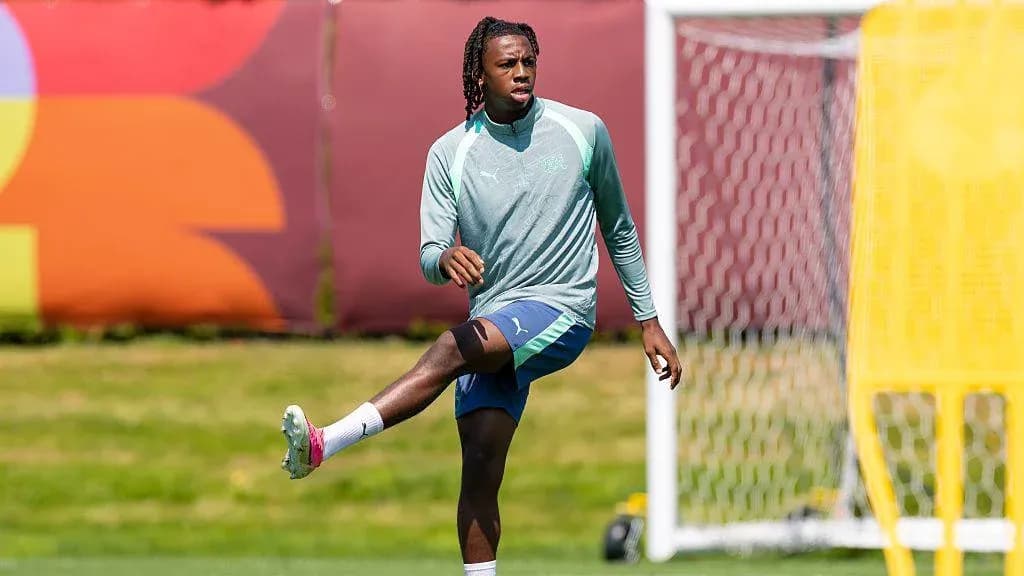
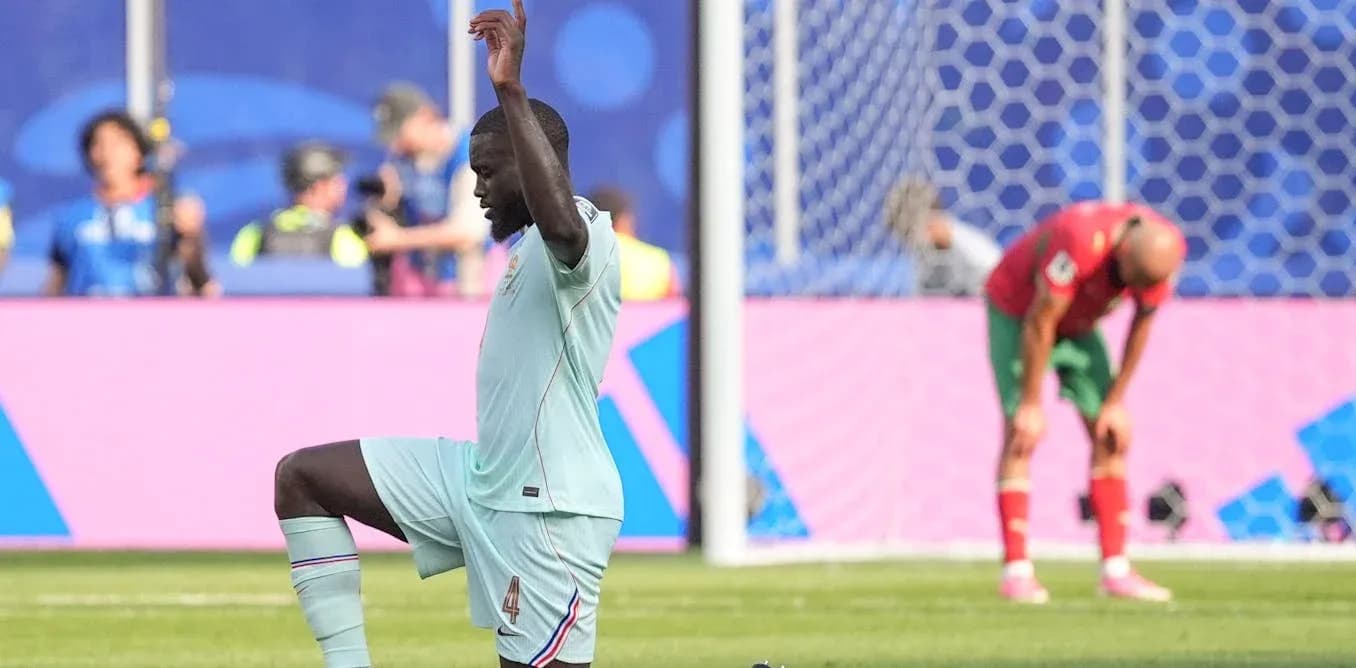
At this World Cup, no one embodied that split-second art quite like Dayot Upamecano. As semi-final week began, the France centre-back sat top of the tournament charts with 12 interceptions. Twelve moments where he read the danger earlier than anyone else, stepped in, and reset the game. Each one a reminder that elite defending is as much about cognition as collision.
The thin line between decision and disaster
Interceptions live on the edge of risk. Go too early and you open a passing lane behind you. React too late and you’re chasing a runner instead of stealing a ball. The defender has to decide not only where the ball is going, but whether they can actually get there first.
Sport science has tried to unpack that instant. Research on anticipation shows that top players don’t just follow the ball; they read bodies. A passer’s posture, the angle of their hips, the way they approach the ball — these become cues. Before the foot connects, the defender already has a strong idea of where the pass will go.
Once the ball is struck, the equation changes again. Speed takes over. In controlled tests with well-trained amateur footballers, as passes travelled faster, players not only intercepted less often, they stopped even trying as much. The brain seems to run a rapid cost-benefit check: if the ball is too quick, the attempt becomes a gamble not worth taking.
Distance weighs heavily too. Futsal studies, where space is tight and decisions are brutal in their speed, show that a defender’s starting distance from the ball helps dictate whether an interception is even on. Yet the movement isn’t fixed from the first step. Players constantly tweak their speed and line as the ball travels. What looks like a single lunge is, in reality, an unfolding stream of micro-adjustments.
Experience sharpens those judgments. In football-specific experiments, more expert players initially overestimated their ability to make certain interceptions. With practice and direct feedback, they recalibrated, learning where their physical limits truly lay. That learning curve never fully ends; it just becomes more refined.
Cape Verde’s World Cup lesson
Cape Verde’s first World Cup showed what happens when a team leans into that defensive craft. They opened their campaign by holding Euro 2024 winners Spain to a 0-0 draw, recording 15 interceptions in that Group H match alone. Across four games they averaged roughly 13 per outing, advancing from the group before finally falling 3-2 after extra time to defending champions Argentina in the round of 32.
Those numbers don’t prove that interceptions drove their run. Often, a high tally simply reveals a team that spent long spells without the ball. But for Cape Verde, those cut-out passes were crucial. Each one broke an opponent’s rhythm, disrupted possession-heavy sides and, at times, sparked counters before defences could reset.
In a tournament dominated by big names and big budgets, their defensive reading of the game became a storyline of its own.
When the mind tires before the legs
All of this precision depends on a brain that stays sharp. That’s where fatigue creeps in, often unnoticed until it’s too late.
Mental fatigue isn’t about heavy legs; it’s about dulled focus. After long periods of concentration, alertness drops. In one study with 20 professional male footballers, a demanding 30-minute mental task before a training game was enough to blunt their passing decisions. Another investigation with well-trained players found that mental fatigue slowed decision-making and made it less accurate in football-specific scenarios.
These experiments didn’t test interceptions directly, but the overlap is obvious. Picking the right pass and stepping into the right passing lane both rely on quickly selecting visual information, judging speed and distance, predicting outcomes and acting under pressure. When the brain slows by even a fraction, the interception that once looked routine suddenly becomes late, clumsy or impossible.
Physical fatigue adds another layer. A ball that was reachable in the 20th minute may not be in the 85th, even if it travels along the same line at the same speed. Research with trained male players shows that acute physical fatigue reduces how far and how intensely they move, and even alters elements of their positioning and teamwork.
A related study drew a revealing contrast. Players with stronger decision-making skills managed to keep their positioning and defensive effectiveness under heavy physical load, partly by choosing to move at a slower pace. They conserved what they had left and stayed in smart areas. Those with weaker decision-making kept pushing their physical output, but their positioning and defensive impact suffered.
The message is stark: the best defenders don’t just run harder; they think better when their bodies start to fade. A tired centre-back doesn’t simply chase the same ball as earlier. They recalculate: Can I still get there? If not, where is the next danger?
The art of deception
Of course, attackers are not passive targets in this duel. They know defenders read cues, so they start to hide them.
Sport science on deception describes how athletes disguise their intentions to mislead opponents. A midfielder may shape their body towards one teammate, drawing a defender into that lane, before sliding the ball somewhere else entirely. By the time the true direction of the pass reveals itself, the defender has already shifted weight, committed steps, and opened a gap.
So the defender faces a brutal choice. Move early and you increase your chance of arriving first — but you also become easy prey for disguise. Wait and you see more, read more, but you gift the ball extra travel time and shrink your interception window.
That tension plays out constantly at the highest level. Upamecano jumping a line-breaking pass. A Cape Verde midfielder sitting off half a second longer against Spain, then springing when the picture clears. Every decision walks the line between anticipation and over-commitment.
Training for the invisible work
These insights carry clear consequences for how teams prepare. Interceptions can’t be trained as isolated, static drills if they are to transfer to the chaos of a World Cup knockout tie.
Research on realistic practice design argues that training must preserve the key information and actions of real competition. For interceptions, that means moving opponents, varied pass speeds, realistic starting distances and, crucially, deception. Defenders need to see disguised passes, misdirection, changing angles — the very cues they will face under the lights.
Coaches also have to think about the state in which these decisions are made. It’s not enough to track how far players run or how fast they sprint. Fatigue can quietly erode their ability to read and decide, even when GPS numbers look strong. A defender might still cover ground but choose the wrong moments to step in, or fail to spot a chance they would normally seize.
The goal isn’t to chase interception totals for their own sake. The best defenders know when not to go. They learn which balls are realistically reachable, keep adjusting their judgment as each pass travels, and adapt again as their physical capacity changes over 90 minutes and beyond.
By the time Upamecano stretches out a leg to nick a pass, or a Cape Verde defender steps in front of a Spanish midfielder, the visible touch is only the final frame of a much longer sequence — a high-speed calculation running in a tired brain, in a tired body, at the sharpest edge of the World Cup.