Elche vs Alaves: Tactical Analysis of a 1–1 La Liga Draw
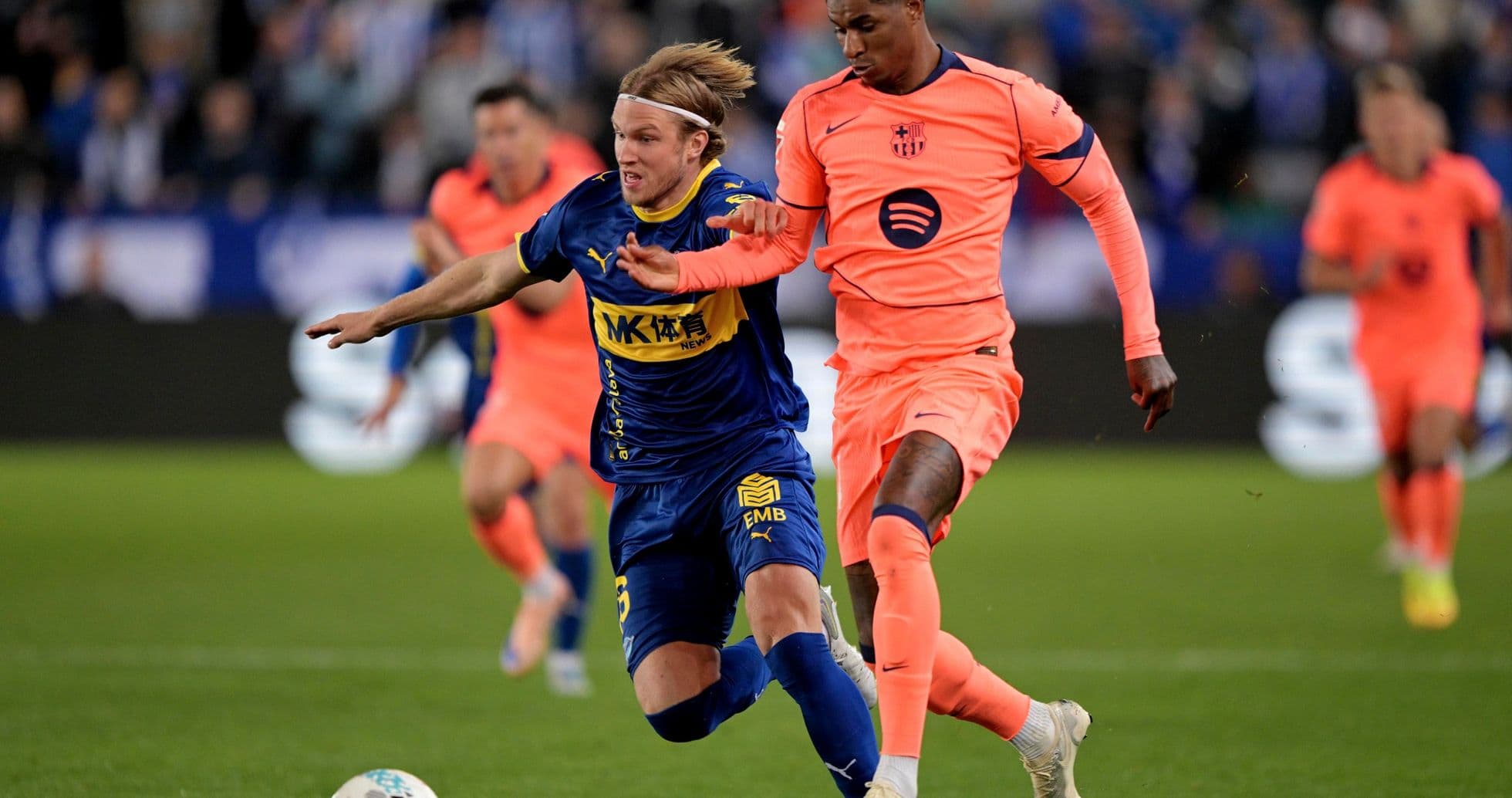
Elche and Alaves shared a 1–1 draw at Estadio Manuel Martínez Valero in Round 35 of La Liga, a contest defined by structural contrast: Elche’s ball-dominant 3-5-2 against Alaves’ low, compact 5-3-2 built to counter and attack space. Elche controlled territory and possession (65%) and finished with more shots (16 to 12), but Alaves generated the higher expected goals (2.14 vs 1.46), reflecting the superior quality of their chances, particularly around the penalty incident. The late phases turned increasingly fragmented and emotional, with a heavy disciplinary load and tactical reshaping on both benches.
Card verification (from events):
- Alaves: 6 yellow cards — Pablo Ibáñez (12'), Antonio Blanco (29'), Jonny Otto (33'), Ibrahim Diabaté (69'), Antonio Sivera (78'), Abderrahman Rebbach (88').
- Elche: 3 yellow cards — Aleix Febas (50'), Grady Diangana (88'), John Donald (90+5').
- Totals: Elche 3, Alaves 6, Total 9.
Disciplinary log (chronological, exact reasons):
- 12' Pablo Ibáñez (Alaves) — Foul
- 29' Antonio Blanco (Alaves) — Foul
- 33' Jonny Otto (Alaves) — Foul
- 50' Aleix Febas (Elche) — Foul
- 69' Ibrahim Diabaté (Alaves) — Foul
- 78' Antonio Sivera (Alaves) — Argument
- 88' Grady Diangana (Elche) — Argument
- 88' Abderrahman Rebbach (Alaves) — Argument
- 90+5' John Donald (Elche) — Foul
Scoring sequence:
after a goalless first half, Alaves struck first from the spot on 51', with T. Martinez converting a penalty to reward their more direct, high-impact attacks. Elche responded on 72', A. Rodriguez finishing a move created by substitute Josan from the right, restoring parity and locking in the eventual 1–1 full-time score. No VAR-specific information is provided, so the penalty stands as awarded in real time.
Tactically, Elche’s 3-5-2 under Eder Sarabia was built on controlled possession and width from the midfield line. The back three of P. Bigas (left), D. Affengruber (central) and V. Chust (right) allowed both wing-oriented midfielders, Tete Morente and G. Valera, to push high, effectively creating a 3-3-4 in sustained attack. Central midfield with G. Villar, M. Aguado and A. Febas focused on short combinations and circulation; the team’s 464 passes at 87% accuracy, plus 14 of 16 shots coming from inside the box, underline how Elche tried to progress methodically into good areas rather than rely on low-percentage efforts.
Up front, Andre Silva and A. Rodriguez initially offered complementary profiles: Silva as a reference between the centre-backs, Rodriguez more flexible in his movements. However, Elche’s chance creation was often funneled via wide overloads and cutbacks rather than direct through balls, which explains the high shot volume but relatively modest xG of 1.46.
Alaves, coached by Quique Sanchez Flores, opted for a very conservative 5-3-2. The back five of A. Rebbach, V. Parada, N. Tenaglia, Jonny Otto and A. Perez stayed narrow, prioritizing box protection over wide pressing. The midfield trio of J. Guridi, Antonio Blanco and Pablo Ibáñez were tasked with screening central zones and jumping to pressure when Elche tried to play between the lines. Their passing volume (250 passes, 75% accuracy) and low possession (35%) show that Alaves accepted long spells without the ball, waiting for transition moments.
The front two, T. Martinez and I. Diabaté, were key in those transitions. They attacked the channels outside Elche’s wide centre-backs, forcing M. Dituro into several interventions. Alaves’ 2.14 xG from only 12 shots, 11 of them inside the box, indicates that when they did reach the final third, they created clear-cut opportunities, often in fewer passes and with more verticality than Elche.
In goal, M. Dituro (Elche) made 3 saves, while Antonio Sivera (Alaves) recorded 4. The identical “goals prevented” values (0.81 for each) suggest that both goalkeepers performed slightly above expectation relative to the quality of shots faced, underpinning the 1–1 scoreline in a match where the xG sum (3.60) pointed towards the possibility of more goals.
Substitutions were decisive in reshaping the tactical landscape. At 46', Alaves replaced Pablo Ibáñez (OUT) with D. Suarez (IN), adding more technical security and ball progression from midfield. On 67', a triple substitution wave changed the rhythm: for Elche, Josan (IN) came on for Tete Morente (OUT), and G. Diangana (IN) for A. Febas (OUT), injecting direct dribbling and fresh width; for Alaves, Yusi (IN) replaced T. Martinez (OUT), slightly altering the profile of the forward line. Josan’s impact was immediate: his delivery on 72' provided the assist for A. Rodriguez’s equaliser, a direct link between substitution strategy and scoreboard.
Later, Alaves freshened their block with C. Protesoni (IN) for I. Diabate (OUT) and A. Guevara (IN) for J. Guridi (OUT) on 82', aiming for more legs in midfield and renewed pressing in the final minutes. Elche reacted by adding J. Donald (IN) for M. Aguado (OUT) and Buba Sangare (IN) for V. Chust (OUT) at 85', shifting towards a more defensive-minded and physically robust setup to guard against late counters. On 89', H. Fort (IN) replaced G. Valera (OUT), another defensive reinforcement, effectively moving Elche towards a back five in the closing stages. Alaves’ last change at 90' — A. Manas (IN) for A. Rebbach (OUT) — was a late attempt to add energy on the flank.
The disciplinary pattern also had tactical implications. Early yellow cards for Pablo Ibáñez (12', Foul), Antonio Blanco (29', Foul) and Jonny Otto (33', Foul) constrained Alaves’ aggression in midfield and on the defensive line, forcing more cautious duels. For Elche, the booking of Aleix Febas (50', Foul) just before the penalty incident reduced his margin for intense pressing, contributing to Sarabia’s decision to withdraw him on 67' for the more direct G. Diangana. The late “Argument” cards for Antonio Sivera (78'), Grady Diangana (88') and Abderrahman Rebbach (88') signalled rising emotional tension, while John Donald’s 90+5' yellow (Foul) reflected Elche’s increasingly desperate defensive interventions as they protected the point.
Statistically, the match tells a story of stylistic divergence. Elche’s Overall Form in this game was possession-heavy and pass-oriented: 65% of the ball, 464 passes at 87% accuracy, 7 corners, and a high volume of shots (16) largely from inside the area. Their Defensive Index on the day was mixed: while they limited Alaves to 12 attempts, the quality of those chances (2.14 xG against) and the need for 3 saves from Dituro show that the back three plus midfield screen struggled at times to control transitions and penalty-box situations.
Alaves’ Overall Form profile is that of a low-block counter side: 35% possession, 250 passes at 75% accuracy, but a more efficient shot map — 12 shots, 11 inside the box, 4 on target, and a higher xG. Defensively, they conceded 16 shots but managed to keep Elche’s xG at 1.46, aided by Sivera’s 4 saves and a compact five-man line. The high yellow-card count (6) underlines the physical and reactive nature of their defending.
In synthesis, Elche imposed structure and volume, Alaves produced clarity and threat. The 1–1 result, with Elche edging possession and passing metrics and Alaves leading in xG and disciplinary burden (6 yellows to 3), reflects a finely balanced tactical contest in which both game plans partially succeeded but neither could fully tilt the match in their favour.