Derek McInnes Leaves Hearts for Rangers: A Complicated Move
When Derek McInnes walked into Tynecastle last May, he made no attempt to hide it. This was the job he believed should have been his years earlier, the role he described as “everything I wanted”. It sounded like a love story. Thirteen months later, it reads more like a brief fling.
He has left Hearts for Rangers, and the speed of it tells its own tale. Once Rangers made it clear they wanted him at Ibrox, there was no real sense of jeopardy around the move. It was a timeline issue, not a will-he-won’t-he saga. Everybody knew how this one ended.
You could forgive Hearts supporters for seething. Their manager, who took them to the brink of a title, has walked away after a single season. Yet the mood around Gorgie is more complicated than simple fury. The anger is there, but it is tempered by a shrug.
McInnes has always been a Rangers man. That badge is stamped on his footballing DNA. As superbly as he performed last season, dragging Hearts into a remarkable title race and coming within three agonising minutes of winning the Scottish Premiership, he never quite felt like a man destined to grow old in the home dugout at Tynecastle.
He nearly gave them the greatest day of their lives. Nearly. That “nearly” has followed him for years.
Even in the middle of Hearts’ surge, with club records falling like skittles in an alley, there was a quiet understanding. If Rangers came, he would go. The job at Tynecastle felt important to him, but it never felt eternal. Hearts turned out to be a stepping stone, not a final destination.
There was another tension too. McInnes is a manager who craves control. At Kilmarnock and, most notably, Aberdeen, he ran football operations his way. At Hearts, he walked into a very different ecosystem, one where Jamestown Analytics wield serious influence over recruitment and selection.
He adapted. He did not surrender. He worked within the system, but never truly looked at home in it.
The model at Hearts meant data experts could push for “their” players to get minutes, could challenge why certain signings didn’t feature, could lean on numbers to nudge football decisions. For a manager steeped in traditional authority, that was always going to chafe.
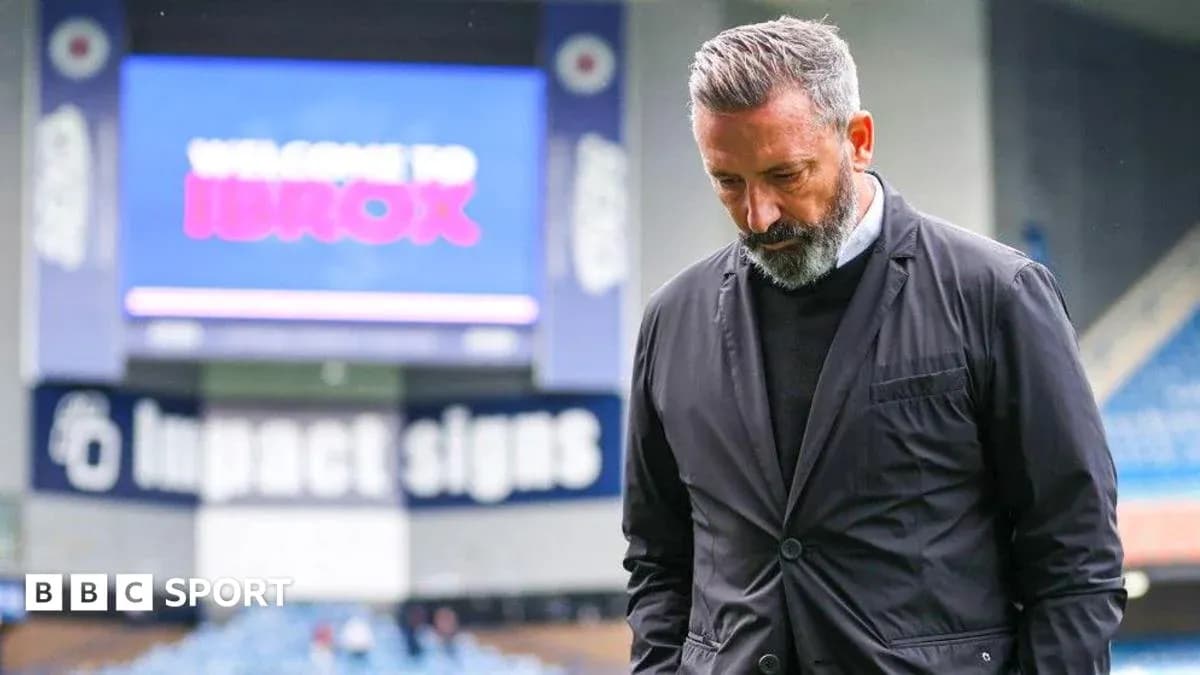
Rangers changes all of that. At Ibrox, McInnes will get a version of the power he has always wanted. He will run the football department in his own image. The train set is his now.
He will also have something else he has rarely enjoyed: serious money. The Rangers owners have already spent heavily in just over a year and are expected to go again this summer, potentially in a big way. For a manager who almost pinched the title on a relative shoestring last season, that is a huge lure.
Call it disloyalty if you like. In the hard-nosed reality of modern football, it looks like a straightforward career move.
The flip side is obvious. With power and resources comes a brutal clarity of expectation. Nothing short of the Premiership title will do next season. Not progress. Not promise. A title.
Danny Rohl had a shot and fell short. Third place brought him no sympathy. Philippe Clement finished second and Rangers fans still couldn’t wait to see the back of him. The mood around Ibrox is not one of patience. It is one of angry, exhausted frustration at living in someone else’s shadow.
McInnes knows this. He is a persuasive communicator, but he understands that in this environment, words are background noise. Only trophies change the sound.
On paper, he is the obvious appointment. He knows Rangers. He knows the league. He has already shown the current owners exactly how dangerous his teams can be, having out-thought them with Hearts last season. He is tactically sharp, hardened by years in the Scottish game, and never short on self-belief.
His work at Hearts showcased his strengths. As the pressure rose and records tumbled, his messaging to players and supporters stayed sharp, measured, and ambitious. He projected authority without drifting into bluster. At a club the size of Rangers, that presence matters. Ibrox demands big personalities; McInnes is undeniably one.
His track record in the cups underlines both his qualities and his frustrations. At Aberdeen, he made Hampden feel like a regular commute: League Cup finals in 2013-14, 2016-17 and 2018-19, plus a Scottish Cup final in 2016-17. That consistency put him in the conversation as one of the most reliable operators outside the Old Firm.
Yet there is that word again: nearly.
Celtic repeatedly blocked his path to silverware, and nobody could realistically condemn him for losing to a financial and footballing giant. The problem is the rest of the story. Cup exits came against Dundee United, Hibs, St Johnstone, Dundee, Hearts, Motherwell, Hearts again, St Mirren, Motherwell again and United again. Too many missed chances, too many regrets.
Since he last lifted a trophy with a Premiership club, others have stepped through the door that stayed shut for him. St Johnstone, Inverness, Hibs, St Johnstone again and Aberdeen have all won the Scottish Cup. Ross County, St Johnstone and St Mirren have all claimed the League Cup. Managers outside the Old Firm – Tommy Wright, John Hughes, Alan Stubbs, Callum Davidson (twice), Jimmy Thelin, Jim McIntyre, Stephen Robinson – have all done what McInnes has been striving to repeat.
The label lingers: the nearly man.
Now he steps into a job where nearly is fatal. His looming battles with Martin O’Neill’s Celtic and with whoever inherits his old seat at Tynecastle will be box-office, but they will be judged by one measure alone – whether he can finally turn all that almost into something Rangers can hold, parade and boast about.
Hearts was the job he wanted at the time. Rangers is the one he has wanted all along. The wait is over. The excuses, from this point on, are gone too.