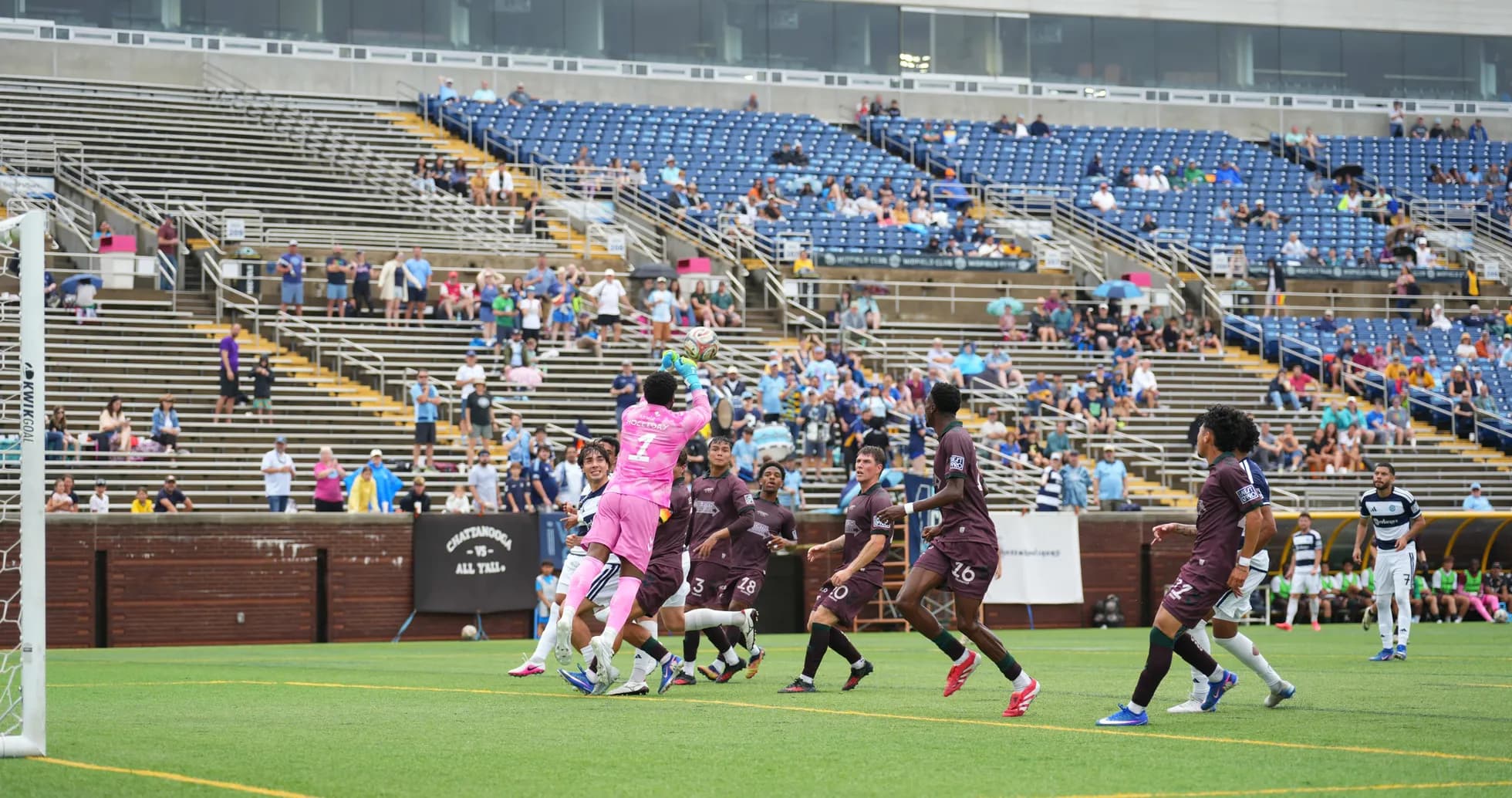

Columbus Crew II vs Toronto II: A Playoff Clash in MLS Next Pro
Historic Crew Stadium had the feel of a playoff cauldron rather than a group-stage backdrop as Columbus Crew II and Toronto II dragged each other through 120 minutes and all the way to penalties. The scoreboard will remember 2–2 after extra time and a 3–1 shootout triumph for Toronto II, but the deeper story is about two contrasting developmental projects colliding at full throttle.
Heading into this game, Columbus were the more ruthless home machine in MLS Next Pro’s Eastern Conference structure. Across the season they had won 5 of 6 at home, scoring 13 home goals at an average of 2.2 while conceding only 7 at 1.2. That home dominance underpinned their 20 points from 12 matches and a perfectly balanced overall goal return: 22 scored and 21 conceded, a razor-thin positive goal difference of 1 that masked how extreme their home/away split had become. Toronto II arrived as the more volatile side: 19 goals for and 19 against overall, 5 wins and 6 defeats from 11, and a penchant for chaos away from home where they had scored 12 and conceded 12 across 7 trips.
I. The Big Picture: Styles in Collision
Federico Higuain’s Columbus Crew II have been built on front-foot football in Columbus. The starting XI – anchored by L. Pruter in goal and a defensive line featuring B. Adu-Gyamfi, Q. Elliot, R. Aoki and I. Heffess – is designed less for containment and more for quick progression. In front of them, T. Brown and K. Gbamble offer running power and verticality, while J. Chirinos and T. Karumanchi link the lines. Z. Zengue and C. Adams give Columbus a mobile, interchangeable front line capable of stretching the pitch.
Toronto II, under Gianni Cimini, brought a more balanced, transitional identity. A. De Rosario’s presence at the back of their structure provides security, with R. Campbell-Dennis, R. Fisher, M. Chisholm and L. Costabile forming a defensive shell that can either sit compact or step into midfield. The spine of D. Dixon and B. Boneau is geared toward winning second balls and launching quick counters to the dynamic trio of M. Stojadinovic, F. Bank and K. Kerr, with A. Bossenberry offering an additional outlet.
The first half followed the season-long logic: Toronto, used to knife-edge away days, struck first and went into the break 1–0 up, exploiting the fact that Columbus, for all their home authority, concede 1.8 goals per match overall. But Columbus’ home attacking average of 2.2 hinted they would not stay quiet for long. They eventually clawed their way back to 2–2 by full time, the match becoming a tug of war between Columbus’ high-tempo combinations and Toronto’s resilience born of a campaign where they have been in constant shootouts – 19 scored, 19 conceded, a perfect equilibrium of risk and reward.
II. Tactical Voids and Discipline
With no official injury list or suspensions provided, both coaches leaned heavily on their core groups. The benches were telling: Columbus named only six substitutes – S. Lapkes, G. De Libera, M. Nyeman, N. Rincon, C. Mrowka and C. Rogers – compared with Toronto’s deeper nine-man bench, including Z. Nakhly, D. Barrow, J. Nolan, J. Nugent and others. Over 120 minutes, that numerical edge in fresh legs became a subtle but decisive advantage for Toronto II.
Disciplinary trends framed the emotional temperature. Across the season, Columbus’ yellow cards spike between 61–75 minutes, with 30.43% of their cautions coming in that window, and they carry a notable early-game risk with 100.00% of their red cards arriving between 0–15 minutes. Toronto’s bookings are more spread, but they show a pronounced edge in the 31–45 minute band (25.00%) and again in 76–90 (20.00%), reflecting a team that often has to defend leads or scramble to stay in games late.
In a match that went the full 120, those patterns suggested a likely narrative: Columbus risking emotional overload as the second half wore on, Toronto bracing for late defensive scrambles. The shootout that followed a 2–2 stalemate felt like the natural endpoint of two teams whose statistical DNA leans toward drama rather than control.
III. Key Matchups: Hunter vs Shield, Engine Room Wars
Without individual scoring charts, the “Hunter vs Shield” battle played out at unit level. Columbus’ home attack – 13 home goals, 2.2 on average – challenged a Toronto away defence that had conceded 12 on their travels at 1.7 per game. On paper, Columbus should have been able to open Toronto up repeatedly. The visitors’ answer lay in collective compactness and the presence of De Rosario marshalling a back line that has already survived a wild 0–5 away win and a 5–0 away collapse this season. Toronto are used to extremes; they did not panic when Columbus surged.
In the “Engine Room”, the duel between Columbus’ central operators – Brown, Gbamble, Karumanchi and Chirinos – and Toronto’s midfield pairing of Dixon and Boneau was pivotal. Columbus’ season form line, “LWWWLWWLWLWL”, reveals a side that either overwhelms or gets picked off, with no draws at all. That binary nature comes from how their midfield either pins opponents back or gets bypassed in transition. Toronto, whose own form string “LLLWLWWLLWW” is equally streaky, relied on Dixon and Boneau to disrupt Columbus’ rhythm and feed quick outlets like Stojadinovic and Kerr.
As the minutes stretched beyond 90, the deeper Toronto bench began to matter. Players such as Nugent, Nolan or Omoregbe (depending on who entered) could inject energy, while Columbus had fewer levers to pull. Every substitution – “[IN] replaced [OUT]” in the match log – gradually tilted the physical balance toward the visitors, even as the scoreboard remained locked.
IV. Statistical Prognosis and the Penalty Denouement
From a season-long perspective, this fixture always had the profile of a high-variance, high-event contest. Columbus entered with 22 goals for and 21 against in total, Toronto with 19 for and 19 against. Both sides had yet to draw a league match. In Expected Goals terms, even without explicit xG numbers, the underlying volume of goals for and against suggests that chances were always likely to flow at both ends.
Columbus’ penalty profile offered a subtle warning: they had yet to take a penalty in the league, with a total of 0, scored 0, missed 0. Toronto, by contrast, had been to the spot once and converted, a 100.00% record from their single attempt. In a match decided by a shootout, that tiny sample of experience mattered psychologically. Toronto’s players stepped into the moment with at least some reference point; Columbus did not.
Following this result, Toronto II’s 3–1 success in the shootout feels like the statistical and tactical equilibrium breaking in favour of the side more accustomed to volatility and more experienced from the spot. Columbus once again lived out their season’s script: thrilling at home, capable of scoring twice even under pressure, but ultimately undone by fine defensive margins and a lack of penalty pedigree.
For both clubs, this was more than a group-stage tie. It was a live-fire exercise in playoff football, a night where the numbers behind their seasons – the balanced goal differences, the late yellow-card surges, the razor-thin home and away splits – stepped out of the spreadsheet and into the floodlights.