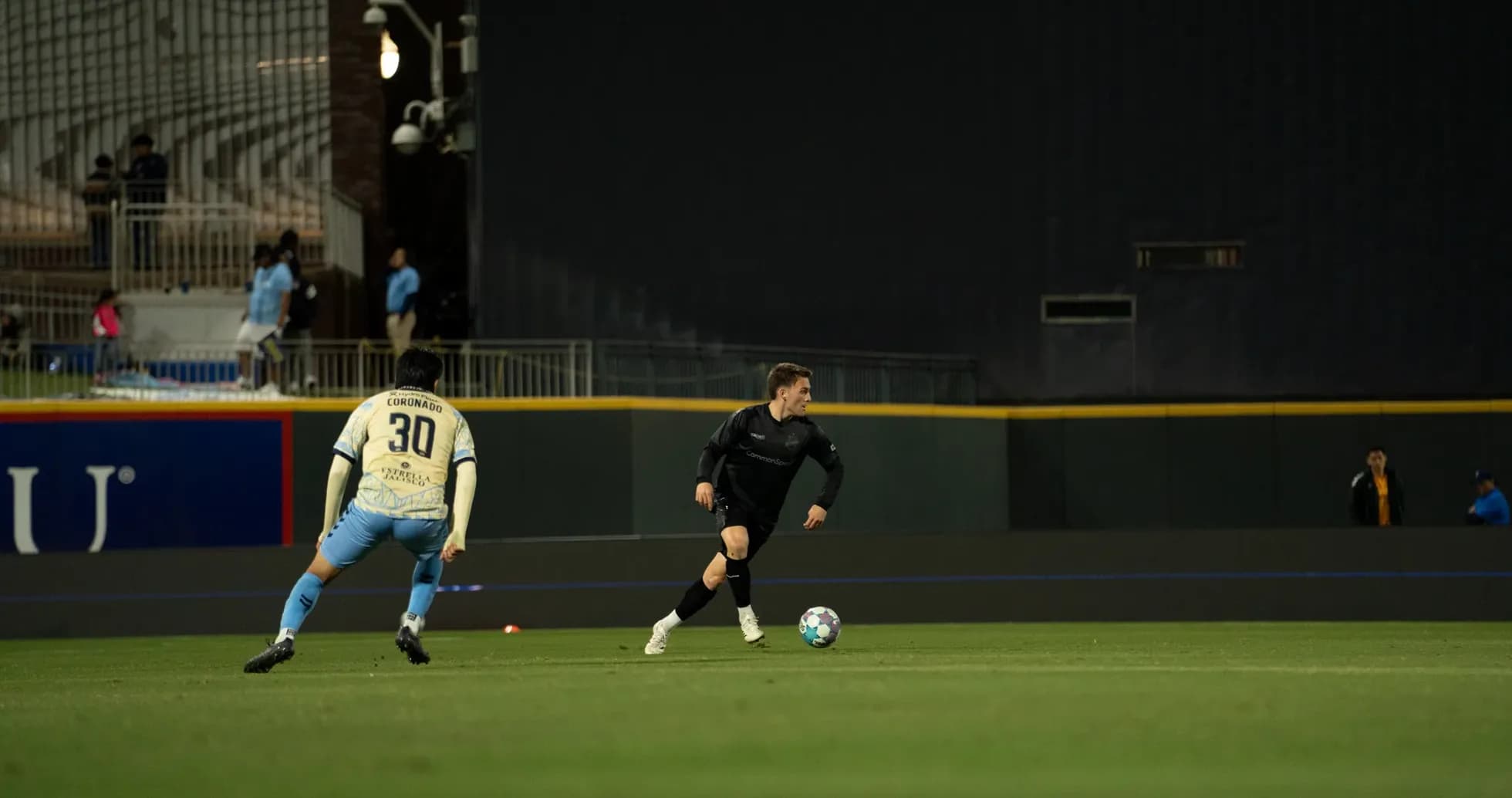
Colorado Springs Defeats El Paso Locomotive 2–1 in USL Cup 2026
Under the thin Colorado night air at Weidner Field, Colorado Springs edged El Paso Locomotive 2–1, a result that felt less like a group-stage formality and more like a statement of hierarchy in USL Cup 2026, Group 2. Following this result, the numbers behind both sides’ campaigns finally aligned with the eye test: Colorado Springs as the complete, ruthless group winners; El Paso as the dangerous but imperfect challenger still learning how to manage fine margins on their travels.
I. The Big Picture – Group leaders vs pursuers
Colorado Springs arrived into this tie already setting the tone for the group. Heading into this game, they had taken 9 points from 3 matches, with a total goal difference of 6 (7 goals for, 1 against). That defensive record – only 1 goal conceded in total – framed this as a test of El Paso’s attacking ambition rather than a simple home fixture.
At home, Colorado Springs’ attacking profile has been emphatic: 6 goals at home from 2 matches, an average of 3.0 goals per home game, backed by only 1 goal conceded at Weidner Field (0.5 conceded on average at home). On their travels, El Paso had been more volatile: 3 away goals scored and 3 conceded across 2 away fixtures, averaging 1.5 goals for and 1.5 against away from home. This was always going to be the collision point: the group’s most prolific home attack against a visiting side that both scores and concedes freely away.
The final 2–1 scoreline reflected that tension. Colorado Springs preserved their perfect record and underlined why they sit first in the group, while El Paso – second in the standings with 6 points and a total goal difference of 2 (5 scored, 3 conceded) – showed enough quality to threaten but not enough control to overturn the leaders on their own turf.
II. Tactical Voids and Discipline – Edges in the margins
There were no officially listed absentees, so both coaches could lean on their core groups. Alan McCann’s Colorado Springs XI had a clear spine: C. Shutler in goal, a defensive platform built around P. Burner, T. Maples and G. Metusala, and a dynamic attacking band featuring Y. Hanya and J. Tejada, supported by the running of S. Masereka and the craft of F. Daroma and T. Magee.
For El Paso, Junior Gonzalez set up with A. Romero in goal and a back line anchored by Tony Alfaro and K. Twumasi, flanked by A. Quezada and R. Ruiz. Ahead of them, the double presence of E. Calvillo and D. Gomez was tasked with both shielding and progressing, feeding a creative triangle of Gabriel Torres, A. Mendez and A. Moreno behind the striker R. Rubin.
The disciplinary trends from the season offered a quiet subplot. Colorado Springs have a tendency to pick up yellows late: 22.22% of their yellow cards come between 61–75 minutes, another 22.22% between 76–90, and a striking 33.33% in the 91–105 window. El Paso, by contrast, cluster their cautions in the 31–45 minute range (50.00%), with a further 16.67% between 61–75 and 33.33% in 91–105. They have also already seen a red card in the 16–30 minute band (100.00% of their reds in that range).
In a tight match like this, those patterns matter: Colorado Springs’ late aggression can tilt momentum but also invite pressure; El Paso’s history of first-half cards and that early red in the season hint at a side that occasionally loses composure when chasing the game.
III. Key Matchups – Hunter vs Shield, Engine Room battles
Hunter vs Shield was written across the front line of Colorado Springs against El Paso’s away defence. At home, Colorado Springs’ attack is relentless: 3.0 goals per game at Weidner Field, with 6 total home goals from just 2 fixtures. El Paso’s away defence, meanwhile, had already conceded 3 goals on their travels at an average of 1.5 per away match. The 2–1 result fit almost exactly into that statistical groove: Colorado Springs slightly under their home scoring average, El Paso conceding right on their away norm.
Within that, the individual duels were decisive. J. Tejada, leading the line for Colorado Springs, constantly asked questions of Alfaro and Twumasi. Without formal positional data, the pattern still felt clear: Tejada’s movement, supported by the drifting of Y. Hanya from the flank and the late runs of S. Masereka, forced El Paso’s back four to defend wider and deeper than they preferred.
Behind them, the “Engine Room” clash pitted Colorado Springs’ midfield trio of S. Williams, F. Daroma and T. Magee against El Paso’s central core of E. Calvillo and D. Gomez. Colorado Springs’ season-long numbers show a side that rarely allows chaos: they have conceded only 1 goal in total, with a total average of 0.3 goals against per game, and have already recorded 2 clean sheets in 3 matches. Even conceding once here, their structure remained largely intact, and the midfield’s ability to shield the back line and break pressure was central to seeing out the result.
For El Paso, the creative burden fell on A. Moreno and Gabriel Torres to find pockets between the lines. They helped generate the away goal that pierced Colorado Springs’ previously near-perfect defensive record, but over 90 minutes they were forced into too many low-percentage positions, often receiving with their back to goal and limited support.
IV. Statistical Prognosis – Why the result made sense
Looking at the broader campaign metrics, this 2–1 Colorado Springs win reads as the logical outcome of two intersecting trends.
Offensively, Colorado Springs have been the most efficient side in the group: 7 total goals at an overall average of 2.3 goals per game, and they have failed to score in 0 matches so far. Defensively, they are even more impressive: 1 total goal conceded, an overall average of 0.3 per match, and 2 clean sheets in 3 games. Their total goal difference of 6 is fully backed by those underlying numbers.
El Paso’s profile is that of a good, but not yet elite, contender: 5 goals scored at an overall average of 1.7 per game, 3 conceded at an overall average of 1.0 per match, and a single clean sheet. On their travels, they are more exposed: 3 away goals conceded, 1.5 per away match, and no away clean sheets.
In xG terms – even without explicit values – you would project a home side averaging 3.0 goals at Weidner Field against an away defence conceding 1.5 per road game to generate the higher-quality chances, especially as the game opens up. Colorado Springs’ defensive baseline of 0.3 goals against per match suggests that conceding one here was more an outlier than a trend shift.
Following this result, the tactical story is clear: Colorado Springs are a complete group-stage machine, combining a high-functioning attack with a miserly defence and the ability to manage late-game pressure, even with their tendency toward late yellow cards. El Paso remain a dangerous second seed – capable of scoring anywhere, but still searching for the defensive solidity on their travels that would allow them to turn nights like this from narrow defeats into defining away wins.