Brooklyn Dominates Portland Hearts of Pine in USL League One Cup
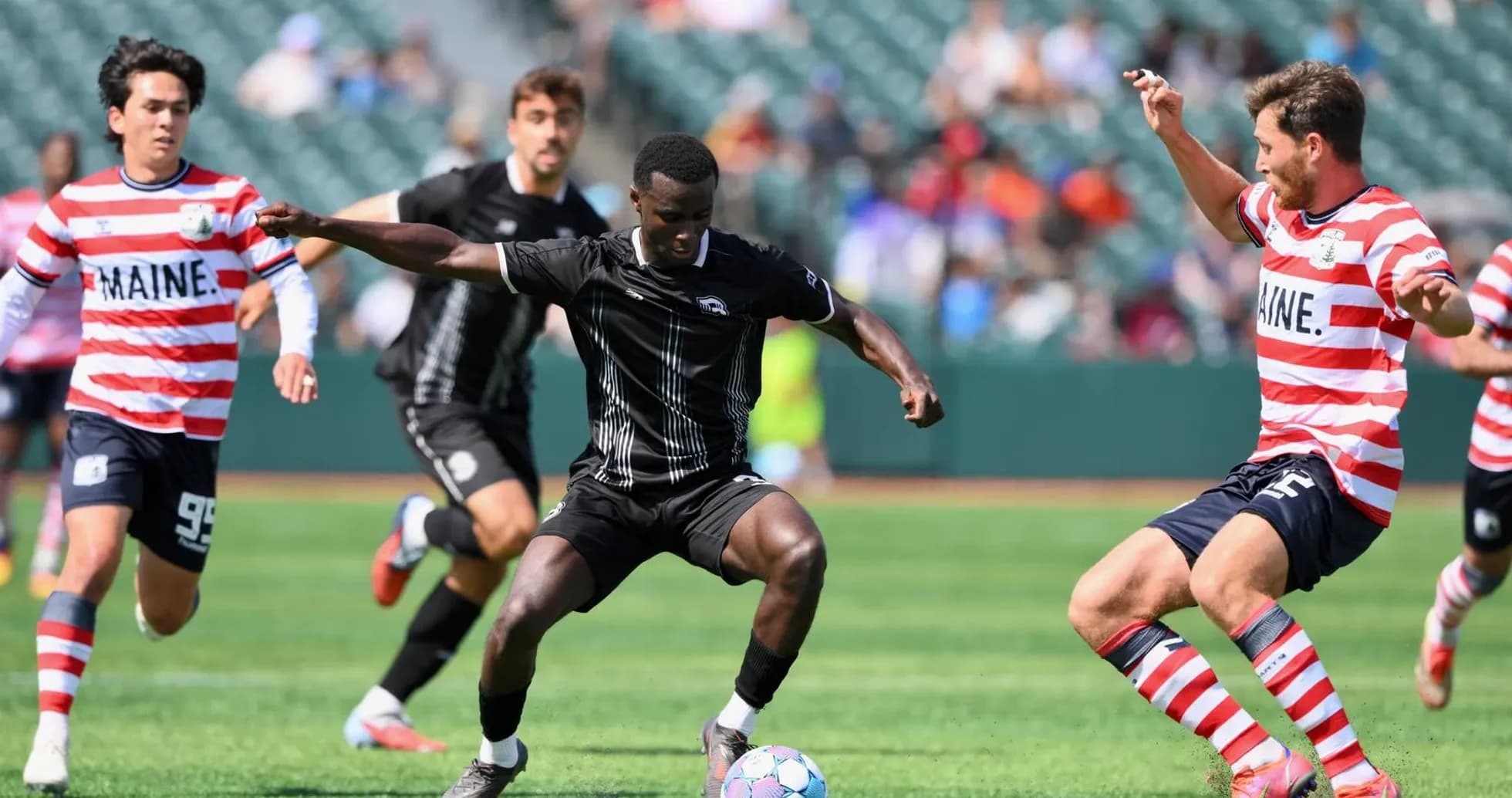
Under the sodium lights at Maimonides Park, this USL League One Cup group tie crystallised the identities of two sides heading in opposite directions. Brooklyn, already an attacking force in Group 5, turned their home ground into a stage for ruthless incision, dismantling Portland Hearts of Pine 5–1 after leading 3–1 at the break. It was not just a win; it was a statement of control and clarity.
Heading into this game, the standings framed the narrative sharply. Brooklyn sat 2nd in Group 5 with 6 points from 3 matches, a goal difference of 5 built on 8 goals for and only 3 against. Their seasonal profile was that of a front‑foot side: in total this campaign they had scored 8 goals at an average of 2.7 per match, conceding 3 at an average of 1.0. At home, they were volatile but dangerous – 5 goals for and 3 against across 2 fixtures, averaging 2.5 scored and 1.5 conceded.
Portland, by contrast, arrived as the group’s paradox. They were 4th with 4 points from 3 matches, but their goal difference of -4 (9 scored, 13 conceded) told the truer story. On their travels, they had been brutally exposed: 2 away matches, 0 wins, 0 draws, 2 defeats, with 3 goals for and 8 against at an away average of 1.5 scored and 4.0 conceded. Their attack could hurt you; their defence could unravel you.
I. The Big Picture: How the sides were built
Brooklyn’s XI read like a carefully balanced ensemble. At the back, L. Burns anchored the side from goal, shielded by a defensive line built around the physical presence of T. Vancaeyezeele, the aerial and positional reading of V. Latinovich, and the left‑sided control of Gabriel Alves. C. Frogson completed a back unit that was less about glamour and more about reliable first contacts and simple distribution.
Ahead of them, the double pivot of M. Pinto and T. McNamara gave Brooklyn their shape. Pinto, in shirt 5, is the metronome, recycling possession and closing passing lanes. McNamara, with 7 on his back, is the tempo‑shifter – happy to drop deep to link play or step into half‑spaces to create overloads. Around them, S. Stojanovic and P. Mangione stretched the pitch horizontally, while C. Olney JR floated between the lines, feeding the central runs of M. Anderson.
This structure perfectly mirrored their numbers: in total this campaign Brooklyn had failed to score only once and had yet to keep a home clean sheet, a side that accepts risk in exchange for control of the ball and territory.
Portland’s starting side under Bobby Murphy was more direct and improvisational. A. Camara led the line with the support of O. Wright and W. Varela, a trio designed to break quickly rather than build slowly. L. Kunga offered wide thrust, while M. Mohamed and D. Barbosa tried to hold a fragile midfield together. Behind them, K. Oladapo, K. Green, B. Evans and J. Drack formed a back line that had already been punished on their travels, conceding 8 away goals in total this campaign.
II. Tactical Voids and Discipline
With no explicit injury list provided, both coaches appeared to have near‑full squads, but the deeper tactical absences were structural rather than personnel‑based.
For Brooklyn, the main void was always going to be defensive concentration. They had not kept a home clean sheet in the competition, and their card distribution showed a tendency to be dragged into physical contests late on: 40.00% of their yellow cards came between 61–75 minutes, with another 20.00% in the 76–90 window. That pattern suggested a side that sometimes pays for their intensity with tired fouls.
Portland’s disciplinary profile was even more telling. In total this campaign, 50.00% of their yellow cards arrived between 61–75 minutes, 25.00% between 46–60, and 12.50% in the closing 76–90 stretch. Crucially, they had also seen a red card between 46–60 minutes, a single dismissal making up 100.00% of their reds. This was a team that, when stretched after half‑time, flirted with collapse.
In a match where Brooklyn’s home average of 2.5 goals for met Portland’s away average of 4.0 goals against, the risk for Murphy’s side was obvious: once they started chasing, their discipline could crack.
III. Key Matchups: Hunter vs Shield, Engine Room vs Enforcer
Without explicit top‑scorer data, the “Hunter vs Shield” duel became more collective than individual. Brooklyn’s front four of Olney JR, Mangione, Stojanovic and Anderson collectively embodied a unit that had already produced 8 goals in total this campaign. Their task was to probe a Portland defence that, on their travels, had already shipped 8.
The decisive battleground lay between Brooklyn’s roaming 10, C. Olney JR, and Portland’s central shield of Mohamed and Barbosa. Olney JR’s ability to find pockets between the lines pulled Portland’s centre‑backs into uncomfortable territory, opening seams for Anderson’s runs. Every time Portland’s midfield failed to compress space, Brooklyn punched through.
In the “Engine Room” duel, McNamara and Pinto faced Mohamed and M. Kidd. Brooklyn’s pair sought to dictate rhythm, turning Portland’s scattered pressing into passing lanes. Portland’s midfield, by contrast, was set up to disrupt rather than construct, but once Brooklyn bypassed that first wave, the Hearts of Pine back line was repeatedly left exposed.
On the flanks, Mangione and Stojanovic worked to pin back Kunga and Varela, neutralising Portland’s best counter‑attacking outlets. With Portland forced deeper, Camara became increasingly isolated, turning hopeful long balls into easy reads for Latinovich and Vancaeyezeele.
IV. Statistical Prognosis and Tactical Verdict
Following this result, the numbers and the eye test converge. Brooklyn’s attacking profile – 8 goals in total this campaign at 2.7 per match – now sits on top of a 5‑goal home demolition that showcased both variety and relentlessness. Their defensive record, 3 conceded overall at 1.0 per match, is slightly flattered by a clean away slate, but at home they still concede at 1.5 on average. This is not a watertight side, but one whose offensive ceiling is high enough to absorb blows.
Portland’s broader arc is more troubling. In total this campaign they have scored 5 at 1.7 per match, but conceded 9 at 3.0 per match. On their travels, that balloons to 4.0 goals against per game. Even if their xG profile is not explicitly given, the pattern is clear: they give up too many high‑value chances, too often, particularly after half‑time when their card spikes and that single red card between 46–60 minutes hints at emotional and structural fatigue.
Tactically, Brooklyn’s blend of controlled build‑up, flexible positioning in the final third, and a midfield that can both press and circulate makes them one of the most coherent outfits in Group 5. Portland, by contrast, remain a side of moments rather than systems – capable of scoring, but even more capable of conceding in bunches.
If this match is any guide, any future meeting between these two will tilt towards Brooklyn’s attacking structure against Portland’s fragile away defending. Unless Murphy can tighten the block in front of his back four and manage his side’s disciplinary spikes after the interval, the statistical prognosis will continue to favour Brooklyn’s relentless hunters over Portland’s overstretched shield.