Canada's Historic World Cup Win Marred by Koné's Injury
Canada finally had its World Cup moment. A 6–0 win, a hat trick from Jonathan David, a statement performance in Group B. Yet as the crowd in Vancouver roared, the night turned cold in an instant.
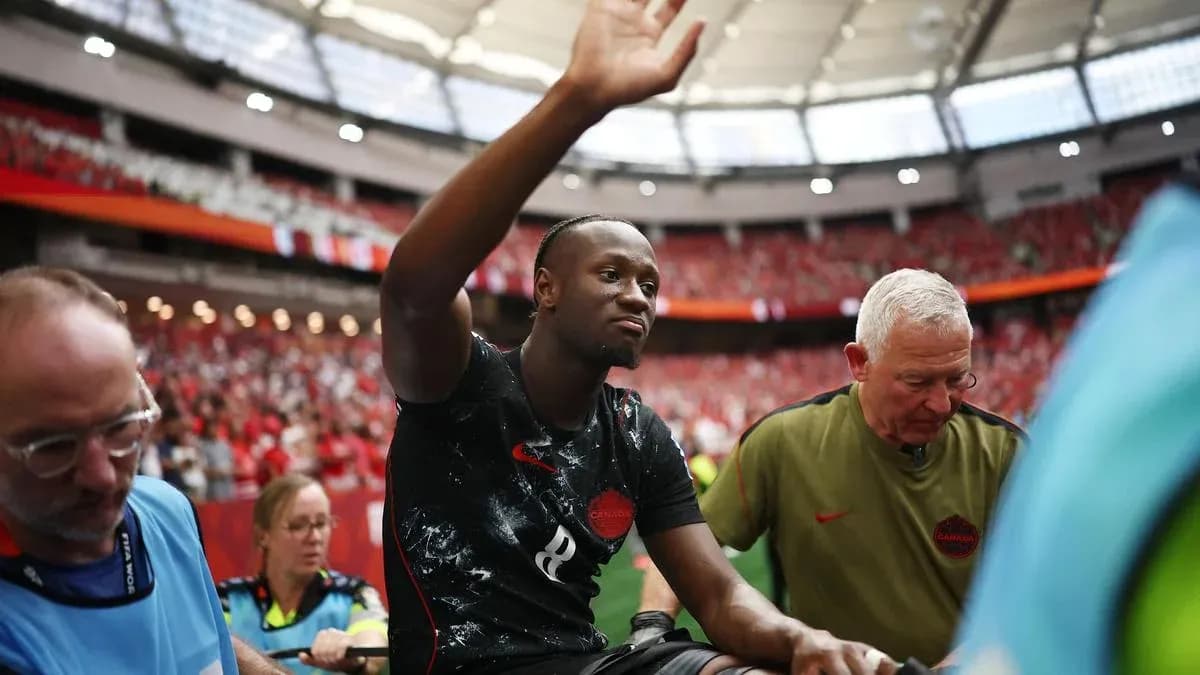
Midfielder Ismaël Koné, one of the faces of this new Canadian generation, left the pitch on a stretcher with what appeared to be a serious left leg injury after a brutal second-half challenge from Qatar’s Assim Madibo. The victory stayed in the record books. The image that lingered was Koné on the turf, teammates forming a human shield around him.
A historic night derailed
The match had already swung heavily in Canada’s favour when the incident unfolded. Qatar were down to 10 men after Homam Ahmed’s first-half red card, and the hosts were cruising.
Then Madibo flew in from behind.
Koné went down immediately, clutching his lower left leg. Players from both sides waved frantically to the bench. Some turned away when they saw the angle of the limb. Canada captain Stephen Eustáquio, among the first to reach him, didn’t hide the shock.
“I saw his leg. I saw that something wasn't right,” he said.
Canada coach Jesse Marsch, standing just yards away, later described hearing the “bones snap.” On the pitch, the reaction told its own story. Koné’s teammates circled around him, blocking the view from the stands and cameras as medical staff rushed on. The stadium noise dropped to a murmur.
Madibo was shown a straight red card, leaving Qatar with nine men. His apology to Koné, Marsch said, came later.
From stretcher to hospital, and a team holding its nerve
Koné was eventually stretchered off, grimacing, to warm applause from the home crowd. He was taken directly to a local hospital, where, according to Marsch, he was being prepared for surgery and surrounded by family.
The exact nature of the injury has not yet been disclosed, but photographs from the incident showed a visibly damaged lower left leg.
“Everybody was crushed when it happened, but we had to find a way to stay focused, we knew that Ismaël wanted us to finish the job,” Marsch said. “There's a lot of thoughts that go through our heads right now, we're all thinking about him, but we're all very proud of what we are.”
Canada did more than just see the game out. The response was ruthless.
Within 10 minutes of Koné’s departure, his replacement, Nathan Saliba, stepped into the spotlight. Arriving late in the box, he swept home Canada’s fourth goal, then immediately lifted Koné’s jersey in front of the crowd — a raw, emotional tribute on a night that had suddenly turned sombre.
David’s hat trick and a pointed message
On any other night, David would have owned the headlines. A World Cup hat trick on home soil, leading the line for a team that has long talked about belonging on this stage and finally proved it.
Instead, his post-match words cut through the euphoria and went straight back to the tackle.
“If there's a play where you cannot win the ball, there's no point,” David said. “It's just to hurt people.”
It was a blunt assessment of a challenge that changed the tone of Canada’s biggest footballing night. What had been a celebration became a vigil of sorts, with players and staff repeatedly referencing their stricken teammate.
A win with a cost
On the field, the numbers were emphatic: 6–0, two Qatar red cards, Canada rampant and ruthless. Off it, the mood was conflicted.
“We're going to miss (Koné),” Eustáquio admitted. “He has that X factor that our team really needs.”
Koné has been central to Canada’s evolving identity — a midfielder with composure, range, and the kind of personality that drags a team forward in tense moments. Losing him, potentially for a long stretch of this World Cup, reshapes the entire picture for Marsch’s side.
For now, the diagnosis will dictate the story of Canada’s tournament. The country finally has its first World Cup win, and did it in style. The question that now hangs over this team is simple and brutal:
What will that landmark victory end up costing them?