Premier League 2026/27: Fixtures and New Challenges Ahead
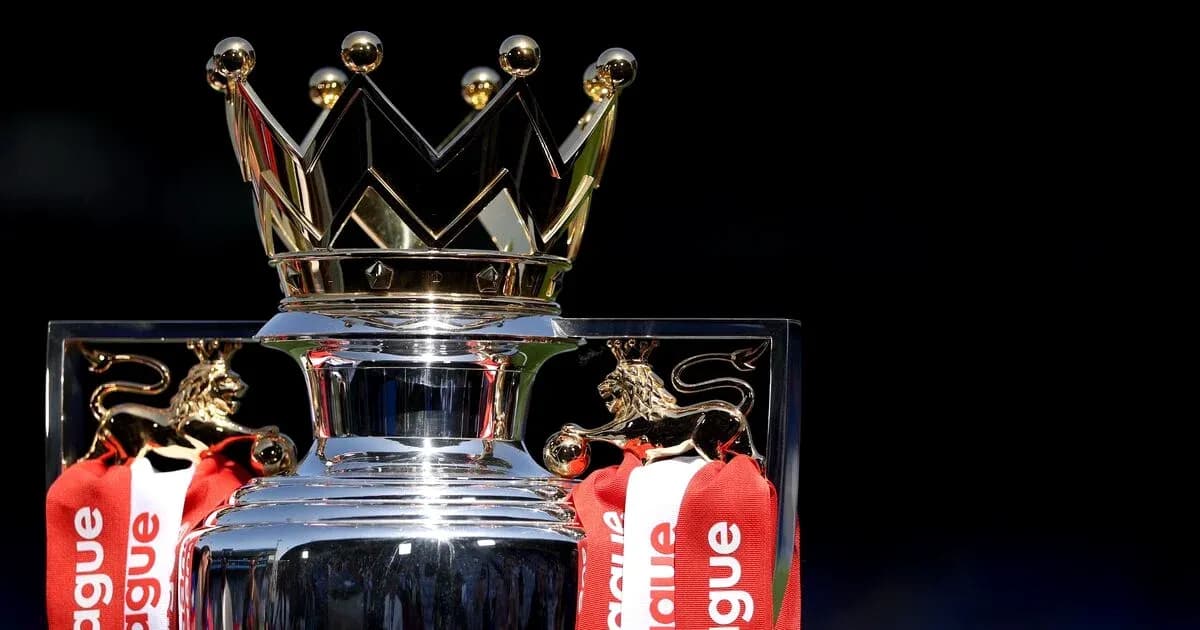
The World Cup may still be holding the spotlight, but English football has already flicked on the lights for its next act. The Premier League has released the full fixture list for the 2026/27 season, and with it comes a campaign laced with subplots: a champion defending its crown for the first time in a generation, a giant learning to live without its greatest modern manager, and three promoted clubs fighting simply to stay afloat.
The season starts a week later than usual, on the weekend of August 22/23, just 33 days after the World Cup final. It ends on May 30, 2027, when all 10 matches will kick off together in that familiar, chaotic final-day symphony.
Champions under the lights
The curtain-raiser has been set with a sense of theatre. On Friday, August 21 at 8pm, Arsenal begin the defence of their title at home to Coventry City, live on Sky Sports.
It is the first time in more than 20 years that Arsenal enter a season as defending Premier League champions. Mikel Arteta’s side finally broke their domestic drought last term; now comes the harder part. Winning again. Coping with expectation. Carrying the weight of being “the team to beat” into every ground they visit.
Coventry, back in the top flight for the first time in a quarter of a century, could hardly have asked for a more vivid reintroduction. From Championship winners to opening-night visitors at the home of the champions, their 95-point surge last season now meets the cold reality of elite opposition under the Friday night glare.
Opening weekend: tests everywhere
The first round of fixtures offers very little in the way of a gentle landing.
On Saturday lunchtime (12.30pm, TNT Sports), Hull City host Manchester United. Hull’s return to the Premier League comes with a cloud already forming overhead: the club faces the threat of a points deduction for a potential breach of profit and sustainability rules, with reports suggesting an overspend of around £6m and a possible six-point penalty if confirmed. Survival is difficult enough for a promoted side. Starting below zero would turn it into a mountain.
At 3pm on the Saturday, Everton face Crystal Palace, Ipswich Town welcome Sunderland, and Nottingham Forest host Leeds United. Ipswich, relegated from the Premier League only in 2024/25, have bounced straight back. Their reward is a first-day meeting with a Sunderland side intent on re-establishing itself at this level.
Saturday’s late kick-off belongs to London and North London tension. Brentford vs Tottenham Hotspur at 5.30pm, live on Sky Sports, brings an early test of Spurs’ ambitions against a Brentford team that relish bloodying reputations on home soil.
Sunday offers no let-up. At 2pm, Brighton and Hove Albion meet Aston Villa, while Manchester City begin life after Pep Guardiola at home to Bournemouth, both live on Sky Sports. A few hours later, at 4.30pm on the Sunday, Newcastle United host Liverpool on Sky, a fixture that rarely passes quietly and now arrives as an early barometer of where both clubs truly stand.
The opening round closes on Monday night at Craven Cottage, where Fulham face Chelsea at 8pm (Sky Sports). Under the lights, by the river, with Chelsea attempting to steady themselves again under yet another manager.
Life after Pep: City’s reset
The most dramatic change at the top comes in Manchester. For the first time in a decade, Manchester City will walk into a Premier League season without Pep Guardiola in the technical area.
The Spaniard stepped down at the end of last season and is expected to take a break from coaching. In his place stands Enzo Maresca, Guardiola’s former protégé and most recently Chelsea manager. City’s hierarchy are convinced he is the right successor, but belief in a boardroom is one thing; inheriting a dynasty is another.
City’s first league step under Maresca, at home to Bournemouth, looks favourable on paper. Yet every dropped point, every tactical tweak, every substitution will be viewed through the prism of what came before. The Guardiola era set an almost impossible standard. Maresca must now prove he is more than just a footnote to it.
Before any of that, City will cross paths with Arsenal in the Community Shield. The champions and the FA Cup holders meet at Cardiff’s Principality Stadium on Sunday, August 16 at 3pm. It is not the trophy either side obsesses over, but it is a first, sharp look at where the balance of power might lie.
Can Arsenal go again?
Arsenal’s title win ended two decades of frustration. The question now is whether it marked the start of something, or a single, glorious peak.
They go into the new season as favourites, a status that has already claimed victims. Liverpool were heavily backed to win the league last season and faded away from the fight. Arsenal know that reputation does not earn a single point.
A supercomputer simulation, run 10,000 times across the full fixture list, has them retaining the title, eight points clear of Manchester City. Liverpool are projected to finish third, with Manchester United and Chelsea rounding off the top five. It is a mathematical nod towards a familiar-looking top end of the table.
At the other end, the same model shows no mercy to the new arrivals. Coventry City, Ipswich Town and Hull City are all tipped to go straight back down, consigned to the relegation zone in the projections before a ball has been kicked.
Reality, of course, rarely sticks to script. But for three clubs building for survival, the numbers underline the scale of the task.
Promoted, but under pressure
Coventry’s story is a romantic one: back among the elite after 25 years away, having stormed to the Championship title. Ipswich’s is one of resilience, recovering from relegation in 2024/25 at the first attempt. Hull’s is the tale of a side that slipped into the play-offs on the final day, then seized their moment when it mattered most.
Now comes the grind. Hull’s off-field situation adds another layer of jeopardy. Reports that they must sell before they can buy, with a looming deadline to balance the books, paint a picture of a club trying to build a Premier League squad while staring at a potential six-point handicap.
All three promoted sides will look at that supercomputer prediction and shrug publicly. But they know what it means. Every home game becomes a cup tie. Every point, a small act of defiance.
Screens, schedules and FPL spreadsheets
The 2026/27 campaign will be spread across 33 weekend rounds and five midweek slates. Television will again shape the rhythm of the season.
Sky Sports will show at least 215 live matches next term under a rights deal that runs until 2029, with a minimum of four live games in every gameweek and five from the opening round alone. TNT Sports will broadcast 52 matches across the season, including that early Saturday lunchtime slot at Hull vs Manchester United.
For matchday one, the pattern is familiar: a Friday night game, two televised fixtures on Saturday, at least two “Super Sunday” matches, and a Monday night closer.
The release of the fixtures also triggers the quiet frenzy of Fantasy Premier League planning. The 2026/27 game will launch later in the summer, but from today The Scout begins dissecting the schedule, while Fixture Difficulty Ratings (FDR) are rolled out to guide millions of managers towards favourable early runs and away from danger.
Behind the curtain: how the calendar is built
The Premier League’s 380-game jigsaw does not fall into place overnight. The scheduling process stretches over nearly six months, shaped by a web of requests and restrictions.
Clubs can flag specific dates on which they would prefer to play at home or away, sometimes to mark anniversaries, sometimes because of stadium works that demand an away start to the season. Local policing requirements also come into play, ensuring neighbouring clubs are not both at home on the same day when infrastructure cannot cope.
This year’s calendar has also had to bend around the World Cup and the 2027 Champions League final, which will be played on June 5, a week after the Premier League season ends.
The result is a campaign that begins later, finishes at the usual fever pitch, and squeezes its drama into a slightly tighter window.
The fixtures are out. The debates have already started. Arsenal’s defence of the crown, City’s reinvention, Liverpool’s response, United’s pursuit of relevance, Chelsea’s latest reboot, three promoted clubs fighting gravity – it’s all there, mapped out from August to May.
Now the dates are fixed, the only question left is the one that keeps this league alive: who will still be standing when May 30 rolls around and the final whistle blows on another season?