Canada and Bosnia & Herzegovina Draw in Tactical Clash
Canada’s 1-1 draw with Bosnia & Herzegovina at BMO Field unfolded as a clash between territorial control and compact resistance, with both sides mirroring each other structurally in a 4-4-2 but using that shape in very different ways.
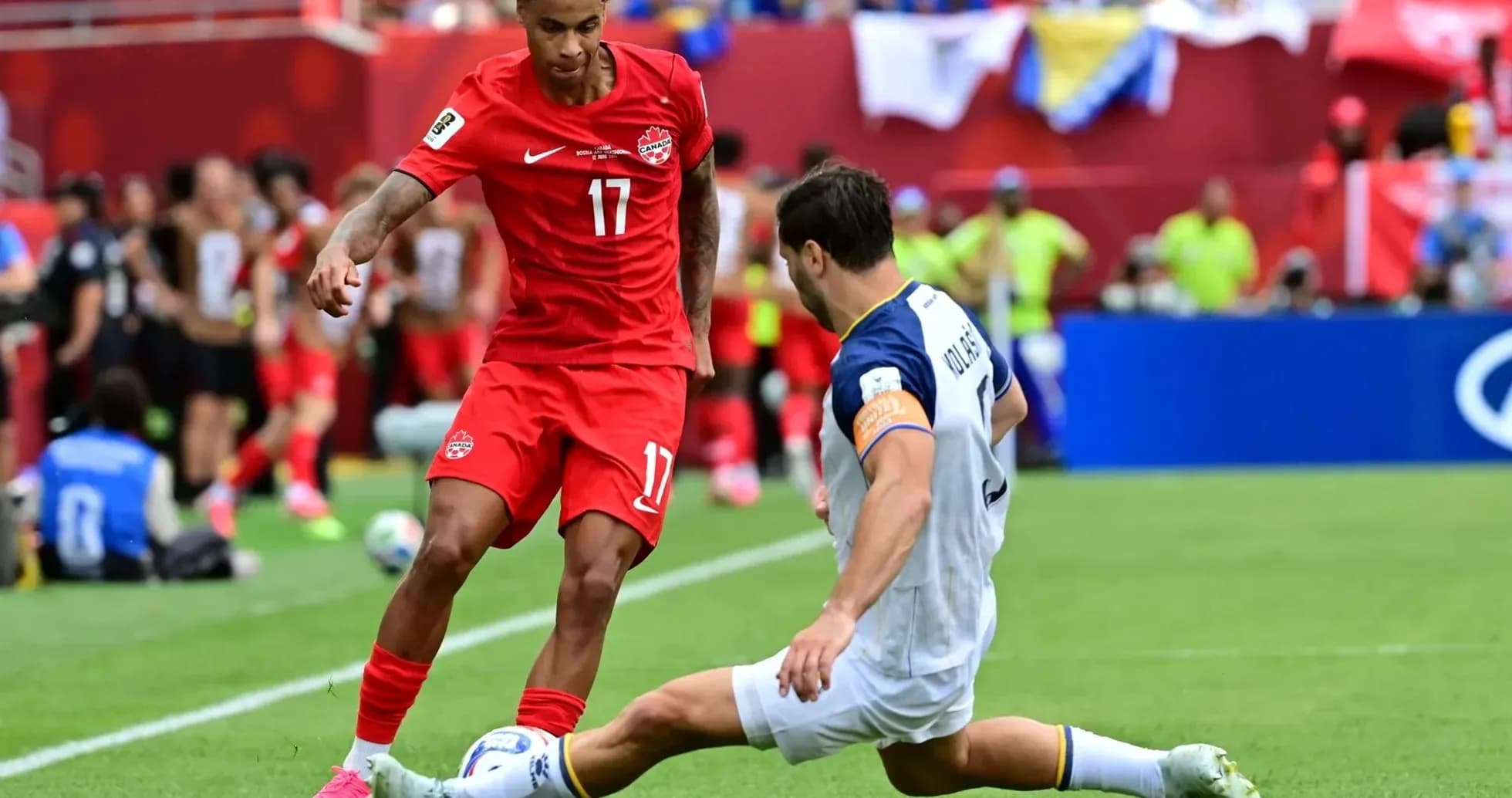
Canada’s 4-4-2 under Jesse Marsch was front-foot and possession-oriented. With 61% of the ball and a 415–270 pass advantage, they built consistently from the back through Derek Cornelius and Luc De Fougerolles, using the full-backs to create width. Richie Laryea advanced aggressively on the left, with Liam Millar starting narrow from the left midfield line to overload central lanes. On the right, Alistair Johnston pushed high in tandem with Tajon Buchanan, effectively turning Canada into a 2-4-4 in settled possession.
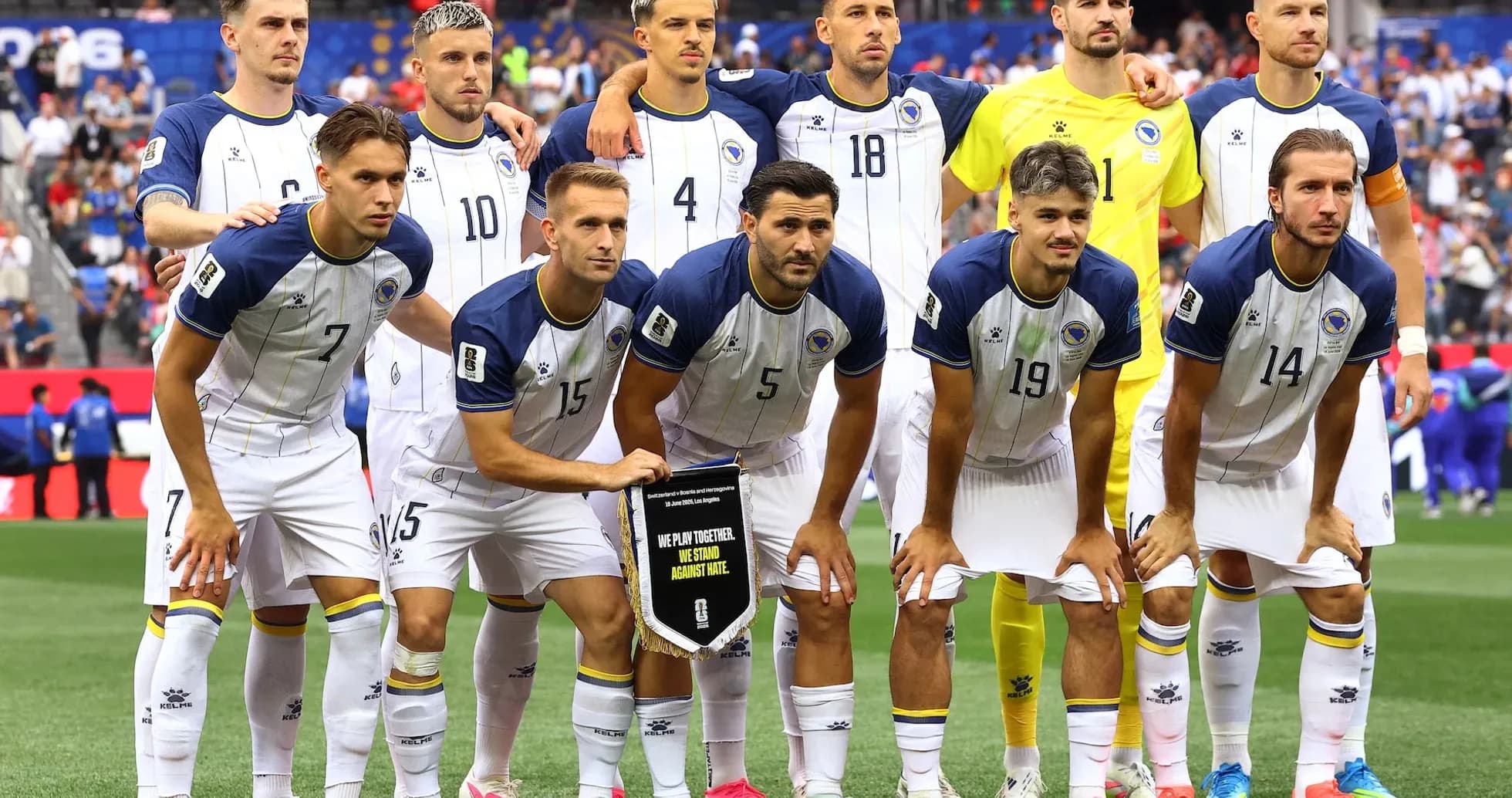
Bosnia & Herzegovina, also nominally 4-4-2, played a far more conservative version. The back four of Amar Dedić, Nikola Katić, Tarik Muharemović and Sead Kolašinac stayed compact and narrow, with the midfield line dropping close to them to form a tight 4-4 block. Ermedin Demirović and Jovo Lukić worked primarily as first-line screeners rather than a true pressing pair, aiming to funnel Canada wide and protect the central channels where Benjamin Tahirović and Ivan Bašić held position.
The first half was defined by Bosnia & Herzegovina’s efficiency against the run of play. Despite only eight total shots across the match and three on goal, they struck first through Jovo Lukić at 21', assisted by Sead Kolašinac, capitalising on Canada’s high line and an early-phase transition. That goal aligned with their xG of 0.98: few shots, but of relatively good quality, generated mostly from quick counters and direct play into the front two.
Canada’s attacking pattern relied heavily on volume and territory rather than clear, repeated high-value patterns in the first 45. They produced 13 shots (10 inside the box), but the spacing between the lines was often too flat, making it easier for Bosnia & Herzegovina to compress space. Stephen Eustaquio and Ismael Koné tried to orchestrate from central midfield, but with both starting relatively high, there was limited staggering to pull Bosnia & Herzegovina’s midfield out of shape. The two early yellow cards — Alistair Johnston at 11' and later Luc De Fougerolles at 53', both for “Foul” — reflected Canada’s aggressive counter-pressing when possession was lost.
The game’s tactical hinge came around the hour mark. Marsch made a triple attacking substitution at 61', with Promise David (IN) coming on for Jonathan David (OUT), Ali Ahmed (IN) for Tajon Buchanan (OUT), and Jacob Shaffelburg (IN) for Liam Millar (OUT). This injected pace, direct running, and more vertical threat between the lines. Promise David, in particular, altered the dynamic by dropping into pockets and then spinning in behind, adding an extra layer to Canada’s forward movements.
Sergej Barbarez responded quickly on 62', withdrawing Jovo Lukić (OUT) for Samed Baždar (IN) and Ivan Bašić (OUT) for Armin Gigović (IN), attempting to refresh the front line and central energy. Later, at 74', Kerim Alajbegović (IN) replaced Amar Memić (OUT) and Ivan Šunjić (IN) replaced Esmir Bajraktarević (OUT), reinforcing the midfield’s defensive density as Bosnia & Herzegovina increasingly protected their lead.
Canada’s equaliser at 78' was a direct product of these changes: Cyle Larin (IN) had entered at 76' for Tani Oluwaseyi (OUT), and within two minutes he scored, assisted by Promise David. The pattern underlined a clear tactical shift — more crosses, more penalty-box presence, and a second-phase focus around knockdowns and cutbacks. With nine corners to Bosnia & Herzegovina’s four, Canada consistently pinned their opponents deep and finally converted that territorial pressure into a goal.
Defensively, Canada’s high line and aggressive full-backs left them vulnerable early, but once trailing, they controlled transitions better. The foul count — 10 for Canada against 20 for Bosnia & Herzegovina — underlined how often Bosnia & Herzegovina resorted to breaking play. Their three yellow cards (Ermedin Demirović at 44', Jovo Lukić at 45+1', and Nikola Katić at 90+3', all for “Foul”) were a direct consequence of repeatedly disrupting Canadian rhythm, especially as the second half wore on and Canada pushed more men forward.
In goal, Maxime Crépeau (Canada) faced three shots on target and made 2 saves, while Nikola Vasilj (Bosnia & Herzegovina) dealt with four shots on goal and made 1 save. The “goals prevented” metric at -0.26 for both sides suggests that each goalkeeper conceded slightly more than the underlying shot quality might have predicted, hinting that finishing rather than elite shot-stopping defined the scoreline.
Statistically, Canada’s 1.25 xG versus Bosnia & Herzegovina’s 0.98 xG encapsulates the story: Canada created marginally better chances in both volume and quality, particularly after the hour when the substitutions tilted the game. Their passing structure — 415 passes, 310 accurate (75%) — reflected a team comfortable circulating the ball, especially across the back line and into the wide areas. Bosnia & Herzegovina’s 270 passes with 172 accurate (64%) pointed to a more direct, risk-accepting approach, happy to concede possession in exchange for compactness and counter-attacking potential.
The shot profile reinforces the tactical contrast. Canada’s 13 shots with 10 inside the box and four blocked attempts show sustained pressure against a deep block, often facing multiple bodies between shooter and goal. Bosnia & Herzegovina’s eight shots, five from inside the box, were more selective and transition-based. Corner disparity (9–4) and the higher foul count against Bosnia & Herzegovina underline a second half played largely in their defensive third.
In the end, the 1-1 scoreline matched the balance between Canada’s territorial dominance and Bosnia & Herzegovina’s structural resilience. Canada’s bench impact and wide overloads salvaged a point; Bosnia & Herzegovina’s compact 4-4-2 and disciplined (if often foul-heavy) block ensured they did not leave BMO Field empty-handed.