Canada's Landmark 6-0 Victory Over Qatar in World Cup
Canada came for a statement. It left with a landmark.
A modest win over Qatar would have done the job on Thursday night. Instead, Vancouver watched Canada tear into their opponents 6-0, a first-ever men’s World Cup victory that felt less like a result and more like a declaration: this is a soccer nation now.
The scoreline will live in Canadian sporting folklore. So will the scar that came with it.
A city painted red
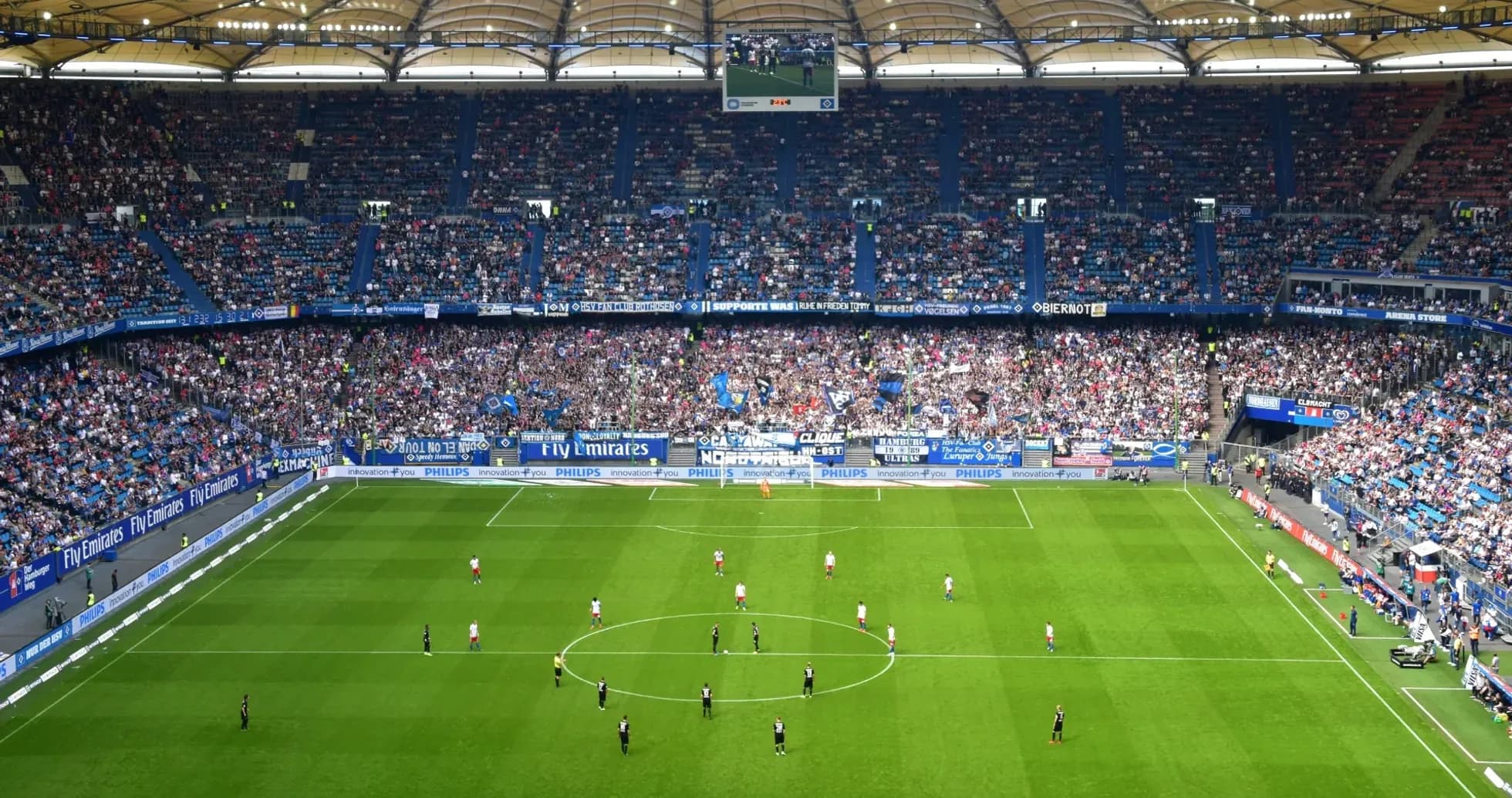
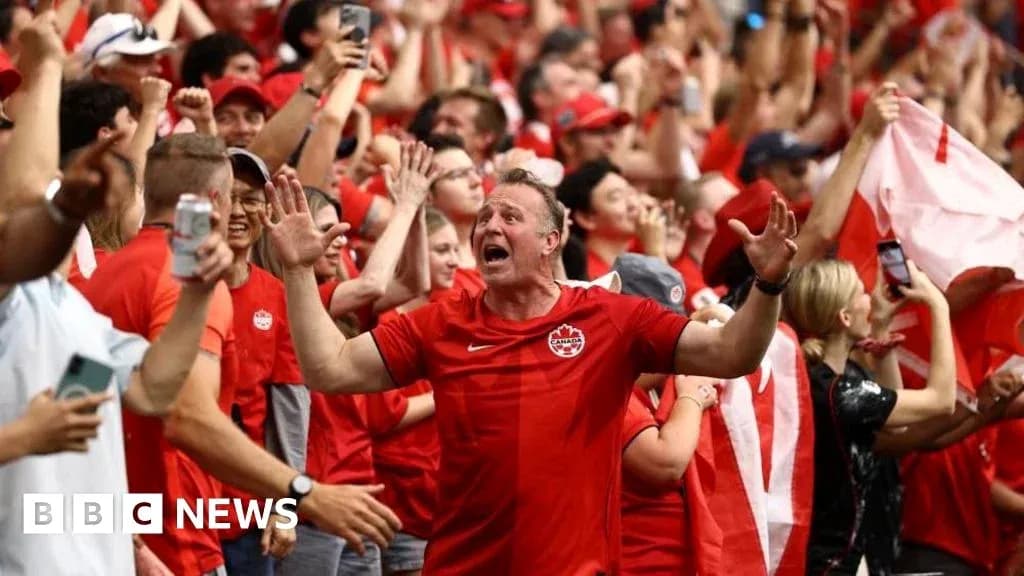
By kickoff, Vancouver was already humming. The “last mile” to the stadium turned into a red-and-white procession, thousands of fans marching through a haze of smoke flares, scarves raised, songs echoing off the buildings. Inside, 52,000 people packed the stands, a sea of red jerseys and maple leaf flags, a few white shirts dotted in between like punctuation marks.
This was Canada’s first game of the tournament in Vancouver, and it felt like a homecoming. Across the country, watch parties formed their own small theatres: Granville Street in Vancouver, neighbourhood bars in Toronto, gatherings in cities and towns that once saved this kind of energy for hockey or basketball.
In one of those Toronto bars, longtime supporter Dave Di Cola settled in with dozens of others, carrying what he called “reserved optimism.” Years of following Canadian football will do that to you. Anything can happen in this sport, and for Canada, it usually has.
Not this time.
Ruthless on the pitch
From the opening whistle, Canada played like a team tired of being treated as a novelty act. The ball moved quickly, the press bit hard, and Qatar never found a foothold. Three goals before half-time told the story: clinical finishing, relentless pressure, and a crowd that roared with each wave of attack.
By the final whistle, the scoreboard read 6-0. Qatar finished with nine men after two red cards, and the numerical advantage only widened the gulf that had already opened. It turned from a contest into a showcase.
Jonathan David stole much of the spotlight, scoring three of Canada’s six. His hat-trick became an instant symbol of the night, captured perfectly in one photograph that swept across social media: a fan wearing a Connor McDavid hockey jersey, the “Mc” covered by a taped-on “J” to honour David. A hockey nation, quite literally, rewriting its heroes.
For supporters like Di Cola, this was more than a big win. It was validation.
“Canada soccer has always been kind of a joke. It’s always secondary,” he said. Watching the outpouring of support in Vancouver and beyond, he admitted, “nearly brought a tear to my eye.”
Les Rouges, once an afterthought, now look like serious contenders in this tournament. The country is watching, and for once, not out of curiosity or pity, but expectation.
Triumph with a fracture at its heart
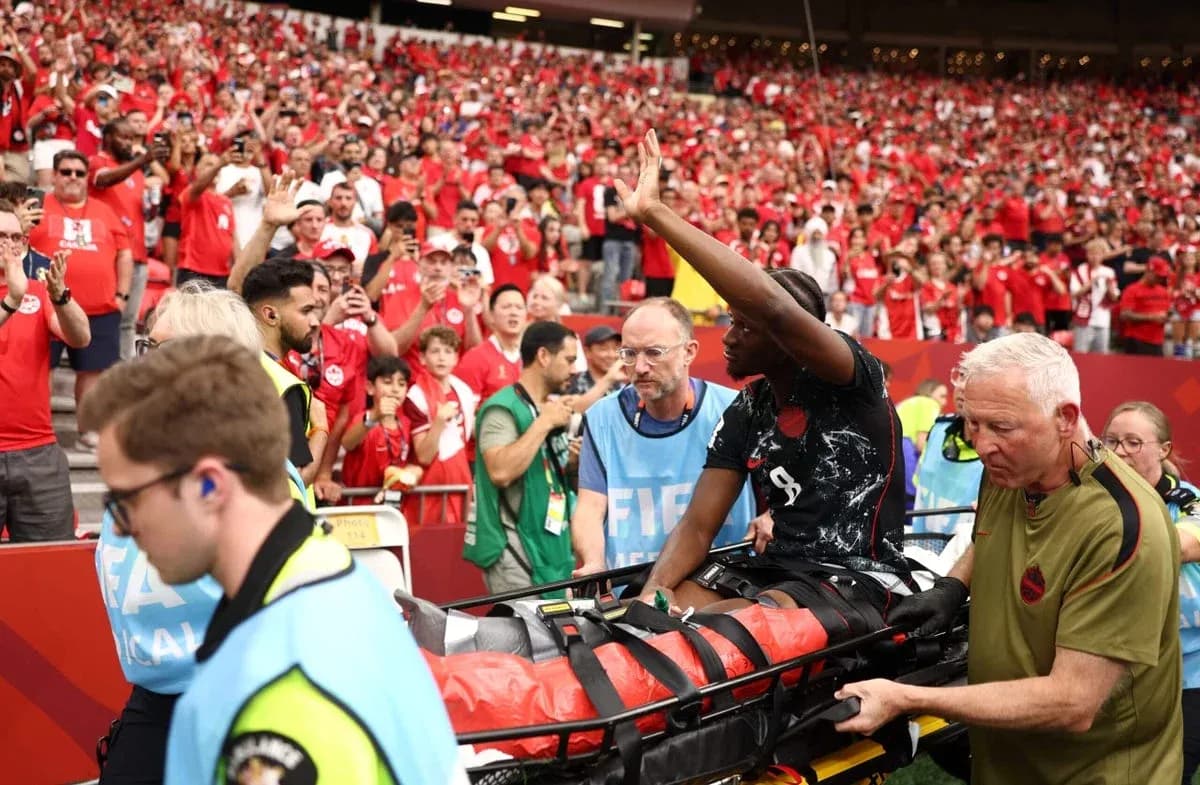
Yet the night’s defining image was not a goal. It was Ismaël Koné on the turf.
Midway through the match, the midfielder went down in a challenge and stayed down. The noise inside the stadium shifted instantly, from jubilation to a low, anxious murmur. Medics rushed on. Teammates formed a protective ring around him, some waving frantically for help, others staring at the ground, already fearing the worst.
The diagnosis came quickly: a broken leg, tournament over.
Koné has been central to Canada’s rise, an Ottawa native who gives their midfield its engine and edge. Coach Jesse Marsch has spoken of him as “a big part of the heart of our team,” and on Thursday night, that heart took a brutal hit.
As Koné was treated and taken off, the Canadian players rallied. Nathan Saliba came on in his place and, not long after, smashed in Canada’s fourth goal. His celebration said everything: he held up Koné’s jersey to the crowd, a simple, raw tribute that cut through the noise.
On Friday morning, after undergoing surgery, Koné addressed his teammates on Instagram. “What you guys did yesterday will stay with me forever,” he wrote. Even from a hospital bed, he understood the scale of what had happened.
A nation watching, and responding
The significance wasn’t lost on those in power either. In the post-match locker room, Prime Minister Mark Carney spoke to the squad, not about tactics or politics, but about character.
He praised them for their response to Koné’s injury, calling it “a level of character that some people never achieve.” He reminded them that an entire country, and much of the world, had seen how they reacted in that moment of shock.
“You showed it when the entire country and a good part of the world is watching,” Carney told them. “And if they didn’t watch they would have watched the highlights tomorrow.”
Canada’s sporting history already boasts some towering moments: Sidney Crosby’s golden goal in Vancouver in 2010, the Toronto Raptors’ NBA title in 2019, the women’s football team’s Olympic gold in Tokyo in 2020. Those are the pillars.
Di Cola is the first to admit that a 6-0 win over Qatar does not yet belong in that pantheon. “A long way to go,” he said, and he’s right. This is not the summit. It might just be the first clear view of it.
Still, something shifted on Thursday night. The old jokes about Canadian soccer felt tired, out of place. The scenes in Vancouver, the viral images, the roar in that stadium – they all pointed in one direction.
Canada has its first men’s World Cup win. It has a team that looks like it belongs on this stage. It has momentum.
Next up is Switzerland.
Now the question is no longer whether Canada can compete.
It’s how far this team, carrying both a historic win and the weight of Koné’s absence, can actually go.