Wouter Vrancken Takes Charge at Hearts: A New Era Begins
Six weeks ago, Hearts were a couple of moments from the Scottish Premiership title. Since then, the club has been torn up and reassembled at speed.
The captain has gone. Several mainstays have followed him out the door. Seven new signings have arrived. Derek McInnes has departed, and in his place sits Wouter Vrancken, a 47-year-old Belgian stepping into his first job outside his homeland and into the eye of a Tynecastle storm.
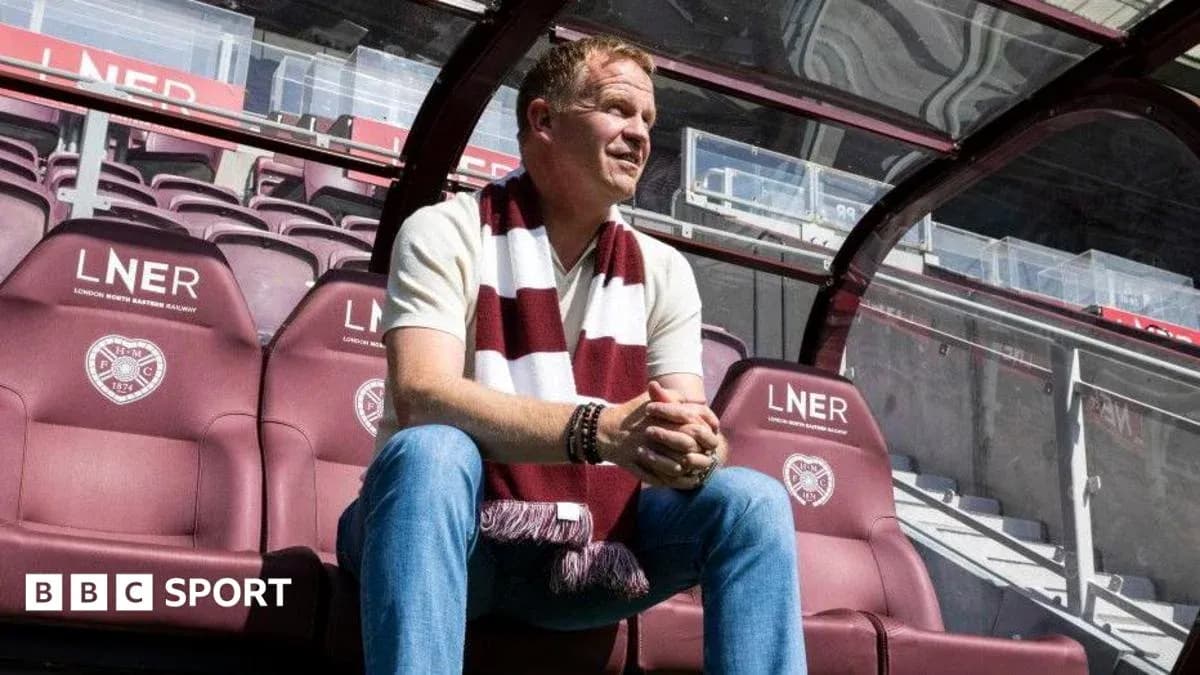
When Vrancken finally took his seat in front of the cameras, it felt less like a routine unveiling and more like a line in the sand. Hearts are not just changing coach. They are doubling down on a project.
Data, ambition and a new kind of head coach
Tony Bloom’s fingerprints have been on Hearts for more than a year now. His analytics operation has quietly reshaped the club’s recruitment and long-term planning. With McInnes gone and Vrancken in, that influence is no longer in the background. It is front and centre.
Sporting director Graeme Jones made it clear how the new man emerged from the search: the data loved him. The numbers highlighted a coach who consistently pushed Sint-Truiden and Genk beyond their expected level in Belgium. A serial overachiever in a league where resources are brutally exposed.
That matters at Hearts, where the remit is clear: compete at the very top against clubs with bigger budgets and deeper squads.
Just as important, Vrancken arrives as a pure head coach, not an old-school manager demanding full control. He has always worked inside collaborative structures, where recruitment is shared and shaped by data. At Tynecastle, that is non-negotiable.
Seven players have already signed before he has even taken a training session. Some coaches would bristle at that. Vrancken leans into it.
“I always wanted to look behind the curtain, actually,” he said, speaking about the data-led model he encountered in Belgium and now joins from the inside. He talks about trust in the process, about wanting to be part of the machinery rather than fighting it.
His friendship with Chris O’Loughlin, sporting director at Union Saint-Gilloise – another club in Bloom’s orbit and a recent rival in Belgium – only underlines the sense that Hearts have picked a man who understands this world instinctively.
High tempo, high stakes
On the pitch, Vrancken’s reputation is clear enough. His teams in Belgium played on the front foot, aggressive and attacking, with an emphasis on intensity and pressure. He is not coming to Edinburgh to sit in and nick 1-0 wins.
There is a catch. He has four weeks to imprint that style before a Champions League qualifier against Sturm Graz. Four weeks to weld a reshaped squad into a side capable of playing with the ferocity he demands.
He does not pretend that is easy. But he is not about to park his ideas either.
He talks about wanting the ball. About positivity and construction. About joy. For him, enjoyment is not a luxury add-on; it is the fuel that takes players to their ceiling. If they love the way they play, they commit to it fully.
So the vision is clear: Hearts pressing high, playing as offensively as possible, flooding the game with energy. It is a style he believes fits Scottish football, with its appetite for tempo and confrontation.
The question is whether the squad, in its current state of churn, can get there quickly enough.
A squad in motion
The cost of ambition has been instability. Hearts’ near-miss in the title race has been followed by a summer of upheaval.
Captain Lawrence Shankland has gone. So has Beni Baningime, a central pillar of last season’s push. Cammy Devlin has yet to decide whether he will sign a new deal. Michael Steinwender and Frankie Kent are also out. Craig Halkett will miss the start of the season through injury. Reports suggest Claudio Braga and Alexandros Kyziridis could be next to move on.
It is a lot, even for a club braced for high turnover when Bloom’s model came in.
Vrancken does not flinch. He describes it as a good, big squad, one that “did very well last year” and does not require wholesale change from him. Different emphasis, yes. Different traits in certain positions, probably. But not a demolition job.
He is careful to respect what McInnes built, calling the previous coach’s work “incredible” and insisting he does not intend to rip it up. Yet he is equally clear: two coaches are never the same. They see different things, demand different details, lean on different qualities.
And he has already seen enough in this group to believe he can bend it towards his own game model.
Learning to live with heartbreak
All of this unfolds against the backdrop of a wound that has barely begun to heal. Hearts lost the title in the dying minutes of a thrilling campaign. The psychological scar is fresh.
Vrancken knows exactly what that feels like. In 2023, his Gent side were denied the Belgian title by a late Royal Antwerp goal on the final day. Same script, different league.
“It takes time [to get over] for sure,” he admits. But he also knows the only way out is forward – new season, new goals, a deliberate refusal to stare too long in the rear-view mirror.
He talks about putting energy into what is to come, not what has gone. About wanting to be “on the good side of the story” next time the title is decided in the final moments.
That is the kind of language that fits a club like Hearts. This is not a place for small ambitions. It is a club that expects to be in the argument when the medals are handed out.
Vrancken embraces that. He calls ambition the best environment to work in, describes the target at Hearts as “a good point of focus, a good goal to have”. The remit is not survival, or consolidation. It is to push again at the very top of the table and see how far this model can really take them.
The rollercoaster is unlikely to slow down. Players will keep coming and going. The data will keep driving decisions. The margins at the summit will stay brutally thin.
The only real unknown now is whether Wouter Vrancken can turn Hearts’ new vision into the kind of story that ends with them, finally, on the right side of the final whistle.