The World Cup That Defied Expectations
This World Cup will not be remembered for a single defining final or a flawless champion. It will be remembered for the games that broke character, the players who refused to fade, and the hosts who turned a sprawling, awkwardly stitched tournament into something strangely compelling.
Matches that bent reality
Start with the old certainty: Germany don’t lose penalty shootouts. Paraguay tore that myth up. Their last‑32 tie finished 1-1, and the shootout that followed was pure theatre. Germany, the team that usually walks those moments, crumbled in spectacular style. Paraguay held their nerve. A routine knockout tie became a jolt to the system.
Some games didn’t just defy expectation; they shredded it. Algeria 3-3 Austria was supposed to be a non-event, a classic biscotto where a gentle draw would usher both sides through. For long stretches it felt exactly that: a soft, staged kickabout drifting towards its preordained conclusion. Then stoppage time arrived, and the match slipped into a fever dream. Chaos, goals, panic. The script went in the bin.
Mexico 2-3 England at the Azteca carried a different kind of weight. From the moment the draw dropped, the fixture felt loaded. The stadium, the history, the altitude, the noise – it all built into a night that had to deliver. It did. A thunderstorm delayed kick-off, Mexico produced their best first half, England clung on, then surged. It was tense, draining, and utterly gripping. For England, it became a high-water mark that will outlast the disappointments that followed. For those inside that awesome bowl of concrete and sound, it was a bucket-list night that lived up to the myth.
England kept finding themselves in the middle of it. A 4-6 defeat to France veered towards slapstick, goals piling up in a game that felt almost absurd. England 1-2 Argentina, by contrast, had a grim familiarity: two heavyweights, one mistake too many, a result that felt brutally inevitable.
Argentina, though, saved their most dramatic work for others. Their 3-2 win over Egypt in the last 16 looked impossible for long stretches. The defending champions trailed by two, already half-packing their bags in the mind’s eye, before Lionel Messi dragged them back. A late, Messi-driven comeback turned a looming humiliation into a classic. The referee’s performance drew its own share of fury, but the drama was undeniable.
Then came Argentina 3-2 Cape Verde, the kind of match that would have sounded like fantasy a decade ago. Cape Verde refused to be overawed, refused to go away, and Sidny Lopes Cabral bent one into the top corner to level it in extra time. For improbable wonder, that night stood alone.
Cape Verde weren’t a novelty act. Their 2-2 draw with Uruguay in Miami showed an attitude and discipline that made them impossible not to enjoy. Vozinha, their 40-year-old goalkeeper without a club, turned into a cult figure, frustrating giants and carrying a story that felt like genuine fairytale, not marketing spin.
Elsewhere, Cape Verde 2-2 Uruguay wasn’t the only underdog showcase. Cape Verde 2-2 Uruguay in Miami crackled with energy; Senegal, Haiti, Bosnia and Herzegovina, Uzbekistan and others all left their own marks on the narrative. Cape Verde’s joy, Mexico’s fury, England’s wild swings, Argentina’s brinkmanship – this was a tournament that refused to settle into a single tone.
Rodri, Vozinha, Messi and the stars who stayed
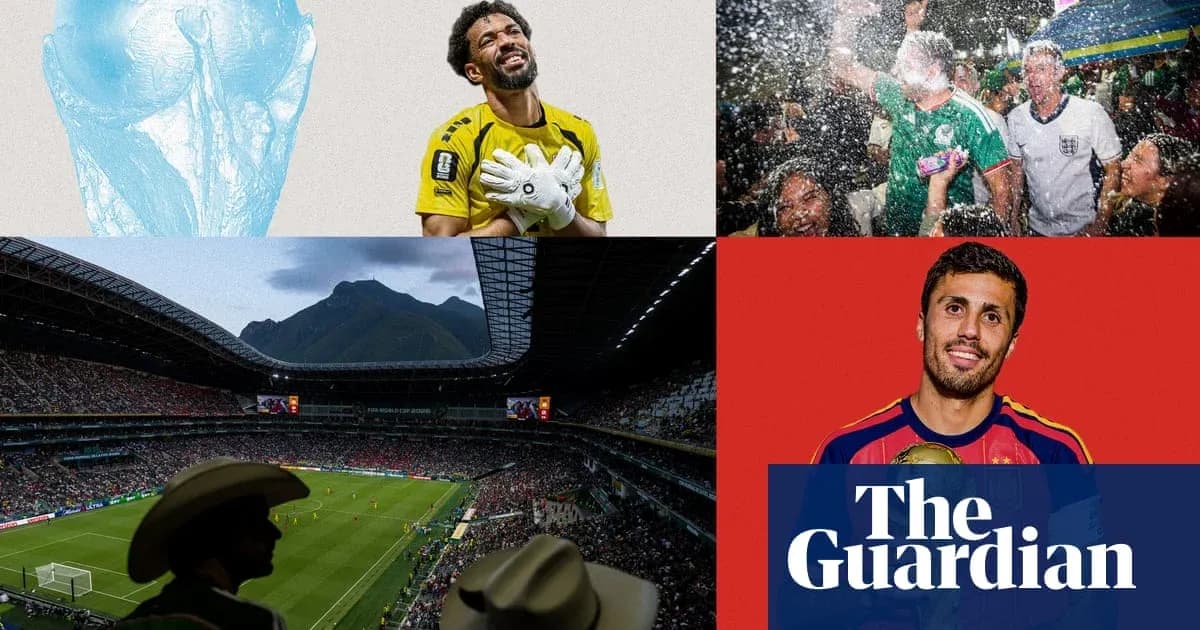
On the pitch, one player towered above the rest. Rodri, the calm heartbeat of a Spain side that rediscovered its possession soul, became the tournament’s metronome. He dictated games, set tempo, killed chaos. For Spain, he was capitán, líder, leyenda – the outstanding figure in a team that looked, for long stretches, like the best in the world.
Kylian Mbappé collected the Golden Boot, padded by a wild third-place game, but it wasn’t a hollow haul. He led a France side that looked destined to take the trophy until Spain stopped them in the semi-finals. Erling Haaland, dragging Norway into a historic quarter-final run, left with goals, a credible Golden Boot tilt and a surge in global star power, particularly in North America.
Lionel Messi, even in the twilight of his World Cup story, still bent games to his will. His comeback orchestration against Egypt and his record-breaking goals against Austria in Dallas turned early Argentina fixtures into mass pilgrimages. Jude Bellingham, at the heart of Thomas Tuchel’s England, justified his selection emphatically after pre-tournament doubts. Michael Olise floated through games with an elegance that made his missed hat-trick against England feel like a genuine regret.
Yet some of the most compelling performances came from unexpected corners. Vozinha, at 40 and clubless, became a symbol of Cape Verde’s debut. He shut out and frustrated elite sides, his story resonating far beyond the islands. Pau Cubarsí, still a teenager, announced himself as a defender of rare poise. Roberto “Pico” Lopes, the Shamrock Rovers stalwart, threw himself into everything for Cape Verde, playing as if each block might change his life.
This was a World Cup where the biggest names did show up – Haaland, Mbappé, Messi, Bellingham – but where the quiet geniuses, the late bloomers and the overlooked journeymen stole just as many hearts.
Goals that will live for ever
One strike, more than any other, defined the tournament’s sense of wonder. Sidny Lopes Cabral’s equaliser for Cape Verde against Argentina was a thunderbolt and a turning point rolled into one. Long range, audacious, hit with venom and curl, it flew beyond Emi Martínez and inside the far post. The moment it left his boot, time seemed to slow. The reaction was almost as good as the goal: Cabral clutching his head in disbelief before seeking out his girlfriend in the stands. A World Cup debutant, a knockout tie, Argentina pegged back – it had everything.
The goal became a reference point. Writers, pundits, fans kept circling back to it. Some called it one of the great World Cup goals, full stop. Others simply remembered the sound they made when it went in, a kind of involuntary roar they’d never reproduce.
There were others. Erling Haaland’s second against Brazil, stroked into the bottom-right corner from outside the box, summed him up: precise, powerful, ruthless. Julián Álvarez, quiet for much of the tournament, detonated a vicious, swerving long-range effort in extra time against Switzerland in Kansas City, lighting up a cauldron of noise. Wilson Isidor’s long-range strike for Haiti against Morocco was hit so cleanly, so perfectly, that some insisted it belonged in any all-time World Cup compilation, regardless of its ultimate impact.
Kerim Alajbegovic, the 18-year-old from Bosnia and Herzegovina, slalomed past defenders and lashed in off balance against Qatar, enhancing a fast-growing reputation. Eldor Shomurodov’s instinctive lob for Uzbekistan against DR Congo, from a tight angle, lodged in the memory as one of those oddly satisfying finishes that defy geometry. Even a disallowed rocket – an Uzbekistan strike ruled out after being hammered into the top corner – stayed in the mind.
And if you prefer simple, brutal clarity, Harry Kane’s second for England against DR Congo, or Haaland’s laser against Brazil, offered it in spades.
Moments that stayed with those who were there
Beyond the goals and the drama, this World Cup lived in smaller scenes.
Eloy Room, 37 years old, stood between Curaçao and Ecuador and broke the record for most saves in a 90-minute World Cup match. As Cape Verde’s Vozinha dominated the headlines, Room quietly enjoyed his own moment, joking afterwards that he might need a statue back home.
After final whistles, when the crowds had gone, the pitches told their own story. Fifa usually guards natural grass like treasure, but once the last games in each venue finished, the gates opened. Stadium workers, volunteers, security guards, low-level Fifa staff and local club stalwarts drifted on to the turf. Some kicked a ball around, some took selfies, some just walked the length of a field they’d spent weeks serving from the shadows. It was their World Cup, too.
The Azteca did what the Azteca always does: swallowed you whole. Mexico’s win over Ecuador produced a noise that felt physical. Later, Mexico 2-3 England turned into a night that left everyone exhausted. Lightning, rain, tension, Bellingham running the show, England claiming what might stand as their greatest away win, even if the wider campaign soured.
There were quieter, stranger memories. Senegalese journalists passing around a packet of malted milks during their anthem before a collapse against Belgium. A kickabout with Danny Cipriani, once a trainee alongside Harry Kane at Tottenham, thrown into the middle of a World Cup work trip. A mariachi in a giant sombrero being patiently walked through the permutations that might yet bring Spain to the Azteca.
Pico Lopes throwing himself into tackles for Cape Verde, his Irish roots and Cape Verdean heritage colliding on the biggest stage. Vozinha’s mother, against all expectations, travelling from the islands to see her son at a World Cup. Nestory Irankunda reviving Tim Cahill’s iconic celebration for Australia against Turkey, a symbolic handover from one generation to the next.
Scotland finally walked out at a World Cup again, warming up to Scotland the Brave on bagpipes in Foxborough. The game against Haiti went south, badly, but that first roar meant something. In Kansas City, England built a base and a bond with the locals, who embraced them even after Mexico’s heartbreak.
And then there were the offbeat details: standing knee-deep in floodwater in Monterrey waiting for a bus after a doomed trip to retrieve a mislaid iPad; watching a Spain team bus motorcade from the same sixth-floor vantage point from which Lee Harvey Oswald fired on JFK; the pancakes at Mile End Deli; a live show in Manhattan punctuated with a booming “HELLO NEW YORK!”
Hosts under the microscope
A World Cup spread across the USA, Mexico and Canada was always going to feel unwieldy. It did – and yet it worked, in its own messy way.
In the United States, the sheer level of public interest surprised even seasoned visitors. Strangers stopped journalists in the street to talk football. The sport became a shared language in cities where, not long ago, it barely registered. The infrastructure, though, asked a lot of everyone involved. Endless travel, remote stadiums miles from city centres, public transport that often didn’t exist. Florida felt almost impossible to navigate without a car; Boston traffic became a running joke.
On the pitch, the US played some of the prettiest football their national team has ever produced, then fell short against Belgium. Beneath the surface, questions lingered about player development and coaching vision. Off the pitch, the Folarin Balogun saga, and the sense that the US administration had leaned on Fifa to bend the tournament’s course, left a sour smell.
Mexico, by contrast, offered pure, concentrated football culture. Fervent, febrile, endlessly alive. The Azteca, Monterrey, the fanbases that turned every game into a festival – it all felt like a World Cup in its natural habitat. Mexico barnstormed Group A, outclassed a rising Ecuador, then hurled themselves at England in that 3-2 epic until the ideas ran out in the final half-hour. Even in defeat, they became one of the tournament’s great bandwagon teams.
Canada embraced the occasion with an earnest joy. Toronto buzzed for their first World Cup match on home soil, a draw with Bosnia and Herzegovina that still felt like a landmark. A 6-0 demolition of Qatar in Vancouver showed a team with pluck and ambition, driven on by Jesse Marsch’s relentless energy. Around Canada Day, Toronto wanted to be told they were a “real” football nation. They were.
Cities such as Vancouver and Seattle, with downtown stadiums and existing soccer traditions, felt like natural hosts. Others, like Dallas and San Francisco, absorbed the World Cup as a novelty rather than a heartbeat. Yet across six weeks in America, one thing stayed consistent: the people. Hotel staff, bartenders, reality TV faces, fans – almost all of them went out of their way to be warm, to insist that visitors understood that the worst of US politics did not define them.
It wasn’t perfect. Fifa’s decision to take direct control of tournament organisation exposed the limits of centralised planning. The absence of a strong local organising committee in places showed. The final, many argued, belonged in Mexico City or in Atlanta’s downtown arena, not in a remote bowl miles from any urban pulse.
But the World Cup did what it always does. It seeped into daily life. In host cities, it became almost impossible to go a couple of hours without someone starting a conversation about the sport. For a country wrestling with isolationist instincts, that mattered.
By the end, the tournament had put the “whirled” in World Cup – sprawling, uneven, impossible to generalise. It gave us Sidny Lopes Cabral from distance, Rodri in total command, Vozinha at 40, Messi still summoning miracles, Mexico and England trading blows under the Azteca lights.
The question now is simple: after a World Cup this strange and this wide, how on earth does the next one follow it?