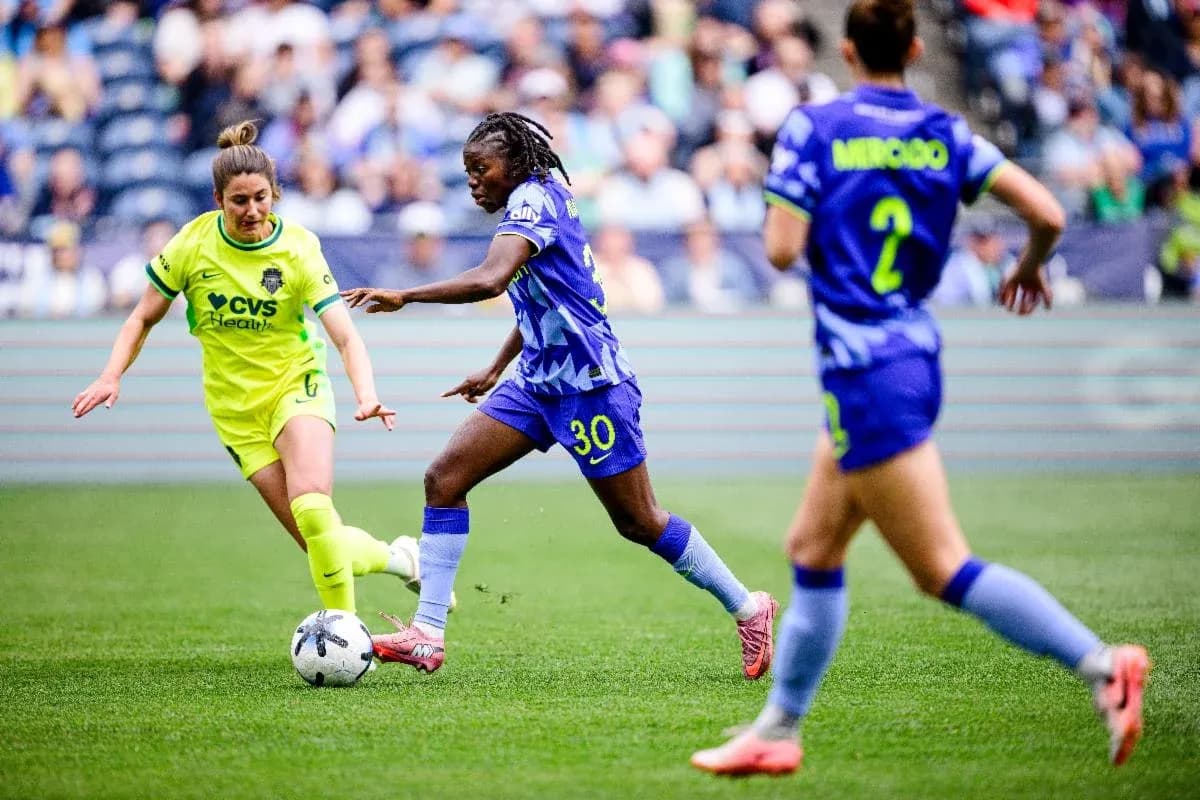
Utah Royals W vs Racing Louisville W: NWSL Showdown at America First Field
Utah Royals W host Racing Louisville W at America First Field in a mid-May NWSL Women group-stage fixture that already carries play-off weight: Utah sit 4th with 17 points from 9 games and are inside the projected quarter-finals spots, while Racing are 15th on 7 points from 8 games and desperate to halt a perfect-lose away record that is dragging them toward the bottom of the table.
Head-to-Head Tactical Summary
The recent head-to-head pattern is split between Utah’s control at home and Racing’s higher-scoring edge in Louisville, with all four recorded meetings coming in league play.
On 20 September 2025 at America First Field in Sandy, Utah Royals W beat Racing Louisville W 3-2, after building a 3-0 lead by half-time (HT 3-0, FT 3-2). Earlier that year, on 7 June 2025 at Lynn Family Stadium in Louisville, Racing Louisville W won 3-2 in an open game (HT 2-2, FT 3-2).
In 2024, Utah had the upper hand at home but suffered heavily away. On 28 September 2024 at America First Field in Sandy, they earned a 1-0 home win (HT 0-0, FT 1-0). On 20 April 2024 at Lynn Family Stadium in Louisville, Racing Louisville W produced a dominant 5-1 victory (HT 1-1, FT 5-1).
Across these four fixtures, Utah have taken both home games (3-2 and 1-0 in Sandy), while Racing have won both in Louisville (3-2 and 5-1), underlining a strong venue effect and a tendency for high-scoring contests, especially in Kentucky.
Global Season Picture
- League Phase Performance: In the league phase, Utah Royals W are 4th with 17 points from 9 matches, scoring 12 goals and conceding 6 (goal difference +6). Their home record is 2 wins and 1 loss from 3 games, with 4 goals for and 2 against. Racing Louisville W are 15th with 7 points from 8 matches, having scored 13 and conceded 15 (goal difference -2). Critically, all of their points have come at home; away they have played 5, lost 5, scoring 5 and conceding 10.
- Season Metrics: In the league phase, Utah’s profile is that of a balanced, efficient side. They average 1.3 goals scored and 0.7 conceded per match (12 for, 6 against in 9), with 5 clean sheets and only 1 match without scoring, indicating a compact defense and consistent attacking threat. Their most-used formation is 4-2-3-1 (8 matches), with a single outing in 4-3-3, and they have converted both penalties awarded (2/2). Disciplinary data shows a concentration of yellow cards from minutes 46–75 (9 yellows out of their recorded total) and a single red card late in games (76–90), suggesting increased aggression in closing phases.
- Form Trajectory: In the league phase, Utah Royals W come into this game on a strong upward curve. Their standings form string is DWWWW, meaning 4 consecutive wins preceded by a draw; combined with the wider statistics form (LLDWWWWWD), they have recovered from an early slump to become one of the most in-form teams in the league, with a current unbeaten run of 7 matches in all recorded league fixtures.
- Racing Louisville W’s standings form of WLLWL reflects inconsistency: 2 wins and 3 losses in their last 5 league games. Expanded form data (LDLLWLLW) shows a pattern of short-lived positive spikes followed by immediate regression, and crucially, their away portion of that run is entirely negative (5 away defeats from 5). The trajectory suggests a team that can be dangerous in spells but has not solved its structural problems, particularly on the road.
Tactical Efficiency
Using the league-phase statistics as a proxy for tactical efficiency, Utah Royals W project as a controlled, low-variance side. Their goals profile (1.3 scored, 0.7 conceded per match) and 5 clean sheets from 9 fixtures point to a defense-first efficiency: they do not rely on high-volume scoring but on restricting opponents and taking chances when they come. The consistent use of 4-2-3-1 supports a stable double-pivot screen in front of the back line, which aligns with the low goals-against figure. Their ability to win both 2-0 at home and 0-3 away as “biggest wins” suggests they can both control and counter, depending on game state.
Racing Louisville W’s efficiency is almost the mirror image. Their attack is reasonably productive (1.6 goals per game) and capable of high peaks, as evidenced by a biggest home win of 3-1 and the historical 5-1 and 3-2 home wins against Utah, but this is undermined by a leaky defense (1.9 goals conceded per match, no clean sheets). The fact that their heaviest away defeat is 4-3 shows they can score on the road yet still lose, reflecting poor defensive control in transition and set plays. The shared preference for 4-2-3-1 on both sides sets up a like-for-like tactical battle in midfield, where Utah’s more compact defensive numbers (6 conceded vs Racing’s 15) indicate a clear edge in structure and spacing.
In comparative terms, any attack/defense index would rate Utah’s defensive unit significantly higher than Racing’s, while Utah’s attack, though slightly less explosive on raw averages, is more efficient relative to chances conceded and game control. Racing’s model points toward high-variance outcomes: they can generate scoring flurries, but their defensive baseline is too low to sustain results, especially away from home.
The Verdict: Seasonal Impact
From a seasonal perspective, this fixture is pivotal at both ends of the table. For Utah Royals W, a home win would consolidate their 4th place and strengthen their position in the NWSL Women play-off quarter-finals zone. With 17 points from 9 games and a strong form line (DWWWW), three more points would push them closer to the top pack and give them margin for error in tougher away fixtures later in 2026. It would also extend their perfect home record against Racing in recent years and reinforce America First Field as a high-yield venue.
For Racing Louisville W, the stakes are more existential. Sitting 15th with 7 points and having lost all 5 away matches so far (5 goals scored, 10 conceded), another defeat would deepen the gap to mid-table safety and entrench a narrative of an away side that cannot translate home performances to the road. That would increase pressure on coaching and squad management, potentially forcing tactical compromises—such as a more conservative 4-2-3-1 block away from home—that might blunt their attacking strengths.
If Racing can break their away losing streak here, the impact would be disproportionately positive: it would validate their attacking numbers, provide a psychological reset, and pull them closer to the cluster of teams above them, keeping a late push toward mid-table and an outside play-off challenge mathematically alive. Conversely, if Utah assert their defensive efficiency and win as expected by current league-phase trends, the broader story of 2026 will tilt further toward Utah as a stable play-off contender and Racing as a high-risk, low-reward side fighting to avoid being dragged into a prolonged relegation-threat narrative at the bottom of the standings.