USMNT vs Germany: A Night of Goals and Tactical Intrigue
Mauricio Pochettino brings the USMNT into Soldier Field knowing one thing for certain: his back line will not be at full strength. Everything else, from the starting XI to the rhythm of the night, feels up for grabs.
USMNT: Questions at the Back, Firepower Up Front
Chris Richards’ ankle ligament injury, carried over from Crystal Palace, hangs over this camp like a dark cloud. His status has drifted from concern to genuine doubt, to the point where an injury-driven roster change before the World Cup opener is now on the table. What’s clear: he will not feature in Chicago.
That absence strips Pochettino of his most natural ball-playing center back and forces another reshuffle in a unit that already leans on experience and improvisation. Tim Ream’s leadership, Mark McKenzie’s athleticism, and the young Alex Freeman’s energy suddenly feel less like rotation options and more like structural pillars.
The real tactical question sits higher up the pitch. Does Pochettino roll again with something close to his first-choice side, then unleash a wave of substitutions to change the tempo after the break? Or does he flip the script, hand minutes to the supporting cast from the start, and drop the presumed starters into the game when the spaces open up?
His choices against Senegal offer a strong clue. He changed all but one of his outfield players by halftime, a bold churn that suggested he wants his core players to build chemistry from the opening whistle rather than chase it late. That pattern points toward another aggressive, front-loaded XI here, with a familiar shape and familiar faces.
That’s where Folarin Balogun and Weston McKennie come in. Both began on the bench six days earlier; both feel primed to step into starting roles this time. Balogun gives the attack a true penalty-box edge, the kind of striker who forces defenders to turn and run toward their own goal. McKennie, with his timing and bite, changes the entire feel of the midfield battle.
There is also the quiet but significant tweak in goal. Matt Freese, the only goalkeeper not used against Senegal, is expected to start. It’s an opportunity and an audition rolled into one, in front of a back three that will be tested by Germany’s movement and shooting range.
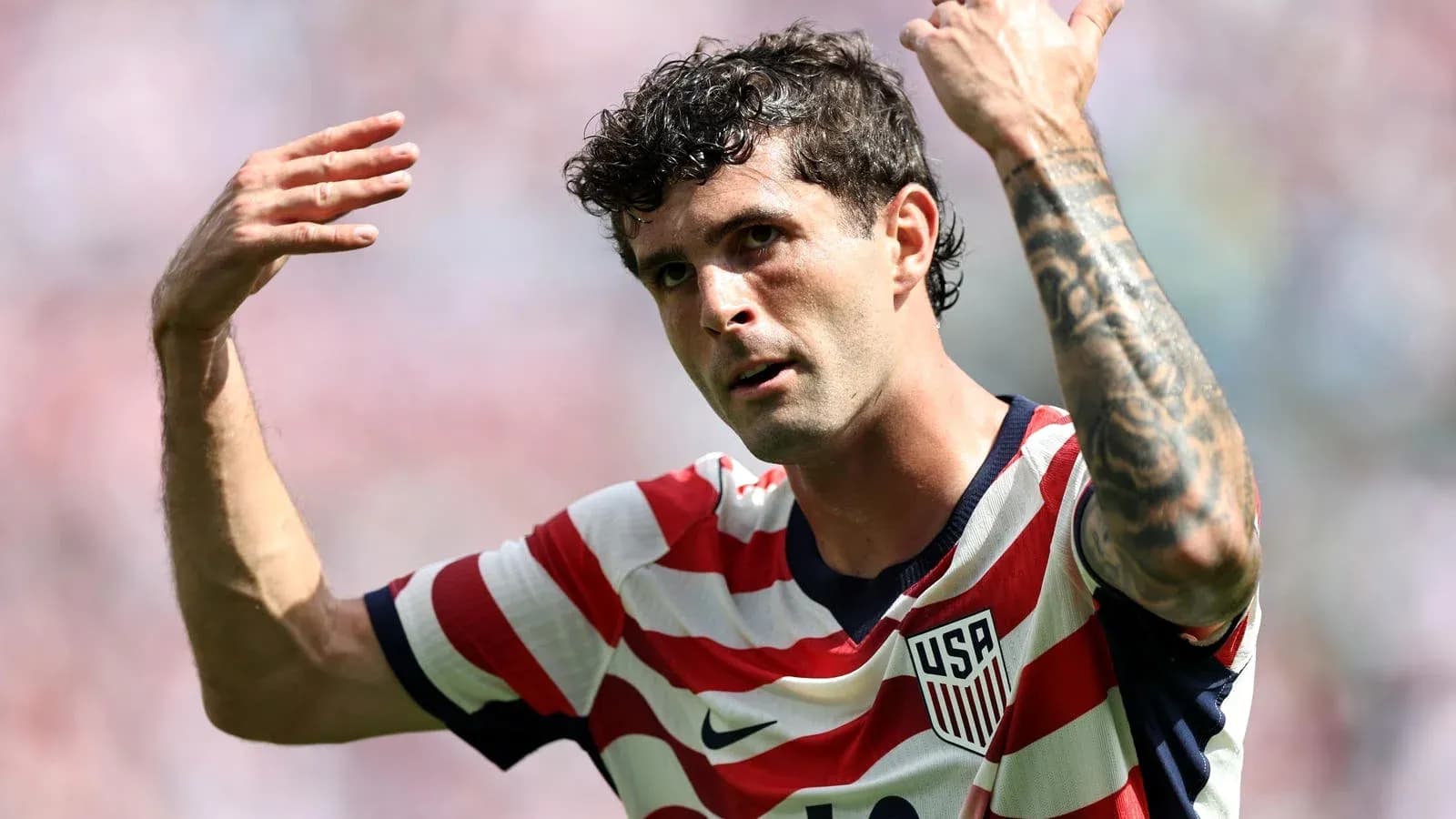
Projected USMNT lineup (3-4-3, left to right): Matt Freese (GK) – Tim Ream, Mark McKenzie, Alex Freeman – Antonee Robinson, Tyler Adams, Weston McKennie, Sergiño Dest – Christian Pulisic, Folarin Balogun, Gio Reyna.
With Pulisic and Reyna cutting inside, Balogun stretching the line, and Dest and Robinson flying down the flanks, this is not a group built to sit back. It’s built to trade punches.
Germany: Rotations, Reputations, and a Restless Giant
Germany arrive in the United States on the back of a 4–0 dismantling of Finland in Mainz, a match that underlined both their talent and their unpredictability. All four goals came in a ruthless 29-minute spell between the 34th and 63rd minutes, a reminder of what happens when their attacking pieces click in sequence.
Deniz Undav stole that show with a brace, turning his superb Bundesliga form for Stuttgart into national-team currency. His finishing and movement again forced the conversation about Germany’s attacking hierarchy.
But that Finland match also came at a cost to continuity. Julian Nagelsmann ran most of that side for the full 90 minutes, then put them on a transatlantic flight two days later. Fatigue and workload make a repeat lineup highly unlikely. This feels like a night for rotation, for experiments, for players on the edge of the XI to make their case.
There’s also the looming question in goal. Manuel Neuer, back from international retirement for a fifth World Cup tilt, is an injury doubt for Saturday. His absence would strip Germany of their most experienced voice and one of their great security blankets, pushing Oliver Baumann into the spotlight.
Kai Havertz, meanwhile, enters this window from a different angle. He wasn’t even with the squad last weekend, still tied up with Arsenal’s UEFA Champions League commitments on June 30. Dropping him into the No. 10 band behind the striker gives Nagelsmann fresh combinations to test, especially with Florian Wirtz and Leroy Sané offering creativity and direct pace either side.
Deeper in midfield, Pascal Groß waits for his turn. Left on the bench against Finland, the veteran defensive midfielder is likely to see minutes here, adding positional discipline and passing range in front of a back four that could also see significant change.
Projected Germany lineup (4-2-3-1, left to right): Oliver Baumann (GK) – David Raum, Nico Schlotterbeck, Waldemar Anton, Joshua Kimmich – Leon Goretzka, Pascal Groß – Florian Wirtz, Kai Havertz, Leroy Sané – Nick Woltemade.
It’s a side rich in technique, heavy on ball progression, and light on certainty. The names are big. The structure is still being written.
A Match Built for Chaos
Strip away the reputations and you’re left with a simple reality: neither Pochettino nor Nagelsmann is wired to tiptoe into a game like this. Both managers lean toward aggressive structures, both want their attacking players to build relationships in real time, not on the training pitch. That usually means risk. It usually means goals.
The USMNT’s 3-4-3 encourages their wingbacks to push high, leaving space behind them that Germany’s wingers and fullbacks will be desperate to exploit. Germany’s 4-2-3-1, with Kimmich stepping into midfield and Raum overlapping on the left, can overload wide areas but also leaves channels for Pulisic and Reyna to counter into if possession breaks down.
Soldier Field, on paper, gives the Americans home advantage. In reality, Chicago’s deep German-American roots could turn this into something closer to a neutral stage, the noise split, the atmosphere shared. That matters in tight games. In open games, it can simply add fuel.
On pedigree alone, a full-strength Germany would be favorites. Their squad depth, tournament history, and sheer number of world-class technicians still carry weight. But this is not their full-strength side. Rotation, travel, and a manager still shaping his blueprint drag the odds closer together.
So the night points toward a different kind of balance: not control, but exchange. Not a cagey chess match, but a contest where both back lines live on the edge and both midfields are asked to sprint as often as they pass.
Prediction: USMNT 2, Germany 2.
For two coaches under constant scrutiny, a wild, high-scoring draw would not answer every question. It would, however, raise a sharper one: which of these ambitious, imperfect teams can turn chaos into a lasting identity before the World Cup clock runs out?