US Soccer Triumphs Over Australia 2-0 in Seattle
On a bright, almost smugly perfect afternoon in the Pacific north-west, the sport that both nations actually call “soccer” got the stage it craves. It did not waste it.
The United States beat Australia 2-0 in Seattle in a match that was never going to be about style points. It was about control, nerve and, for a country that still fights for oxygen in its own sporting landscape, proof. A win in front of 66,925 fans, a place in the knockout rounds secured, and a strong grip on top spot in Group D, pending Turkey v Paraguay later on Friday. Box ticked. Statement made.
A stage dressed in red, white, blue… and yellow
This was not a neutral World Cup crowd. Three thick bands of Australia supporters in yellow clustered around the south end of Seattle Stadium and sang as if they owned the place. They did not. Every US half-chance, every tackle, every hint of a break was met with a roar that made clear whose city this was for the day.
The pre-game theatre underlined it. Four military helicopters thundered over the stadium just as the final notes of the US anthem hung in the air. It was choreographed patriotism, but it worked. The noise spiked, the flags shook, and the sense of occasion hardened into something more serious.
Both teams arrived with the familiar burden. In the US and Australia, every World Cup feels like a referendum on the sport’s future. Every slip, every success is measured not only in points, but in what it might mean for the next generation choosing between soccer and everything else.
No Pulisic, no problem
The buildup had revolved around one calf muscle. Christian Pulisic limped out of the opener at half-time and spent the week training alone. Mauricio Pochettino kept his cards close, then revealed shortly before kick-off that his star was not available. It cast a question over how the US would unlock an Australian backline that had impressed in its own first outing.
Australia, meanwhile, arrived with a little extra edge. US pundits had casually dismissed the Socceroos as a “layup”, a team to be handled rather than feared. If that stung in the visiting dressing room, it did not show in the American one. Pochettino and his players spoke all week about Australia’s quality, repeating the message like a mantra. Respect them. Expect a fight.
They were right to.
Inside the first minute, Alex Freeman’s loose pass invited trouble. Mohamed Touré pounced, drove at Chris Richards and squeezed off a low shot from a tight angle that Matt Freese gathered. It was a sharp reminder that this would not be a training exercise.
The US took the hint and the ball. They began to probe, stretching Australia side to side, working both channels, testing the discipline of a five-man backline that rarely panicked but constantly had to adjust.
Balogun forces the door
The opening goal came from the space where Pulisic might have been. Antonee Robinson stepped in and fizzed a pass into Folarin Balogun, stationed wide. Balogun burned past Jacob Italiano and whipped a low ball into the box. Defender Burgess, caught in the wrong place with no time to think, could only divert it into his own net.
For the second straight game, the US had an early lead courtesy of an opponent’s misfortune. Paraguay had crumbled under that pressure. Australia did not.
Two minutes later, Touré again showed his threat, holding the ball up against a tight US line before Mathew Leckie wrapped his right foot around an audacious outside-of-the-boot effort from the top of the box. It sailed high and wide, but it was enough to keep American hearts honest.
The physical edge the players had promised began to surface in pockets. Nishan Velupillay thundered into Tyler Adams in front of the US bench, drawing fury from the home fans. Jordan Bos picked up the first yellow card for a hand to Weston McKennie’s face, Alessandro Circati followed later for clipping Malik Tillman as he sliced toward the area. The free-kick was cleared bravely, but the tone was set: this would be a grind, not a showcase.
Freeman’s redemption punch
The game’s pivotal spell arrived just before half-time. In the 39th minute, Freeman and Paul Okon-Engstler clashed heads and both hit the turf, medical staff sprinting on. Both chose to continue. Moments later, Freeman made that decision count.
The move began with Tillman, who refused to let the ball die on the Australia endline, wrestling with Velupillay and eventually winning a dangerous free-kick. Robinson rolled it short to the top of the box, where Sergiño Dest stepped onto it and let fly. Harry Souttar launched himself into the shot, the ball cannoning off his body and dropping loose in the area.
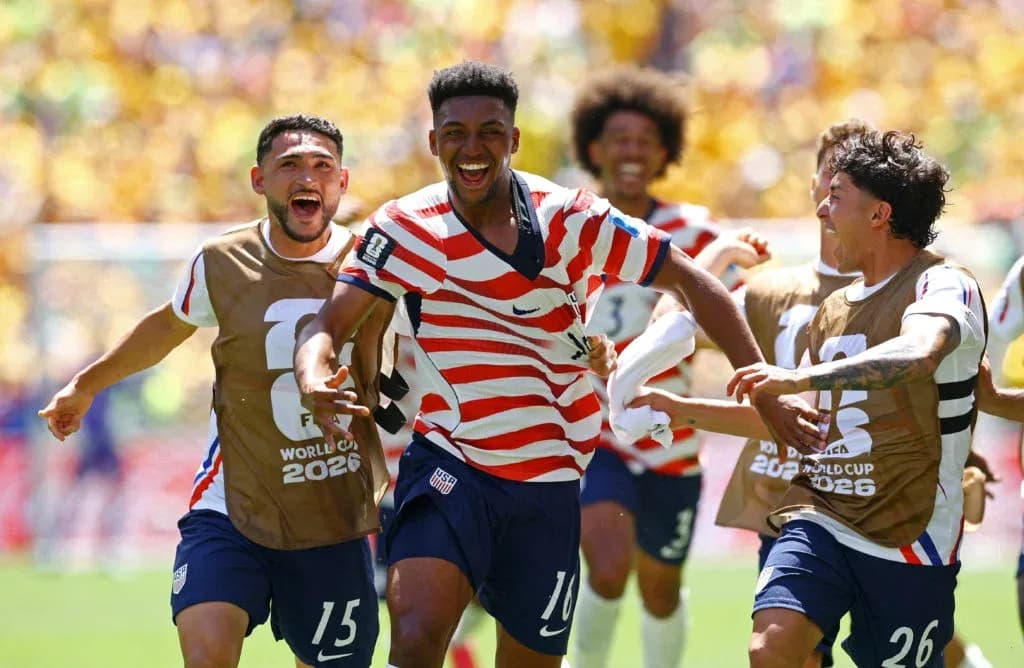
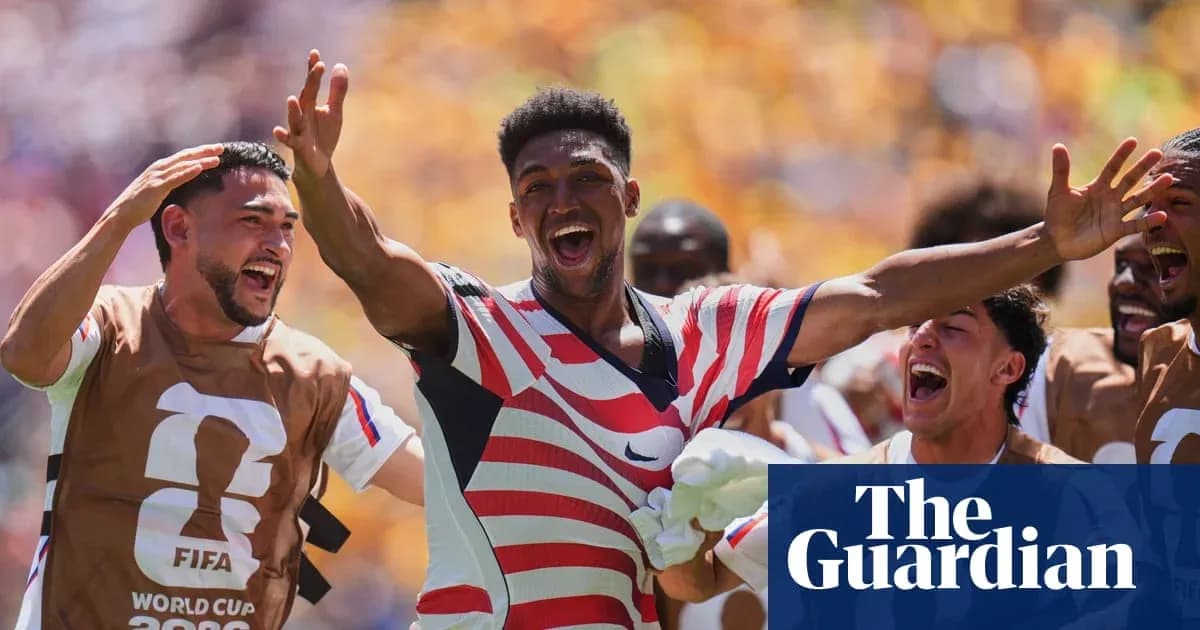
Freeman reacted first, bundling the rebound over the line. The flag went up, the goal went to review, and the stadium held its breath. When it was finally given, Freeman had already sprinted the length of the field, celebrating in front of the opposite end, swallowed by teammates spilling from the bench.
From a shaky opening pass to a crucial goal, the US centre-back had lived an entire tournament arc in 45 minutes.
Popovic rolls the dice
Tony Popovic could not ignore what he had seen. His side had competed physically but had lacked bite in the final third. At the break, he ripped up the script.
Jason Geria replaced Burgess. Nestory Irankunda and Connor Metcalfe, the scorers from the Socceroos’ previous match, came on for Touré and Velupillay. Australia shifted into a far more aggressive 4-3-3 with the ball, only dropping back into a five-man line when defending.
The new shape carried risk, and the US nearly punished it seven minutes after the restart. McKennie snapped onto a loose ball and threaded Balogun through with only Souttar chasing. Balogun drove into the box, but his shot was smothered and blocked. Warning delivered.
The gamble also gave Australia the attacking thrust they had lacked. Robinson collected the US’s first yellow card in the 56th minute, forced into a cynical foul to halt a break down his flank.
Just after the hour, Popovic doubled down, sending on Cristian Volpato for Leckie. The Sassuolo playmaker almost made an instant impact, latching onto the end of a surging Irankunda run down the right and firing over from inside the box. Minutes later, Metcalfe found space for a shot, but Freese fell on it with ease.
Popovic kept pushing. Jackson Irvine replaced Okon-Engstler, another attacking nod from the Australian coach. Pochettino answered in the opposite direction: Robinson, Dest and Ricardo Pepi made way for Sebastian Berhalter, Auston Trusty and Joe Scally, a clear signal that game management had become the priority.
Hanging on, pushing back
The changes tilted the field. Australia grew into the contest, if not always with composure then certainly with intent. Circati forced a desperate defensive response in the box. Half-chances and near-misses flickered around the US area, never quite turning into the moment the Socceroos needed.
The temperature rose with the stakes. Heavy challenges flew in, and the atmosphere teetered on the edge. “USA” thundered around the stadium, a wall of sound trying to smother any Australian surge. Late yellow cards for Souttar, Balogun and Italiano – some for fouls, some for flashpoints off the ball – underlined how thin the line had become.
Even the referee could not escape the chaos. Felix Zwayer picked up an odd injury late on, briefly halting play before deciding to continue. It was a strange pause in a match that had rarely stopped moving.
As the clock wound down and the tension threatened to sag, Balogun turned to the stands and windmilled his arms, demanding more noise, more energy, one last push. The crowd responded, the volume spiked again, and the US saw it out.
When the final whistle finally came, the US had what it came for: a clean sheet, a second straight World Cup win, and a night in which a team missing its brightest star still imposed itself on a dangerous opponent.
For a country forever asked to prove it belongs at this level, this was not just another group-stage victory. It was another step toward a World Cup run that, for once, might not be framed as a question.