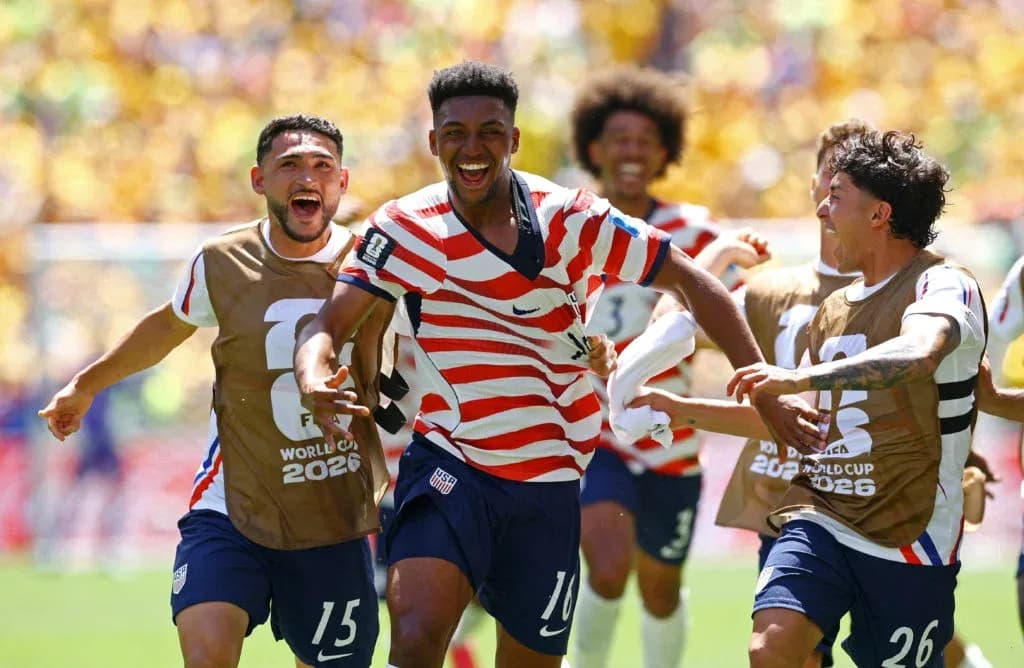
U.S. National Team Advances to World Cup Knockouts Without Pulisic
SEATTLE — No Christian Pulisic. No problem — at least for now.
On a cool Friday night in the Pacific Northwest, the U.S. national team brushed aside the absence of its star forward and booked a place in the World Cup knockout rounds with a controlled 2-0 win over Australia, a result that underlined both the depth and the growing maturity of this squad.
A different kind of statement
The last time the United States hosted a World Cup, in 1994, survival came by the narrowest of margins: sneaking through as one of the best third-place teams before bowing out to eventual champions Brazil in the round of 16. This time, the path looks sharper, more assured.
Two games. Two wins. Knockout berth already secured.
And they did it without the player who has come to define this era of American soccer.
Pulisic, the AC Milan attacker with 33 goals in 87 international appearances, sat out with a calf injury, a conspicuous figure in street clothes as the teams walked out. For many nations, losing a talisman on home soil would bring tension, maybe even panic.
Instead, it brought opportunity.
Balogun forces the issue
The tone was set early down the left flank.
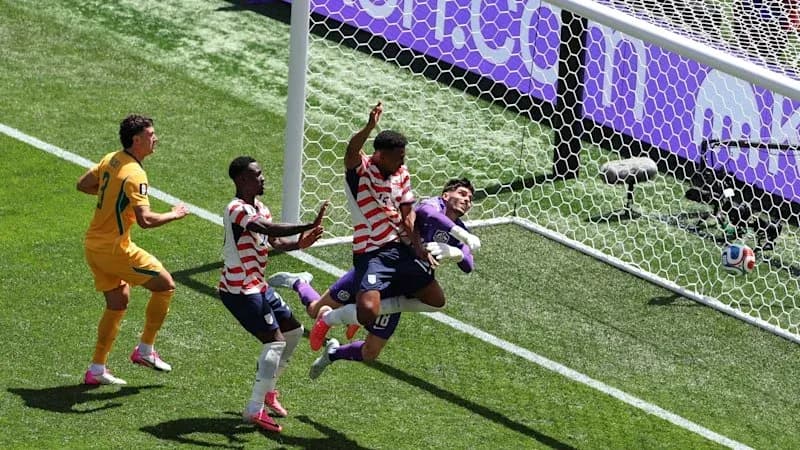
In the 11th minute, Folarin Balogun — already in form after his brace in the 4-1 win over Paraguay on June 12 — surged into space, driving at Australia’s back line with intent. His low centering ball was aimed for Ricardo Pepi, starting in Pulisic’s place and lurking in front of goal.
Pepi never touched it.
Australia defender Cameron Burgess did, the ball glancing off him and spinning past his own goalkeeper and into the net. The Socceroos had barely settled; the U.S. had the lead and the stadium erupted, a roar that felt like a release of weeks of pre-tournament anxiety over injuries and form.
Call it an own-goal on the stat sheet. On the pitch, it was the product of pressure, pace, and a forward line that refused to play within the lines of caution.
The U.S. didn’t stop there. They squeezed Australia higher up the field, circulated possession with patience, and picked their moments to break. The hosts looked comfortable, even without their most decorated attacker.
Freeman’s moment
Then came the flashpoint that may define this group’s early narrative.
Alex Freeman, at 21 the youngest player on the roster and the son of former Super Bowl champion Antonio Freeman, stepped into the spotlight just before halftime. The U.S. had been probing, winning set pieces, asking questions of a stretched Australian defense.
In the 43rd minute, a set piece did the damage.
Sergiño Dest’s effort took a deflection and looped dangerously across the box. Freeman reacted quicker than anyone, attacking the loose ball and guiding a header into the net for his first career World Cup goal.
The celebrations paused for a moment as video review checked the play. When the goal was confirmed, the roar was even louder. A 2-0 lead. Breathing room. And a new name etched into the tournament’s story.
Freeman didn’t just score; he embodied what this campaign is starting to look like for the U.S. — a team no longer leaning on a single star, but drawing decisive contributions from across the roster.
Depth on display
Without Pulisic, others had to carry the creative and emotional load. Balogun stretched the field. Pepi’s movement kept Australia honest. Dest’s involvement in the second goal showed how much the fullbacks drive this system.
The U.S. didn’t need to chase the game after the break. They managed it. They controlled tempo, shut down Australian surges, and leaned on a “deep U.S. roster” that looked every bit as advertised.
This was not a wild, end-to-end spectacle. It was something more telling for a host nation with ambitions beyond the round of 16: professional, composed, and ruthless at the key moments.
A different kind of pressure ahead
The Americans have been here before as hosts, but the context is different now. In 1994, just being on this stage felt like the achievement. This time, qualifying early from the group is only a checkpoint.
They have advanced without their marquee name and without needing late drama. The questions now shift from “Can they cope without Pulisic?” to something far more intriguing:
If this is what they look like short-handed, what happens when the full arsenal is available in the knockout rounds?