Spain's Evolution: From Entitlement to a Ruthless Machine
There was a time when Spain walked into every tournament as if the trophy already had their name engraved on it. From 2008 to 2012, La Roja didn’t just win; they rewrote the sport. Euro, World Cup, Euro. A dynasty that made everyone else feel a step behind, a second slower, a thought short.
Then it all collapsed.
The decade that followed was brutal. False dawns, early exits, managers churned, philosophies questioned. The country that preached patience and control had to learn something far less glamorous: humility.
Now, on the eve of the 2026 World Cup, Spain arrive in North America with a different kind of swagger. Not the old arrogance. Something sharper. Cooler. A team that knows exactly what it is.
They come as reigning European champions, having cut through Euro 2024 with a ruthless clarity that silenced an army of sceptics. Croatia, Italy, Germany, France, England – all beaten, and beaten properly. Luis de la Fuente’s side didn’t just survive that gauntlet; they imposed themselves on it.
From “win or bust” to trust and respect
For years, Spanish squads carried the suffocating weight of expectation. Anything less than a trophy felt like failure. That toxicity has lifted.
“I don't think it's that extreme anymore,” says Spanish-American journalist and ITV World Cup presenter Semra Hunter, who has watched the shift up close.
The country, she argues, has finally processed the comedown from that golden era. “Fans learned their lesson from how spoiled they were getting with all the success from 2008 to 2012. There was almost this level of confidence that we were untouchable. But things came crashing down very hard after 2012, and it was very painful.”
That pain bred doubt. By the time Euro 2024 rolled around, suspicion of De la Fuente was everywhere.
“Going into the Euros, fans were super critical of Luis de la Fuente. There was almost no hope,” Hunter recalls. It turned out to be the perfect fuel. “I actually think that helped because the players went in with a chip on their shoulder to prove everyone wrong. They were consistently the best team.”
The relationship has been reset. “Now, fans feel confident and they trust the team again, but it isn't a case of ‘you have to do it or you're failures’.” Spain still demand excellence. They’ve just stopped eating their own when it doesn’t arrive on command.
The Yamal–Williams tension
If Spain are to reach the summit again this summer, they need their two most explosive weapons fully charged. Right now, that’s the one cloud hanging over an otherwise immaculate preparation.
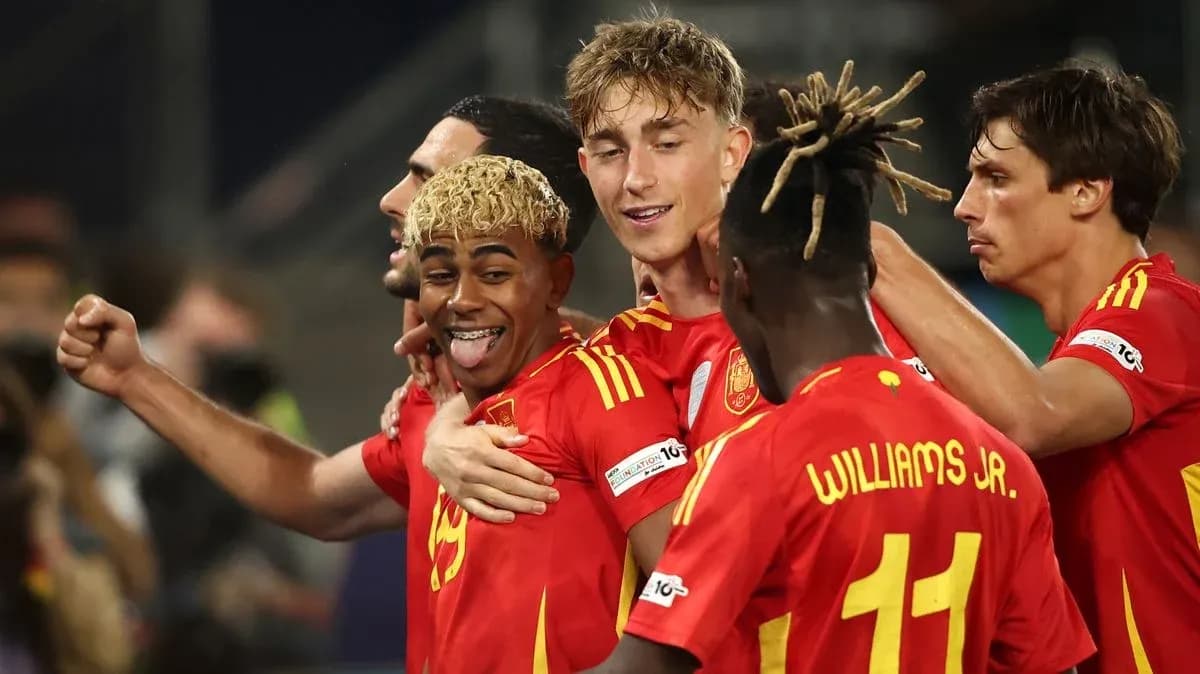
Lamine Yamal and Nico Williams are not just wingers. They are chaos in boots.
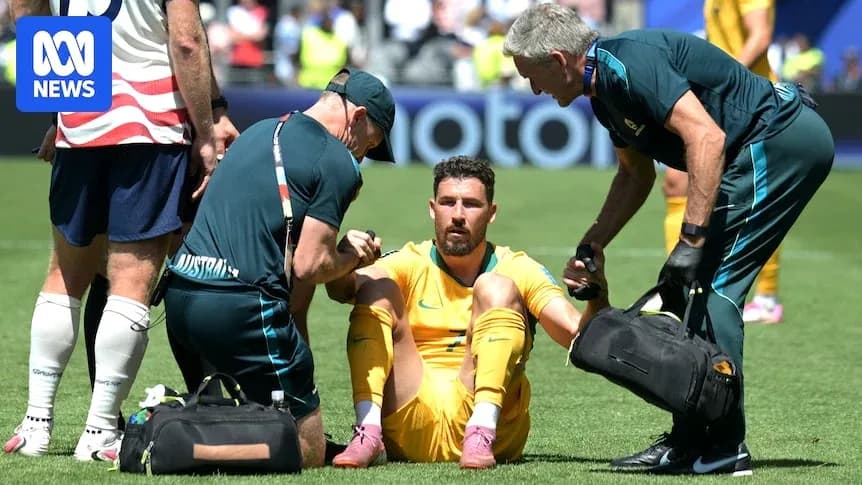
Both are managing hamstring issues. Both are central to Spain’s attacking identity.
Yamal’s setback came in April. The 18-year-old is expected to feature in the World Cup, but no one can say with certainty how sharp he will be when the tournament kicks off.
“They are two of the most special, unique wingers in world football at the moment and they give Spain an edge they wouldn't have without them,” Hunter says. Yamal, in particular, bends games. “Lamine Yamal provides so much unpredictability; he's a destabilising force. We've even seen him starting to evolve into the Messi role a little bit, coming more inside. He's capable of conjuring up a moment of brilliance when the going gets tough.”
On the other flank, Williams – arguably Spain’s standout performer at Euro 2024 – suffered his own hamstring issue in May. The alarm bells rang, but this time the prognosis soothed nerves.
“Thankfully, that one doesn't seem to be as bad, and he should be back to fitness to start training,” Hunter notes.
Spain can function without them. The structure is that strong. But can they win the whole thing without both of them at full tilt? That’s a different question.
“Spain can win without them because of the team's structure, but they really need both at full tilt to go all the way.”
A midfield that embarrasses the rest
If there is one area where Spain still look like the old Spain, it’s in the middle of the pitch. The depth is absurd.
Rodri, the metronome and enforcer, fresh from anchoring Manchester City’s dominance. Barcelona’s gifted trio Pedri, Gavi and Dani Olmo. Arsenal’s intelligent pair Martin Zubimendi and Mikel Merino. Fabian Ruiz bringing control and guile from PSG.
You could build two midfields from that list and both would be contenders.
Yet for De la Fuente, some choices are already made.
“As long as Rodri and Pedri are fit and firing, they are non-negotiable starters,” Hunter says. Everything else revolves around them.
“Then after that, it's a question of what the manager wants to do. Gavi provides more of the bite, the aggression, and the physicality. Dani Olmo is someone who can break through the lines, score goals, and practically play as a forward.”
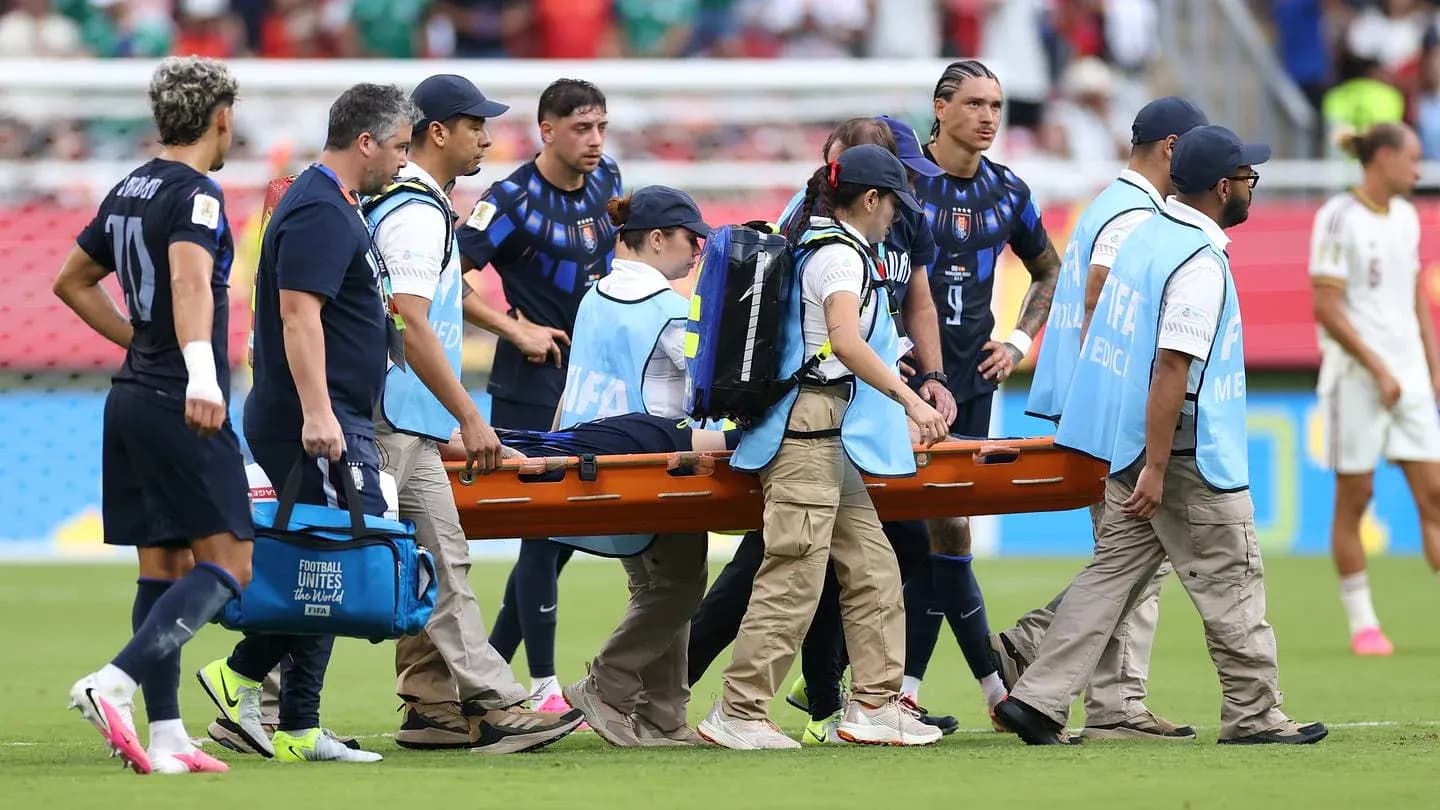
The one major setback is the loss of Barcelona’s Fermin Lopez. Thirty goal contributions this season, and a genuine candidate to explode on the international stage, wiped out by a broken foot.
“Fermin Lopez is a big loss. He's somebody who probably could have been a breakout player for Spain, but he underwent surgery and won't make it in time,” Hunter says.
Yet Spain can absorb it. They always seem able to shuffle the pieces.
“Luckily, Spanish players are so versatile. Even with Martin Zubimendi acting as a direct, like-for-like backup for Rodri, Spain is completely spoiled for choice.”
The eternal No.9 riddle
For all that luxury, one problem refuses to go away. Spain still don’t have a classic, cold-blooded centre forward.
It has been their nagging flaw for more than a decade.
“Our biggest weakness is so obvious for me – we haven't had a proper, lethal ‘fox in the box’ striker who can put balls away first touch since the days of David Villa and Fernando Torres,” Hunter admits. “No disrespect to Alvaro Morata but Spain just doesn't produce that kind of player. It's all about midfielders.”
Real Sociedad’s Mikel Oyarzabal, who scored the winner against England in the Euro 2024 final, is expected to lead the line this time. Intelligent, technically sound, reliable in big moments – but not the sort of striker who terrifies defenders just by walking onto the pitch.
Spain will rely on collective goals, late runs, wide forwards cutting inside. It has worked before. It might have to work again.
A nation of football philosophers
Look at the Premier League’s touchlines and Spain’s imprint is obvious. Pep Guardiola, Mikel Arteta, Unai Emery, Xabi Alonso, Andoni Iraola – different personalities, same deep tactical schooling.
That, Hunter argues, is no coincidence.
“In Spain, football is a language,” she says. From childhood, players don’t just play; they study. “From a very young age, players learn about tactics. Everybody fancies themselves a football philosopher in Spain, really. There's so much romance about it.”
When those minds move to England, they carry that obsession with them. “When Spanish managers go to the Premier League, they bring that tactical obsession with them. Players like Guardiola and Xabi Alonso were already managers on the pitch when they played.”
The philosophy is clear. “They focus on the collective, on being collaborative, on the whole being more important than the individual. They're very humble, they're hardworking people. And I think that is reflected in their management style – and the players' playing style too.”
This Spain side is a product of that culture: structured, collaborative, relentlessly drilled, but with just enough individual brilliance on the wings to break a game open.
The path through North America
On paper, Spain’s group offers a clean runway into the knockouts: Cape Verde, Saudi Arabia and Uruguay.
They know better than to treat any World Cup opponent as a formality, but Hunter expects authority from the start.
“They should get through relatively comfortably. Cape Verde are debutants and Saudi Arabia are organised, but Spain should get past them,” she says.
Uruguay, though, is another story. A different kind of fight.
“Uruguay will be the biggest test. They are intense, aggressive, streetwise, and technically more talented than people give them credit for. If they want to rough up Spain, they certainly can.”
That clash – Spain’s structure and control against Uruguay’s bite and cunning – feels like a litmus test. Pass it, and the route deep into the tournament opens up.
Hunter doesn’t hesitate when asked how far this Spain can go.
“I see them getting seven to nine points, topping the group and advancing. Quite honestly, I think they will make it all the way to the final.”
Pressed for a prediction, she goes all in.
“I think it's going to be Spain to win it.”
From entitlement to equilibrium, from collapse to reconstruction, Spain arrive at this World Cup not as a nostalgic tribute act to 2010, but as something new: a beautifully structured machine, powered by philosophy, scarred by failure, and convinced – quietly, firmly – that the biggest prize in football is about to come home with them again.