Sevilla Secures 1–0 Victory Over Real Sociedad in La Liga
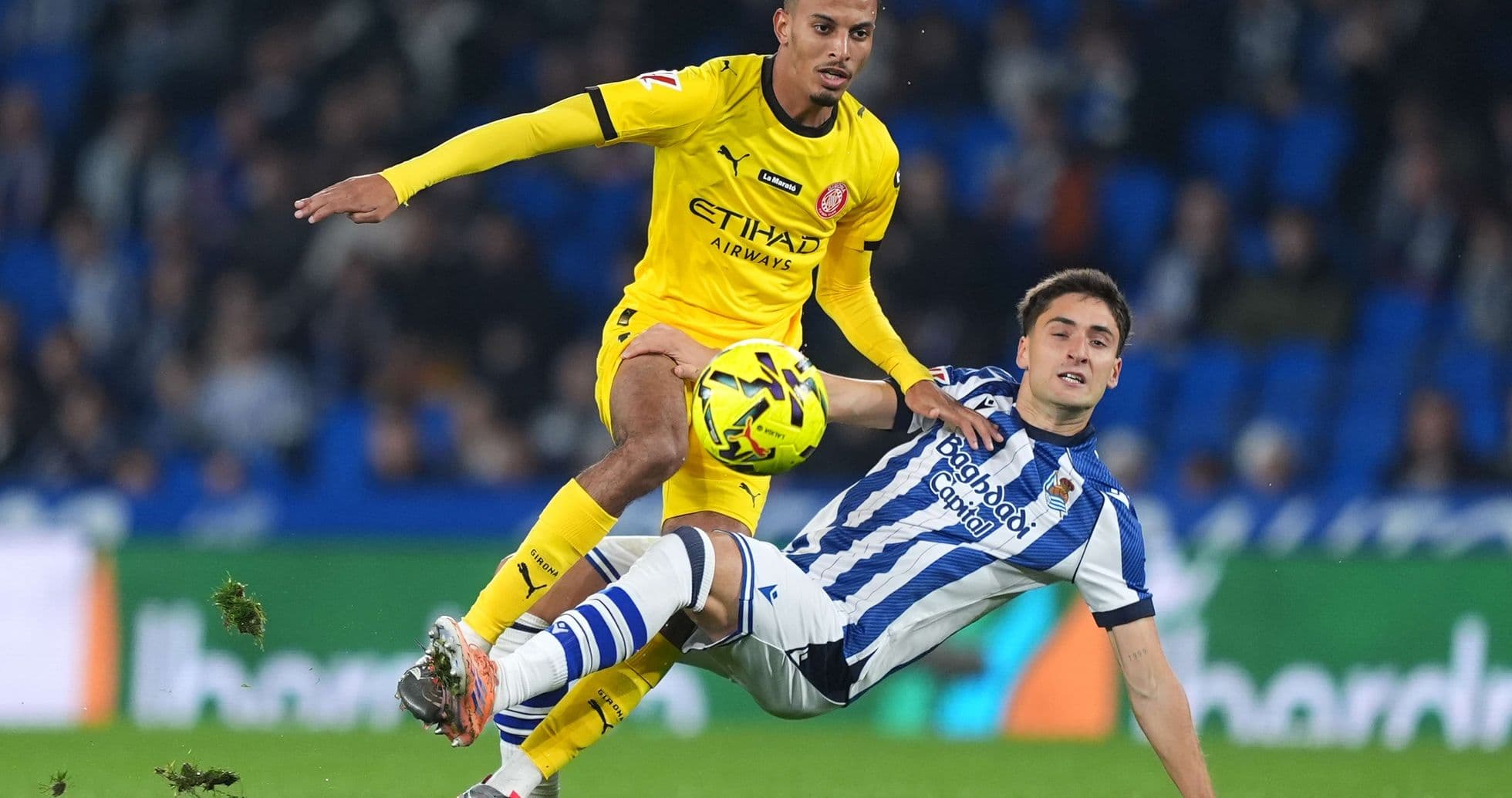
Sevilla edged a cagey La Liga contest 1–0 against Real Sociedad at Estadio Ramón Sánchez Pizjuán in Round 34, relying on vertical efficiency rather than territorial control. With the match level 0–0 at half-time and Real Sociedad enjoying more of the ball, Luis Garcia Plaza’s side leaned on a compact 4-4-2 block, then struck early in the second period through substitute Alexis Sánchez, set up by Neal Maupay. From there, Sevilla managed the game with disciplined defensive spacing and selective pressing, limiting Real Sociedad to zero shots on target despite their 58% possession and higher pass volume.
Scoring Sequence
The scoring sequence was defined by a single, well-executed transition. After an even but chance-light first half, Garcia Plaza introduced Alexis Sánchez (shirt 10) at 46', with A. Sanchez (IN) came on for I. Romero (OUT), immediately sharpening Sevilla’s threat between the lines. Four minutes later, at 50', Sánchez finished a move created by Maupay, whose movement away from the centre-backs opened a lane for the Chilean to attack space and convert for 1–0. There were no VAR interventions or disputed phases linked to the goal in the event data.
Disciplinary Control
Disciplinary control played a quiet but important role. The first card arrived on 28' for Real Sociedad: Jon Aramburu (shirt 2) was booked for a foul, reflecting Sevilla’s attempts to target the full-back zones with wide runners. In the second half, Alexis Sánchez himself received a yellow card at 75' for a foul, a sign of Sevilla’s increasingly combative game management after taking the lead. The final caution came on 88', when José Ángel Carmona was booked for a foul as Sevilla defended deeper and protected their narrow advantage. No red cards were shown, and there were no bookings for simulation or dissent; all cards were explicitly for fouls.
Substitution Patterns
Substitution patterns reveal contrasting tactical priorities. Sevilla’s first change at 46' was clearly offensive: bringing on Alexis Sánchez for I. Romero shifted the front line from a more direct, running profile to a hybrid creator-finisher who could drop into pockets. This directly produced the decisive goal. At 75', R. Vargas (OUT) made way for J. Sanchez (IN), tightening the right side of midfield and adding fresher legs for defensive work and ball retention. On 82', N. Gudelj (OUT) was replaced by B. Mendy (IN), a like-for-like midfield swap to sustain intensity in central duels. In stoppage time at 90+1', Garcia Plaza used two more changes to close the game: N. Maupay (OUT) for Peque (IN) to add fresh pressing energy up front, and C. Ejuke (OUT) for Oso (IN), reinforcing defensive solidity on the flank and running capacity in transition.
Real Sociedad’s substitutions reflected a search for attacking solutions that never fully materialised. At 46', J. Gorrotxategi (OUT) was replaced by O. Oskarsson (IN), a clear attacking adjustment, pushing an extra forward presence to pin Sevilla’s back line. On 58', P. Marin (OUT) came off for T. Kubo (IN), adding creativity and one‑v‑one threat between the lines. At 69', B. Turrientes (OUT) made way for Y. Herrera (IN), bringing more verticality and late-box runs from midfield. The triple change at 82' underlined Pellegrino Matarazzo’s urgency: A. Barrenetxea (OUT) for L. Sucic (IN) to gain a more central creative profile, Jon Aramburu (OUT) for Wesley (IN) to add a second striker and height, and the earlier structural tweaks effectively converted the initial 4-2-3-1 into a more aggressive, striker-heavy shape. Despite this, Sevilla’s block held, and Real Sociedad still failed to register a shot on target.
Structural Analysis
Structurally, Sevilla’s 4-4-2 was pragmatic and vertically oriented. O. Vlachodimos, notably, recorded 0 saves, which is less a reflection on his performance than on the outfield unit’s control of the defensive third; Real Sociedad’s xG of 0.16 underlines how little they allowed in dangerous zones. The centre-back pairing of Castrin (32) and K. Salas (4) stayed narrow and conservative, with G. Suazo (12) and José Ángel Carmona (2) balancing occasional overlapping with a primary focus on maintaining the line. In midfield, N. Gudelj (6) and L. Agoume (18) anchored central areas, screening passing lanes into M. Oyarzabal and forcing Real Sociedad to circulate around the block rather than through it. Wide men R. Vargas (11) and C. Ejuke (21) tucked in without the ball, compressing the half-spaces and leaving Sevilla comfortable to concede possession in non-threatening zones.
Attacking Strategy
In attack, Sevilla’s 19 total shots and xG of 1.39 show a strategy built on quick, direct attacks once the ball was recovered. Ten shots came from inside the box, illustrating that when Sevilla did progress, they reached high-value areas. Maupay’s role as a connector was crucial: dropping off the front line, combining with midfield, and then spinning into channels, as seen on the 50' goal where his assist to Alexis Sánchez encapsulated Sevilla’s vertical, two-pass mentality. After the lead, the introduction of J. Sanchez, B. Mendy, Peque, and Oso gradually shifted the side from an attacking 4-4-2 into a more conservative, workmanlike unit designed to compress space and defend the box.
Real Sociedad's Approach
Real Sociedad’s 4-2-3-1 was built on possession and circulation but lacked incision. With 58% of the ball, 481 total passes, and an 84% pass accuracy, they controlled tempo but rarely disorganised Sevilla’s block. The double pivot of B. Turrientes (8) and J. Gorrotxategi (4) recycled possession but struggled to break lines consistently. A. Barrenetxea (7), C. Soler (18), and P. Marin (15) offered width and pockets, yet Sevilla’s compactness forced them into lower-value shots: only six total attempts, with just two inside the box and none on target. The late introduction of T. Kubo, Y. Herrera, O. Oskarsson, L. Sucic, and Wesley aimed to overload central and final-third zones, but by then Sevilla were entrenched, and Real Sociedad’s attacks became predictable crosses and hopeful entries rather than crafted chances.
Goalkeeping Performance
In goal, the statistical contrast is stark: A. Remiro made 4 saves for Real Sociedad, underlining Sevilla’s more frequent and clearer chances, while Vlachodimos was untested. Both keepers show a goals prevented value of -0.7, which in this context suggests that the single goal conceded by Remiro was roughly in line with chance quality, and Sevilla’s defensive unit prevented Real Sociedad from generating the type of shots that would meaningfully test their goalkeeper.
Statistical Verdict
The statistical verdict reinforces the tactical story. Sevilla, with 42% possession, 346 passes, and 79% accuracy, accepted a lower share of the ball but translated it into 19 shots and 1.39 xG, embodying an efficient, transition-focused approach. Real Sociedad’s 58% possession and higher pass volume did not convert into threat: 6 shots, 0 on target, and 0.16 xG highlight a sterile dominance. Fouls (19 by Sevilla, 11 by Real Sociedad) and the 3 yellow cards (Aramburu, Alexis Sánchez, José Ángel Carmona) align with a match where Sevilla were more aggressive in duels to protect their lead. In terms of overall form on the night, Sevilla’s attacking efficiency and defensive compactness outstripped Real Sociedad’s possession-based plan. Defensively, Sevilla’s index is strong: zero shots on target conceded and minimal xG allowed, achieved through structure rather than goalkeeper heroics.