Pochettino's Journey: From Gold Cup Tears to World Cup Success
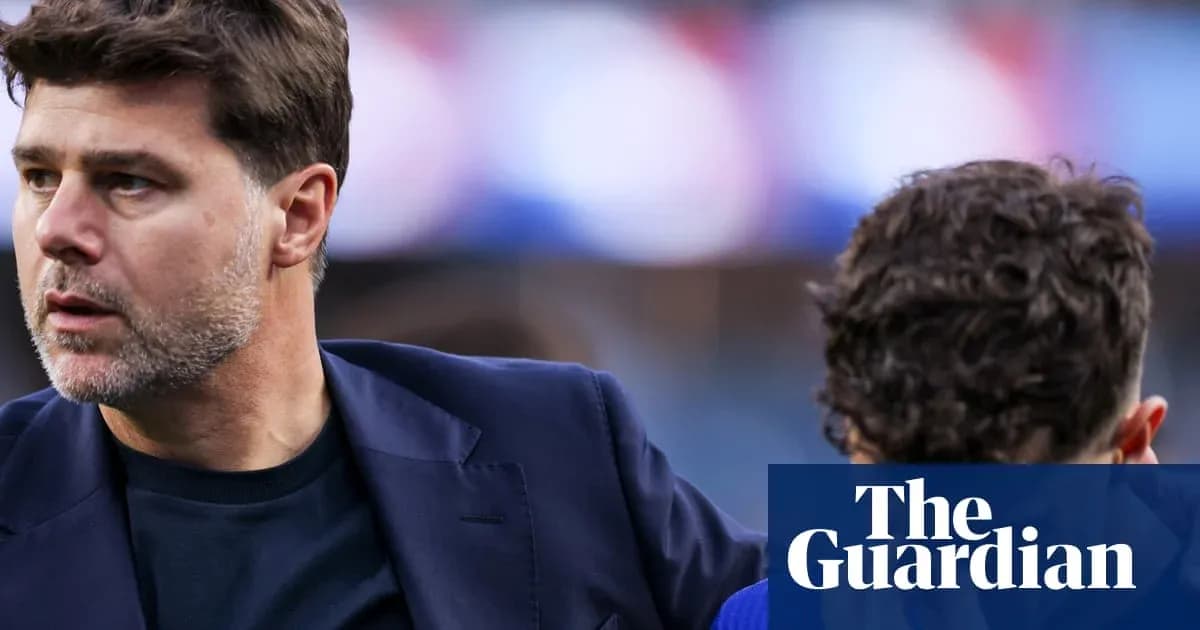
Mauricio Pochettino stood on the touchline in Houston with tears in his eyes. His US team had just lost the 2025 Gold Cup final to Mexico, the old enemy, in a bruising contest for regional supremacy. The scoreboard hurt. The soundtrack cut deeper.
In one of the largest metro areas in the United States, the noise rained down for Mexico.
It felt, as Pochettino would later admit, like walking into Tottenham on derby day and seeing the stands flooded with Arsenal shirts. A year out from a home World Cup, the Argentine didn’t just lose a final. He absorbed a jolt of reality about where his program stood, and about the strange, often hostile space his players occupy in their own sporting culture.
Were those tears about defeat? Partly. But they were also for his players, who had fought their way to a final and then discovered that the “home” crowd was anything but.
“We were so naive,” Pochettino said this week, looking back. “We misjudged the situation. It was worse than we really believed. … When we arrived here, we received a big bang, punch, and we were knocked out for a while. We said: ‘What the fuck?’”
That punch, he knows now, landed months before Houston.
Crash course in reality
The first blow came in March 2025. The Concacaf Nations League had become familiar ground for the US: three editions, three trophies. The script seemed set again. Beat Panama in the semi-final, prepare for Mexico or Canada in another regional showpiece.
Instead, they never reached the final.
Panama arrived organized, aggressive, and hungry. The US arrived flat. The game unfolded in front of almost nobody. The stands were largely Mexican fans waiting for the later match.
“It was empty,” Pochettino recalled. “You remember the game, Panama? It was the Mexican people [in the stands] because they played after us.”
For years, the US had dominated this fixture. As of mid-2021, the record stood at 17-4-2 in their favor. But Panama had flipped the dynamic. This was a fourth win in six meetings, after victories in the 2023 Gold Cup semi-final and a 2024 Copa América group game. One mental lapse, one sharp Panama strike – their third shot of the night – and the US were out.
“That was [a] good crash, no?” Pochettino said. “When people say, ‘Yeah, but you have bad results.’ Yeah, yeah: bad results. No worries. We know what we are going to do. When we detect all the problems, we go for the solution. And we knew that the solution would arrive.”
One of those problems, in his eyes, lay at the core of the squad. Comfort. Entitlement. A sense that certain players could dip in and out on their own terms.
So when Christian Pulisic asked to skip the Gold Cup but still join for the warm-up friendlies against Turkey and Switzerland, Pochettino drew a line. No. One group, from day one of camp to the end of the tournament. No exceptions. The same principle he would later apply to his World Cup squad.
The decision sparked tension. Results didn’t help. The US lost both pre-Gold Cup friendlies, and the noise around the team grew louder. But the standard was set: all-in, or watch from home.
A new core, a new edge
The Gold Cup became a laboratory. With some regulars absent, new pillars emerged.
- Malik Tillman finally ran a tournament as the team’s main creator.
- Matt Freese seized the No 1 shirt and then outlasted Keylor Navas in a penalty shootout.
- Alex Freeman played his way into undroppable status.
- Sebastian Berhalter forced his way into Pochettino’s midfield rotation.
Pochettino changed too. International windows had previously felt disjointed – a few days here, a few days there. Now he had a fixed squad for more than a month. Training every day. Tactical tweaks tested and refined under tournament pressure. The rhythm felt closer to club football, where Pochettino has always done his best work.
They fell short in the final, beaten by Mexico, and Pochettino fought back tears in the aftermath. But inside the locker room, he delivered a different message.
“Keep improving, but please don’t change,” he told his players. The heart they had shown, the intensity, the willingness to suffer together – he saw that as the foundation for a World Cup run.
His mind kept drifting back to another game he had watched: Ohio State vs Texas in Columbus, 30 August 2025. Seventy thousand fans. Wall of sound. Total devotion.
“We were in Columbus watching Ohio State against Texas,” he said. “There were 70,000 fans there. And my question was, you know, why not? If the fans are very passionate, why not with us, with soccer? Because if [the support is] with us, they will be and show the same passion. It’s massive. It’s so powerful for the player.”
Out of that came a mantra: “Why not us?”
And with it, a shift in style. When Pulisic and the other mainstays returned in September, Pochettino rolled out the shape that would define his team. A fluid, restless system. Players interchanging, lines blurring, opponents dragged into uncomfortable spaces. Constant off-ball movement. Quick switches of play. Aggression whenever a gap appeared.
Showtime, USMNT edition.
The results began to match the swagger. A 2-0 win over Japan in September. A draw with Ecuador and a win over Australia in October. In November, a victory over Paraguay and a 5-1 demolition of Uruguay to close 2025 with a roar.
Then came lesson three.
The March that stung
Two games in March. Two defeats. Seven goals conceded over the two legs. The margin hurt, but the manner cut deeper.
The team looked unsure. The defense, so solid in the previous months, lost its bearings. Against Belgium, the US even slipped back toward an older, more fragile defensive structure. Up front, Pulisic, stuck in the worst goal drought of his career, started at center-forward against Portugal and barely laid a glove on them.
Inside the camp, the players insisted they still believed.
“I feel like we’ve always bought in,” defender Chris Richards said this week, “but I really feel like the March camp that we had was really important. … I think we really gave, you know, two really good teams in Europe a really strong game.”
Pochettino backed his group, but he didn’t sugarcoat the gap.
“Belgium and Portugal have, in the top 100 players, [a] few or some players in that top 100,” he said. “I think we don’t have [any].”
Outside the bubble, the old doubts resurfaced. This looked like the US fans had come to know for decades: capable of the odd statement win, just as capable of tumbling back to earth. Vulnerable to anyone, from giants to also-rans.
So when pre-World Cup friendlies were lined up against Senegal and Germany, the question came quickly: would they regret it?
“No,” Pochettino replied. “That is good for us. It’s going to measure our level.”
The answer arrived on the pitch. A 3-2 win over Senegal, full of attacking verve. A 2-1 defeat to Germany, but one that showed a team finding its gears at just the right time.
Then came the World Cup.
A 4-1 demolition of Paraguay to open. A controlled 2-0 win over Australia. On Thursday, a dead rubber against Turkey, with the US already confirmed as Group D winners and their opponents already out.
Only four teams wrapped up their groups after two matches. Argentina. Germany. Mexico. And Pochettino’s US.
From “What the fuck?” to “Why not us?”
The contrast with Houston could not be starker. Back then, the US walked into a Gold Cup final in their own country and felt drowned out by Mexico’s support. Now, in 2026, the noise is theirs. The home crowds have been loud, partisan, and relentless. Players and coach alike point to that energy as fuel for their early surge.
This is the high point of Pochettino’s tenure so far. Not because of the scorelines alone, but because of the path that led here: the empty stands against Panama, the bitter tears after Mexico, the bruising March against Belgium and Portugal.
“It’s not going to be figured out overnight, it’s not going to be figured out in one camp, or sometimes in six months, or 12 months, maybe not as fast as everybody wanted to,” Mark McKenzie said. “I think we’re showcasing that it’s a process.”
The process has taken them from “What the fuck?” to “Why not us?” in little more than a year.
Now comes the real examination: whether this version of the US can turn the noise, the style, and the scars into something the program has never truly owned on the men’s side – a deep World Cup run on home soil, with the country finally, unmistakably, behind them.