South Africa vs Canada: World Cup Knockout Clash in Los Angeles
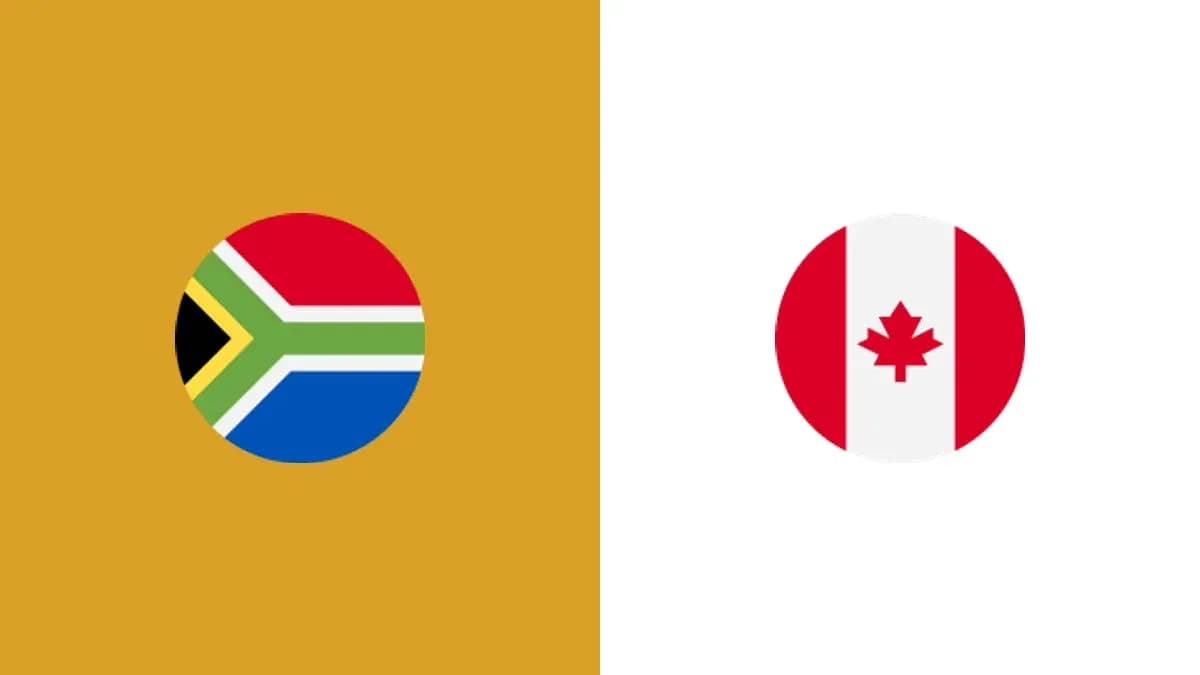
South Africa’s date with history meets Canada’s home ambition in Los Angeles on 28 June, a World Cup round of 32 tie that feels bigger than the bracket line suggests.
Bafana Bafana, in the knockout phase of a men’s FIFA World Cup for the first time, walk into the cauldron as underdogs with momentum. Canada, co-hosts and crowd favourites, arrive with firepower, scars, and a sense that this generation cannot let the moment pass.
Kick-off is set for 15:00 EST, 20:00 GMT. The stakes are far less tidy: win, and the last 16 opens up; lose, and four years of planning vanish in a single night.
Canada’s smooth start, bruising blow
Canada’s route to the last 32 looked, for a while, like a tournament blueprint.
They opened with a composed 1-1 draw against Bosnia and Herzegovina, then tore Qatar apart in a 6-0 demolition that underlined their attacking ceiling. Jonathan David, now of Juventus, walked away with the match ball and a statement hat-trick, the kind of performance that shifts how a nation sees itself at a World Cup.
But that same night carried a heavy price. Ismael Kone, the Sassuolo midfielder who knits Canada’s transitions together, suffered a broken leg. One emphatic win, one long-term loss.
Their final Group B outing, a 2-1 defeat to Switzerland, stung but did not damage their standing. The work had been done early; four points were enough. The Canucks advanced, but the aura of control dimmed.
Jesse Marsch has had to navigate all of this without his headline act. Alphonso Davies returned from a long layoff in Bayern Munich’s Champions League semi-final against PSG in April, only to suffer a recurrence of the injury. He has not played a single minute at this World Cup. For a team built in part around his chaos from left-back, that absence is enormous.
Canada, though, have leaned on stability at the back. Maxime Crepeau has been a constant in goal, shielded by a settled line of Alistair Johnston, Luc de Fougerolles, Derek Cornelius and Richie Laryea. That unit has started every match together, a rare luxury in tournament football and a key reason they have conceded just four times in their last five outings.
Bafana’s wild ride to history
South Africa’s journey could not have been more different. Where Canada cruised, Bafana Bafana clung on and then punched back.
Their World Cup opened with a jolt: a flat 2-0 defeat to Mexico, made worse by red cards for midfielders Themba Zwane and Sphephelo Sithole. It was the kind of night that can sink a campaign before it starts.
Hugo Broos reacted. Three changes followed. The team looked sharper, more connected, and earned a 1-1 draw with the Czech Republic. Teboho Mokoena, the Mamelodi Sundowns midfield general, buried a penalty to keep South Africa alive in the group. Then came the twist: his booking ruled him out of the decisive clash with South Korea.
So they went to a raucous Estadio Monterrey without their midfield anchor, knowing only a win would do. Mexico’s goals against the Czechs filtered through the stands, every roar from the crowd a reminder that the margins were razor-thin.
Bafana responded with a defensive masterclass. They absorbed waves of South Korean pressure, stayed compact, and carried a constant threat on the counter. Thapelo Maseko, operating as an inverted winger on the right, tormented his marker all night and finally struck in the 63rd minute. He could easily have walked away with a hat-trick.
On the opposite flank and between the lines, Orlando Pirates prodigy Relebohile Mofokeng lit up the contest with sharp decision-making, incisive passes and fearless running at defenders. It was the kind of performance that turns a promising youngster into a national talking point.
The 1-0 win sealed second place in Group A and wrote a new line in South African football history: Bafana Bafana in the World Cup knockouts.
Young steel at the back
What has quietly underpinned South Africa’s surge is a back line that looks built for more than just this tournament.
At 20, Mbekezeli Mbokazi, based in the USA with Chicago Fire, is already being spoken of as a future captain. Alongside him, 22-year-old Ime Okon brings composure and range from the heart of defence. On the flanks, Khuliso Mudau and Aubrey Modiba have locked down the full-back roles, while Ronwen Williams, the captain in goal, has started all three matches with that same back four in front of him.
It is a unit that has grown together in real time on the biggest stage.
Mokoena’s return from suspension now adds another layer of protection. The Sundowns midfielder is expected to slot back in at the base of midfield, likely pushing Sithole out of the XI. With him screening the defence and dictating tempo, South Africa gain both bite and calm.
A likely Bafana lineup reads: Williams; Mudau, Okon, Mbokazi, Modiba; Mokoena, Thalente Mbatha; Maseko, Mofokeng, Oswin Appollis; Evidence Makgopa.
There is youth, there is running power, and there is just enough experience to believe they can manage the pressure.
Canada’s balance without their star
Canada’s structure, by contrast, has been about continuity and finding solutions around missing pieces.
Behind that familiar back four and Crepeau, Marsch has leaned on a midfield anchored by Stephen Eustaquio, the Porto man whose passing and positioning hold the side together. Nathan Saliba of Anderlecht adds legs and aggression, while the wide roles fall to Tajon Buchanan and Liam Millar, both capable of stretching the game or cutting inside to combine.
Up front, Jonathan David is the headline name and primary goal threat. His movement in the box and willingness to drop into pockets make him difficult to track. Tani Oluwaseyi offers a more direct, physical presence alongside him.
A probable XI: Crepeau; Johnston, de Fougerolles, Cornelius, Laryea; Buchanan, Saliba, Eustaquio, Millar; David, Oluwaseyi.
Even without Davies and Kone, it is a side that can hurt teams quickly if given space. Nine goals in their last five matches, six of them in that Qatar rout, show what happens when the attack clicks.
Form, margins and a rare meeting
South Africa arrive with a mixed but telling form line: W1 D1 L2 D1 across their last five, yet four points from three World Cup matches and, crucially, just three goals conceded in that stretch. They have only scored twice, but both goals have carried weight. Mokoena’s penalty kept them alive. Maseko’s strike changed the course of a nation’s tournament.
Canada’s record of W2 D2 L1 over their last five paints a picture of a team that rarely collapses. They have conceded four times in that run and, outside of the Switzerland loss, have looked largely in control. The question is whether their attack can find rhythm against a South African side that just showed against South Korea how comfortable it can be without the ball.
There is very little shared history to lean on. These two nations have met only once before, a friendly back in November 2007, when South Africa won 2-0 at home. Nineteen years later, they collide again, this time in a World Cup knockout in Los Angeles with everything on the line.
Both finished second in their groups. Both have found different ways to survive.
Team sheets and tension
Official lineups remain unconfirmed. Broos has not nailed down a public XI, and the South African camp lists no fresh injuries or suspensions. The expectation is continuity, with Mokoena’s return the one major tweak.
Marsch is similarly holding his cards close. Canada’s squad lists no new confirmed injuries or bans, though Davies’ fitness continues to hover over every discussion. Even if he is available in some capacity, his minutes will be carefully managed after such a long spell out.
Beyond the tactical boards and medical reports, this tie carries a sharper edge.
For South Africa, this is uncharted territory, a chance to turn a historic breakthrough into something deeper, something that lingers in the country’s football memory long after the tournament moves on.
For Canada, co-hosts with a maturing core, an early exit on home soil would feel like an opportunity wasted.
One side plays with the freedom of a team that has already broken its ceiling. The other plays with the weight of expectation and the noise of its own stadium.
In Los Angeles, only one of them gets to keep dreaming.