Pep Guardiola in Talks for Italy National Team Job
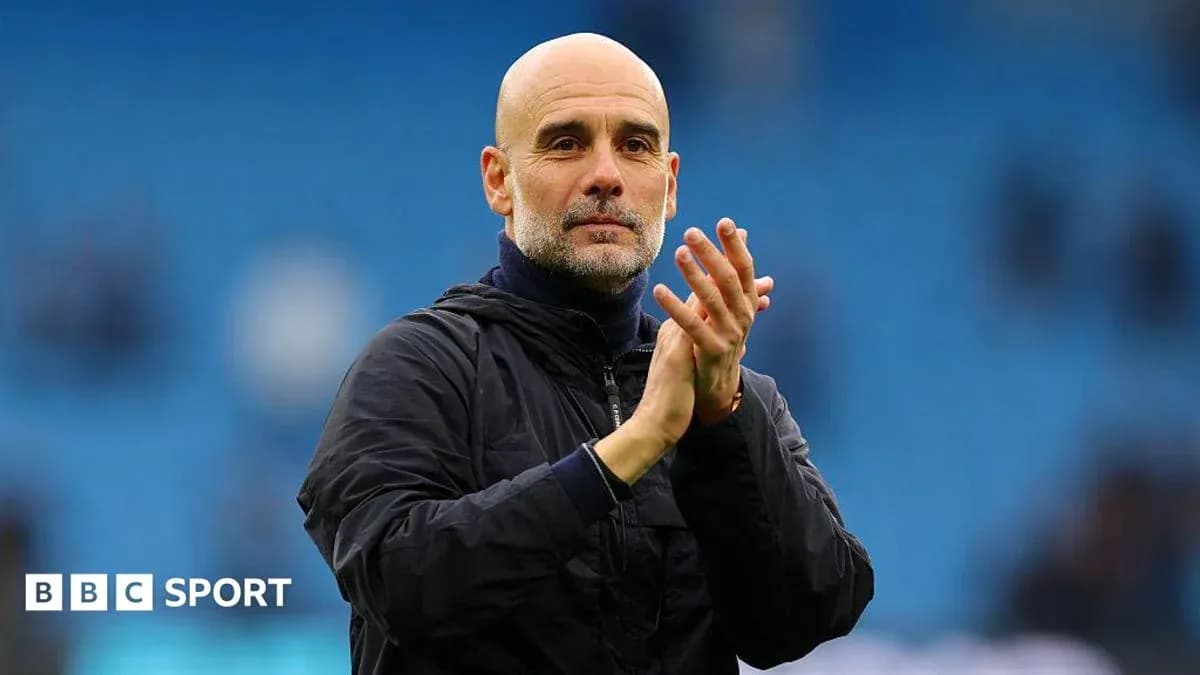
Pep Guardiola has formally held talks about becoming Italy’s next head coach, Italian Olympic Committee and Football Federation powerbroker Giovanni Malagò has confirmed – a development that would mark one of the most dramatic appointments in the Azzurri’s modern history.
The 55-year-old walked away from Manchester City this summer after a decade of domination in England, a spell that delivered six Premier League titles, three FA Cups, five League Cups and the club’s first Champions League. Barely weeks later, his name now sits at the centre of Italy’s search for a saviour.
A crisis and a superstar candidate
Italy have been drifting. Gennaro Gattuso resigned in April after failing to drag the four-time world champions to a third successive World Cup – a drought that would have been unthinkable a generation ago. The bench at Coverciano is empty, the pressure enormous, and the Italian Football Federation (FIGC) is under intense scrutiny to get the next call right.
Sky Italia first revealed on Monday that the FIGC had made contact with Guardiola. On Tuesday, Malagò went a step further, confirming in an interview with digital outlet Cronache di spogliatoio that discussions with the Spaniard have taken place and that the federation is ready to bend its own financial framework to make it happen.
“[Financial] exceptions have been made, exceptions that for example may concern the name that is so overbearing in these hours: Pep Guardiola,” Malagò said. “Exceptions for obvious reasons that I am not here to explain, but it is not certain that this thing will go through.”
In other words, Italy know the price of Guardiola – and are at least prepared to explore paying it.
Breaking with tradition
To appoint Guardiola would be to rip up a century of habit. Italy’s men’s national team has almost always been led by one of their own. Only twice has a foreign coach been involved: Hungarian Lajos Czeizler as part of a technical committee in the 1950s, and the legendary Argentine Helenio Herrera, who shared the role with Ferruccio Valcareggi in the 1960s.
This is a federation that typically leans on its own school of thought. Yet the scale of the current crisis, combined with Guardiola’s availability, has clearly changed the conversation.
Malagò stressed that Guardiola is not the only name on the shortlist. Roberto Mancini, the former Manchester City manager who guided Italy to Euro 2020 glory five years ago, is under consideration for a sensational return. So too Andrea Pirlo, the 2006 World Cup winner currently in charge of Dubai United.
Asked directly whether Guardiola, Mancini and Pirlo were the only candidates, Malagò’s answer was brisk: “Absolutely not. We think about a certain profile and certainly these names fall into that category.”
The profile is clear enough: a strong personality, a defined footballing identity, and the stature to withstand the storm that comes with the Azzurri job.
Why Guardiola and Italy fit – on paper
Guardiola has never coached in Italy, but he does not arrive as a stranger. He speaks fluent Italian and spent two seasons in Serie A between 2001 and 2003, with two spells at Brescia and a stint at Roma. Those years gave him a close-up view of calcio’s tactical obsessions and its unforgiving media landscape.
On the touchline, his CV hardly needs repeating. Before Manchester City, he turned Barcelona into one of the most influential sides in football history and piled up trophies at Bayern Munich. His City tenure ended in May, when he openly admitted the toll of constant winning.
“I am so tired. Seriously, I am so tired,” he said as he closed the book on a decade in Manchester. “The memories I have of Barcelona and Bayern Munich are unbeatable but the luggage of memories I have from here from 10 years is more than any other.”
Those words suggested a man ready to step away, at least briefly. If he does take the Italy job, the pause will be minimal. A swift return to the frontline, but this time with a nation on his shoulders instead of a club.
Money, politics and the weight of expectation
For the FIGC, Guardiola represents both opportunity and risk. To land him, they would likely need to smash their usual salary structures, lean on sponsors and political backing, and accept that the coach will arrive with his own demands on infrastructure, staffing and long-term planning.
Malagò’s reference to “exceptions” speaks to that. There is a recognition that normal rules do not apply when you chase a coach who has reshaped the modern game.
The federation has yet to comment officially on the talks, but the very fact that Italy are entertaining such a move says plenty about their desperation to reassert themselves among the elite. Euro 2020 glory under Mancini already feels distant. Consecutive World Cup absences still sting. The next coach will not be given much patience.
Guardiola, Mancini, Pirlo – three very different roads. One would be a revolution, one a return to a familiar face, one a bold bet on a young coach still building his reputation.
Italy have rarely faced a choice quite like this. Will they cling to tradition, or gamble on the most decorated club coach of his generation to drag a wounded giant back to the top of the world game?