NWSL's Historic Night: Gotham FC's Triumph at Citi Field
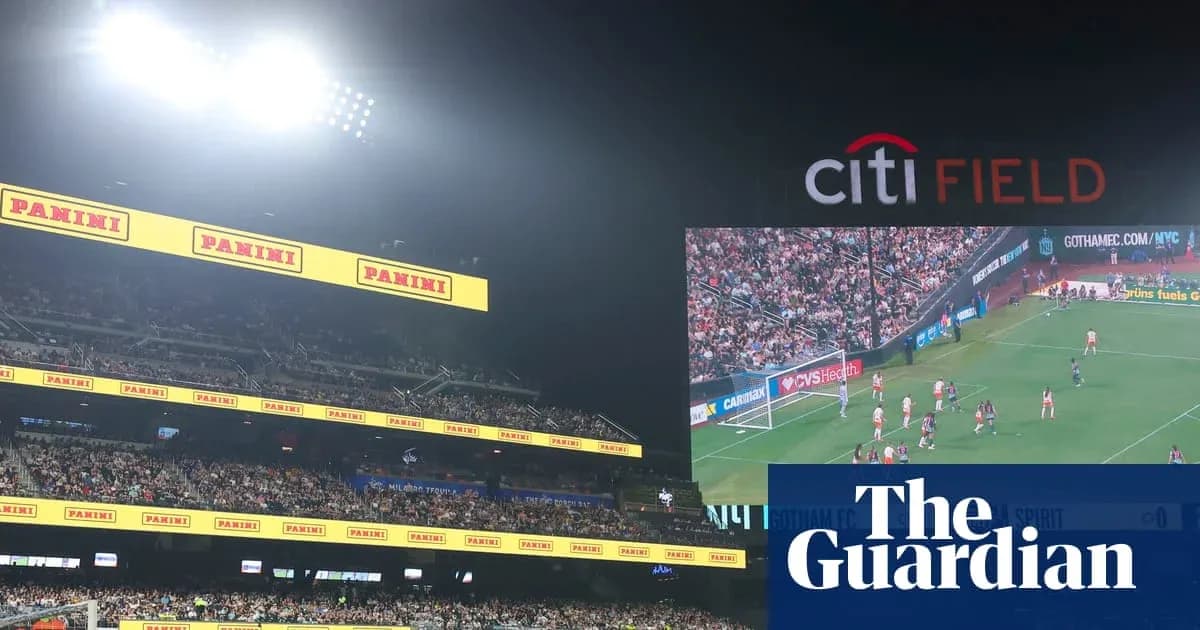
Ten years ago, a National Women’s Soccer League game in a baseball stadium was a punchline. A cramped, undersized field in a minor-league park. Players calling it “shocking and embarrassing.” A visual reminder of how fragile the league still was.
On Wednesday night in Queens, the same setup felt like something else entirely: a flex.
Gotham FC’s 1-0 win over the Washington Spirit at Citi Field drew 42,175 fans, the second-largest crowd in NWSL history and the biggest for any women’s sporting event in New York City. The home of the New York Mets, wrapped in a smoky summer haze, turned into a statement piece for a league that no longer apologizes for its ambition.
A table-setter in the heat and haze
The NWSL had been on pause for a month during the men’s World Cup. If the league needed a re-entry point, this was it. San Diego still sit atop the table, but Gotham’s victory pulled them level on points with Washington and the Portland Thorns, with the Spirit holding second on goal difference.
These two know each other too well for a midseason game to feel routine. They met in last year’s final. Across the past three seasons they’ve shared two championships (both Gotham’s), two runner-up finishes (both Washington’s) and three more trophies from other competitions. They have become the league’s East Coast axis of power.
On Wednesday, they brought all the familiar ingredients: stars, stakes, and just enough chaos to feel distinctly NWSL.
The only goal came from the player who so often delivers when the lights are harshest. In the 37th minute, Rose Lavelle found a pocket of space and bent a gorgeous curler beyond the Spirit defense and into the net, a finish worthy of the stage and the moment. It echoed her decisive strike in last year’s championship game, another reminder that Gotham’s midfield maestro rarely wastes a big night.
The crowd leaned heavily Gotham, but Trinity Rodman’s No 2 shirt popped up everywhere in the stands. The Spirit forward was electric on the ball, as usual, driving at defenders and rifling off five shots. None went in. On a night defined by narrow margins, that was the difference.
Then came the roar that shook the place.
In the 63rd minute, Sam Kerr stepped onto an NWSL field again.
Kerr’s homecoming and Gotham’s reinvention
Kerr’s introduction, her first minutes since signing for Gotham after six-and-a-half prolific years at Chelsea, drew the loudest cheer of the night. For this club, it was more than a marquee substitution. It was a full-circle moment.
She once carried this franchise when it was still Sky Blue FC, scoring at a historic clip while the club lurched through off-field turmoil, bare-bones resources and home crowds that sometimes struggled to hit 3,000. She left in 2018 with the headlines focused on inadequate training facilities and organizational dysfunction, not on trophies or transfers.
Now she returns to a different world.
Gotham are defending champions. They’ve rebranded, rebuilt and re-rooted themselves in the region. Over the past month alone they’ve added Kerr, Ireland captain Denise O’Sullivan and Norwegian midfielder Guro Reiten to a roster already stacked with international talent.
“I feel so spoiled to play at this club, because we keep bringing in incredible players,” Lavelle said, summing up the mood inside a locker room that suddenly feels like a destination. Rodman, ever the competitor, joked that she told Kerr on a corner kick, “Welcome back, but chill.”
The transformation stretches beyond the pitch. Last week, Gotham announced a move into New York City proper starting in 2028, at the future Etihad Park just around the corner from Citi Field. The buildup to this Queens Classic felt like a major-market event: subway ads, promotions, and a $15 ticket initiative organized by Mayor Zohran Mamdani. The club says 70% of ticket buyers were “new fans.”
“It was really special just to see how many people were there that that was their first Gotham game,” midfielder Jaedyn Shaw said.
That, perhaps more than any single goal or signing, tells the story of where this league is heading.
Washington’s rise and a commissioner’s proof point
It made sense that Washington were on the other side of this landmark night. The Spirit, like Gotham, have clawed their way out of lean years and leaned into big spending and bigger ideas in a league whose structure doesn’t always reward either.
“In many ways, this is like a full-circle moment,” NWSL commissioner Jessica Berman said at half-time. “We know that with investment, if you build it they will come, and this is a proof point for that.”
The numbers back her up. Over the past 12 months, the league has broken records for attendance, TV viewership and expansion fees. Games at baseball cathedrals like Wrigley Field and Oracle Park, once novelties, now routinely smash attendance marks. Citi Field just joined that list.
But the night also underlined the growing pains that come with rapid ascent.
A league pushing limits
Nearly a decade after that infamous tiny-field match, both teams agreed: the Citi Field pitch wasn’t a disgrace, but it wasn’t exactly a postcard either. “That’s showbiz, baby,” Lavelle quipped, capturing the uneasy balance between spectacle and sporting purity.
On television, the league’s primetime slot on ESPN brought its own awkward moment. As Lavelle struck the decisive goal, the broadcast was split-screened for an interview, leaving commentators scrambling over each other as the ball hit the net. Even on one of its biggest nights, the NWSL still had to fight for a full frame.
Then there was the air.
New York spent the day under an air quality alert, with smoke from Canadian wildfires drifting south. Temperatures hovered in the 80s and 90s Fahrenheit, the heat index pushing past 100. As the sun dropped behind the upper deck, Citi Field sat in an orange-brown haze. The smell of smoke never really left.
The league has postponed games before because of poor air quality, but it has also been hammered for playing through dangerous conditions. The most glaring example came last year, when a nationally televised match between the Orlando Pride and Kansas City Current went ahead in extreme heat that sent more than a dozen fans to the hospital.
This time, the numbers stayed just below the NWSL’s thresholds. With the air quality index above 150 — “unhealthy” by Environmental Protection Agency standards, but below the 180–200 range that can trigger a delay and the 200-plus level that demands postponement — the league opted for mitigation instead of cancellation. Two hydration breaks per half were mandated.
Spirit coach Adrián González made his feelings clear: the constant pauses killed the rhythm, even if they were necessary in the conditions.
Rodman echoed the players’ frustration.
“I think on both sides, we were just like, ‘Damn, another break, another break, another break,’” she said. “If we have to have a hydration break every 15 minutes, then we shouldn’t be playing the game, and that’s my opinion. … But at the end of the day, there’s 40,000 people, it’s a whole event. So it is really tough. I think it was a really hard situation for everybody to work around.”
That tension — between safety and spectacle, between duty of care and the demands of a booming business — isn’t going away. The league will have to decide, again and again, where its line truly is.
From punchline to proof
By any measure, Wednesday will be logged as a triumph. Gotham’s crowd at Citi Field more than doubled the total attendance across their entire 12-game home slate in their debut 2013 season. A decade ago, the idea of 42,000 people turning up to watch this club would have sounded like fantasy.
Yet the night also insisted on nuance. The NWSL has come a long way. It still has a long way to go. Both truths sat side by side in the Queens humidity.
On the field, Lavelle’s left foot decided the game. In the stands, new fans outnumbered the old guard. Above them, the haze hung stubbornly over a league racing to grow while still figuring out what it wants to be.
“It’s pretty cool when you’re out there and you realize that this is your job,” veteran Spirit midfielder Andi Sullivan said, “and that this is what your dreams looked like, or maybe what they haven’t looked like along the way.”
On nights like this, under a smoky sky in a baseball park turned football stage, the NWSL looks a lot like the dream — and just as clearly, like a project still under construction.