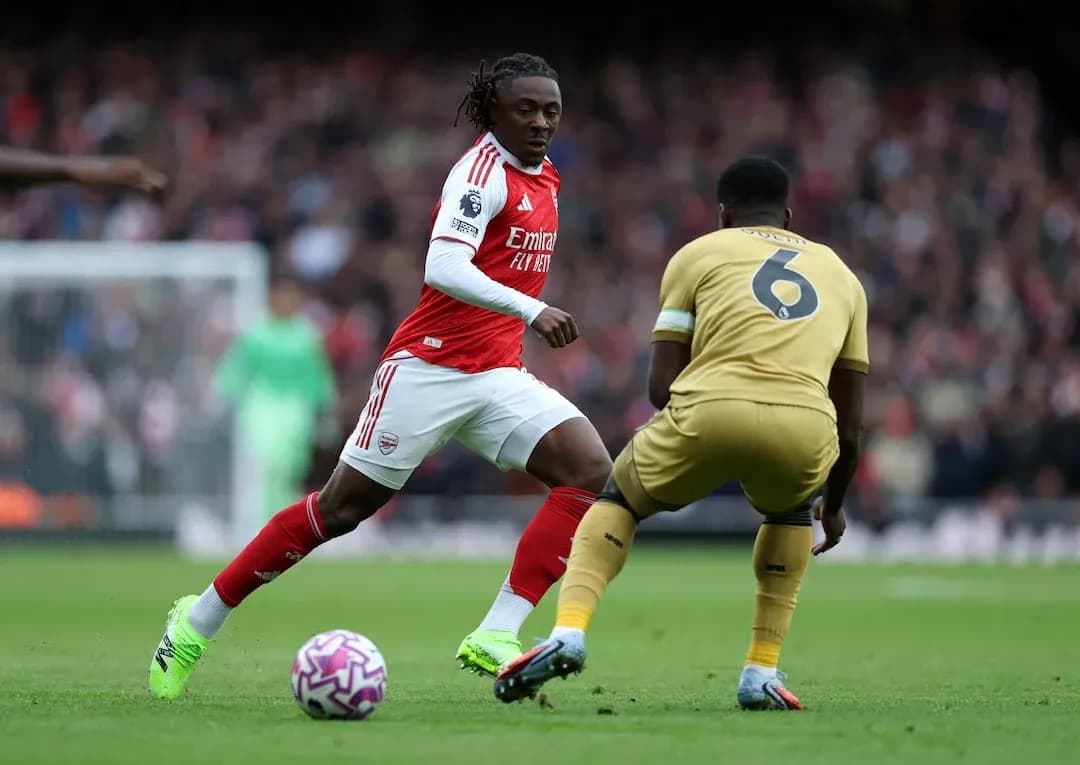
Nottingham Forest vs Newcastle: Tactical Insights from a 1-1 Draw
At the City Ground, Nottingham Forest and Newcastle played out a 1-1 draw that felt less like a dead-rubber in “Regular Season - 36” and more like a tactical argument about what these sides want to be. Following this result, Forest sit 16th on 43 points, Newcastle 13th on 46, both with 36 matches played and identical goal differences of -2, Forest at 45-47 and Newcastle at 50-52.
The scoreline matched the broader seasonal profiles. Forest’s campaign has been about fine margins: overall they average 1.3 goals for and 1.3 against, with a fragile home record of 19 scored and 22 conceded at the City Ground across 18 matches. Newcastle, by contrast, have been two teams in one body: front-foot and free-scoring at home (33 goals), but cautious and often blunted on their travels, where they have only 17 goals in 18 away games, an average of 0.9.
Against that backdrop, the 1-1 felt almost inevitable: Forest’s desire to turn the City Ground into a fortress colliding with a Newcastle side whose away identity is built on control rather than chaos.
Tactical Voids
This fixture was shaped as much by absences as by those on the pitch. Forest were stripped of some of their most defining personalities. M. Gibbs-White, their top scorer with 13 league goals and 4 assists, was ruled out with a head injury. Without him, Forest lost their natural conduit between midfield and attack, the player who normally knits transitions together and carries the ball between lines.
C. Hudson-Odoi’s injury removed another source of one-v-one threat, while the absence of Murillo and W. Boly weakened Forest’s ability to defend aggressively on the front foot. I. Sangare’s injury robbed Vitor Pereira of a natural ball-winner in midfield. This many structural pieces missing forced Forest into a more collective, system-first interpretation of their 3-4-2-1.
Newcastle had their own structural wounds. F. Schar and V. Livramento were both unavailable, as were E. Krafth and L. Miley. That stripped Eddie Howe of rotation options in the back line and some ball progression from deep. It also pushed greater responsibility onto the starting back four of L. Hall, M. Thiaw, S. Botman and D. Burn to manage space without their usual depth of cover.
Disciplinary trends also hovered over this game. Heading into this fixture, Forest’s yellow cards peaked in the 46-60 minute window with 25.86% of their bookings arriving just after half-time, while Newcastle’s ill-discipline spiked late: 28.13% of their yellows came between 76-90 minutes, with another 17.19% from 91-105. Both teams, then, are prone to emotional surges at opposite ends of the second half – a detail that framed how the final stages were likely to unfold.
Key Matchups
With Gibbs-White absent, Forest’s “hunter” role was redistributed. T. Awoniyi led the line in the 3-4-2-1, flanked by Igor Jesus and D. Bakwa. The task for that trio was to test a Newcastle defence that, overall, concedes 1.4 goals per match, and on their travels allows 23 goals in 18 away games. The numbers say this back line is not impregnable; it bends regularly, even if it doesn’t always break.
Forest’s season-long pattern is clear: on their travels they are more incisive (26 goals away, average 1.4) than at home (19, average 1.1). So Pereira’s challenge was to manufacture “away-style” transition moments in a home setting. That’s where N. Williams and L. Netz became crucial. Williams, one of the league’s standout red-card figures, is also one of Forest’s most dynamic outlets: 2 goals, 3 assists, 26 shots, and 36 key passes this season. His ability to overlap from the right of the midfield four and deliver early crosses was designed to drag D. Burn into wide duels and isolate him.
Burn, for his part, arrived as one of the division’s leading yellow-card collectors with 10 bookings and 1 yellow-red. He had already engaged in 268 duels, winning 144, and blocked 12 shots. His job here was to be the shield on Newcastle’s left, dealing with Williams’ forward surges and Bakwa’s direct running. Every time Forest shifted play quickly to that flank, it was Burn’s decision-making – step out and risk another booking, or drop and concede territory – that shaped the visitors’ defensive line.
Engine Room
If the flanks were about chaos, the centre was about control. Newcastle’s double pivot of Bruno Guimarães and S. Tonali faced Forest’s axis of N. Dominguez and E. Anderson.
Bruno entered as one of the league’s most complete midfielders: 9 goals, 5 assists, 45 key passes, 56 tackles, and 15 interceptions, with an 86% pass accuracy. He is Newcastle’s metronome and their scalpel in one body. Tonali’s positioning allowed Bruno to roam, stepping higher into pockets behind Forest’s first press.
Dominguez and Anderson were tasked with fracturing that rhythm. Without Sangare, Dominguez had to be both destroyer and distributor, closing Bruno’s angles while still progressing the ball into Igor Jesus and Bakwa. Anderson’s role was more elastic – shuttling into half-spaces to combine with Netz and Williams, but always aware that if he lost Bruno, Newcastle would suddenly have a free man driving at the Forest back three.
Statistical Prognosis
Following this result, the numbers around both clubs harden into focus. Forest’s overall goal difference of -2 (45 scored, 47 conceded) underlines a side that lives on the edge but rarely collapses. They have kept 9 clean sheets overall, and their penalty record – 3 scored from 3, with no misses – speaks to composure in the biggest moments.
Newcastle mirror that -2 goal difference with a more uneven emotional profile: they have failed to score 8 times overall, including 7 on their travels, yet when they do click, they can produce away wins like 1-4. Their 8 clean sheets are spread evenly enough to suggest a team that can still shut games down, but their late yellow-card surge and three red cards in the 46-75 minute window this season hint at volatility under pressure.
In xG terms – even without explicit figures – the patterns are clear. Forest’s home average of 1.1 goals for and 1.2 against suggests most City Ground matches are decided within a narrow xG band either side of parity. Newcastle’s away profile, 0.9 scored and 1.3 conceded, points towards opponents generally carving out the better chances when they host Howe’s side.
Overlay those curves and the tactical prognosis emerges: in fixtures like this, Forest are likely to edge the shot quality, particularly when Williams and Netz can force Newcastle’s full-backs into deep positions. Newcastle, meanwhile, rely on Bruno’s ability to tilt the pitch and on moments of individual incision from the likes of Joelinton and J. Murphy to overperform their underlying away numbers.
A 1-1 draw, then, feels like the statistical mean made flesh: Forest marginally ahead on territory and pressure, Newcastle leaning on structure and moments. For the run-in, the data hints that Forest, if they continue to manage discipline in that 46-60 minute window and keep leveraging wide overloads, are marginally better placed to grind out the final points they need. Newcastle, unless their away attack can lift itself above that 0.9-goal ceiling, may remain a side whose performances promise more than the table ultimately allows.