Neymar and Pulisic Face Injury Challenges at World Cup
Two of the World Cup’s marquee attackers are stuck on the same problem: a calf muscle that will not cooperate.
On opposite sides of the draw, Neymar Jr. and Christian Pulisic are both fighting injuries that threaten to reshape Brazil’s and the United States’ ambitions for 2026.
Neymar’s World Cup On Hold
Neymar is 34 now, and this was supposed to be the tournament where experience met redemption. Instead, his World Cup has yet to start.
He injured his right calf on May 17 while playing for Santos and has been sidelined for a month. This week brought a flicker of progress: individual work on the sideline on Tuesday, a brief spell with his Brazil teammates on Wednesday. But that is as close as he has come. He has already been ruled out of Brazil’s next Group C match against Haiti.
Inside the Brazil camp, the calculation is clear. There is a real possibility he will not feature at all in the group stage, with the medical staff and coaching team weighing whether to hold him back entirely for the knockout rounds. That is, of course, if Brazil get there.
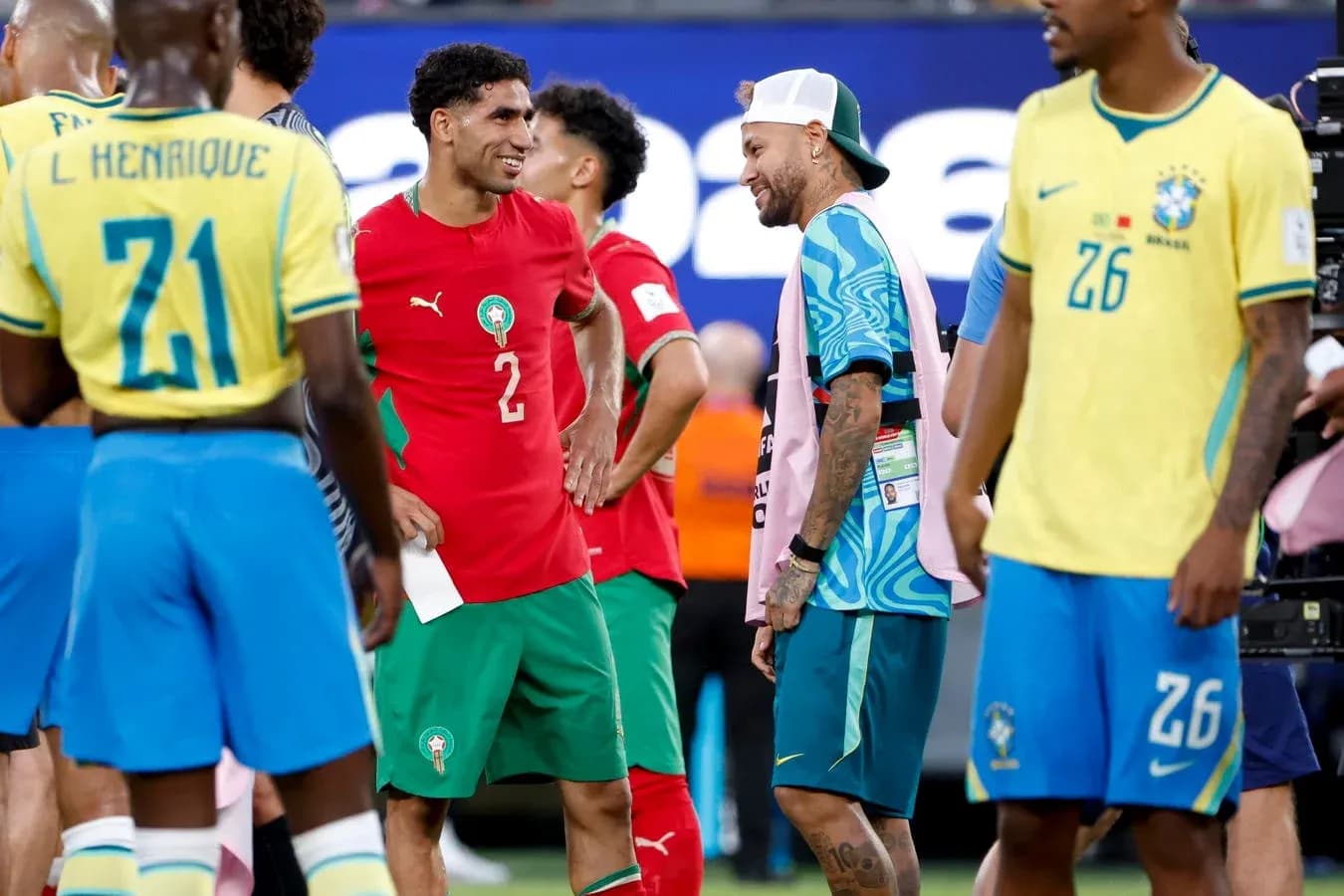
The five-time champions have made a stuttering start. A 1-1 draw with Morocco on Saturday has left them with work to do against Haiti on Friday and Scotland on June 24. All of this unfolds against the backdrop of Neymar’s long road back from a major knee injury: he has not played for Brazil’s senior national team since October 17, 2023, when he tore the anterior cruciate ligament and meniscus in his left knee in a World Cup qualifier against Uruguay.
He is chasing fitness and rhythm at the very moment his country needs certainty.
Pulisic’s Sudden Setback
While Neymar’s absence has been a slow burn, Pulisic’s came like a jolt.
The 27-year-old U.S. attacker first felt his left calf in training last week. He then aggravated the problem in the USMNT’s World Cup opener, a 4-1 dismantling of Paraguay that should have been a statement night for the American star. Instead, his evening ended at halftime, forced off by the injury.
Now his status for the United States’ Group D clash with Australia on Friday is unclear. The team has momentum, a big win in the bank, and a system built around Pulisic’s direct running and creativity. But the question hangs over everything: can he play, and if he does, how close will he be to full throttle?
The Same Injury, Different Timelines
Strip away the names and the story is the same. Both Neymar and Pulisic are dealing with calf strains — pulled calf muscles affecting the powerful group at the back of the lower leg and the tendons that link them to bone.
In a sport built on sudden bursts and sharp changes of direction, these injuries are almost part of the landscape. Sprinting demands a violent push-off from the feet, with the calf muscles firing hard and fast. If they are not supple enough or properly primed, the muscle fibers can overstretch or tear. One mistimed surge, one explosive take-off, and a World Cup can tilt.
The severity of a strain dictates everything. Muscle injuries are typically graded in three degrees:
- A first-degree, or mild, strain affects less than five percent of the muscle. Players can often return in one to three weeks, sometimes sooner if a major tournament is on the line.
- A second-degree, or moderate, strain involves a larger portion of the muscle without a complete tear. Recovery to full activity usually takes around three to six weeks.
- A third-degree, or severe, strain is a full tear of the muscle or the muscle-tendon unit and can mean months on the sidelines.
Neymar is reportedly dealing with a second-degree calf strain. That places him firmly in the three-to-six-week recovery window and explains Brazil’s caution. Pulisic’s strain has not been publicly defined as first- or second-degree, leaving his timeline less precise and his availability more of a day-to-day decision.
Managing Risk On The Biggest Stage
Neither player is expected to need surgery. The standard treatment is conservative and familiar: rest, ice, compression, elevation.
Rest means stopping the very activity that defines them: no sprints, no sharp cuts, no shooting drills that load the calf. Ice is applied in short, regular spells — about 20 minutes at a time, every couple of hours — to control pain and swelling. Compression bandages help limit fluid build-up around the injury. Elevation, keeping the leg above heart level, supports that same goal.
Behind those simple steps lies a more delicate balance. Push too hard, too soon, and a moderate strain can turn into something far worse. Hold back too long, and a team’s best player watches the defining moments of a World Cup from the bench.
That is the tightrope Brazil and the United States now walk.
For Brazil, the decision is strategic as much as medical. Do they gamble on navigating the group without Neymar, trusting their depth and history, to give him the best chance of being decisive in the knockout rounds? Or do circumstances in Group C force them to accelerate his return?
For the U.S., the equation is sharper and shorter. Pulisic’s influence is central, their margin for error slimmer. Each day between now and Australia feels like a test: how does the calf respond, how much can he tolerate, how much risk can they afford?
Two calves, two contenders, one shared uncertainty. As the group stage unfolds, the fate of Brazil and the United States may rest not on tactics or talent, but on how quickly torn muscle fibers can heal — and how much both stars are willing, and able, to endure.