Netherlands: Dark Horses with Elite Talent in Euro 2024
The Netherlands arrive as they so often do: talked about, respected, but parked just outside the velvet rope of the true favourites. This time, they wear the label of dark horses again – the team no one wants to face in the knockouts, but few are tipping to win it all.
They have every right to feel they belong higher up the billing.
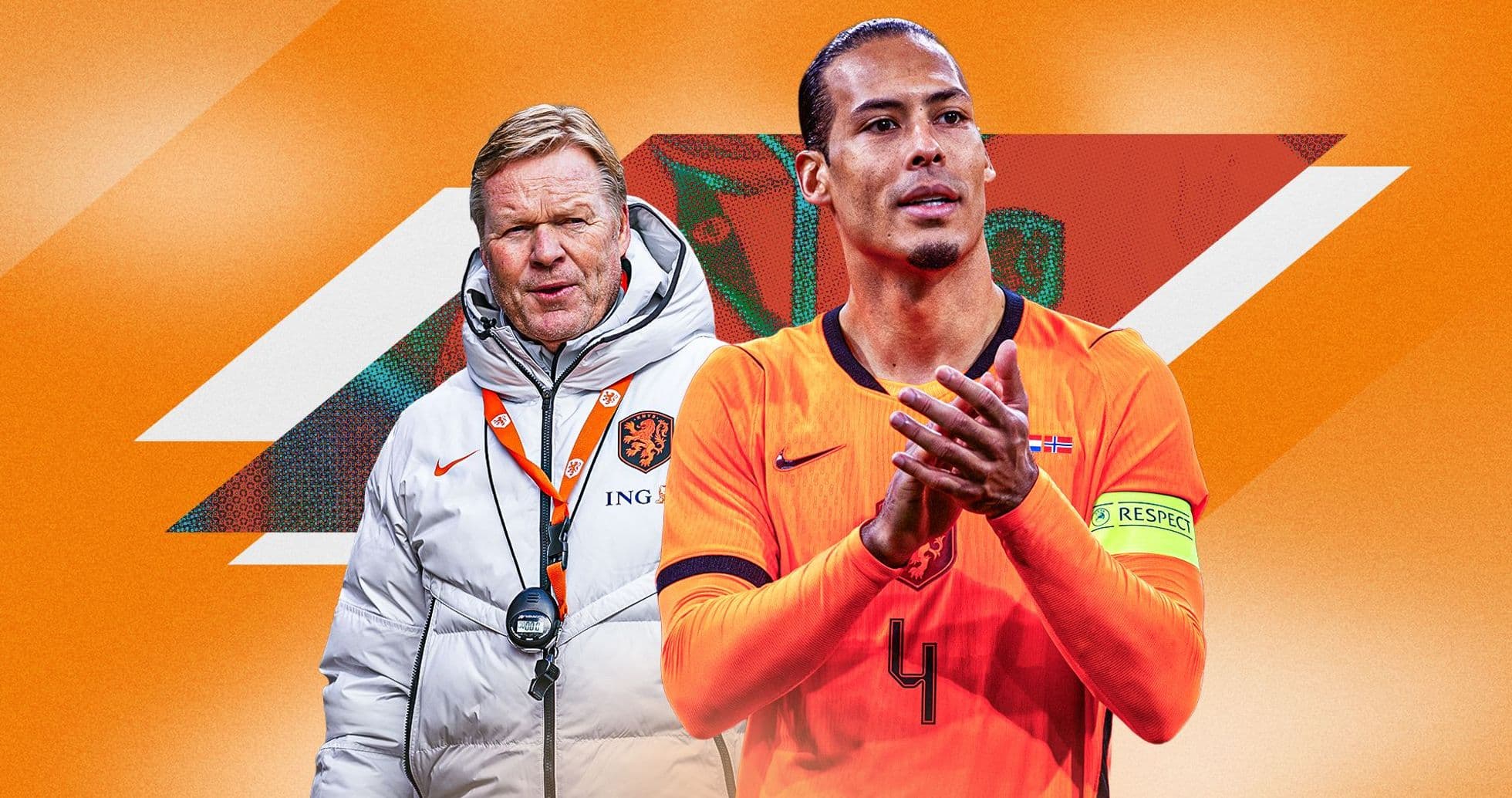
Virgil van Dijk anchors a defence that, on paper, can handle anyone. In front of him, Frenkie de Jong dictates tempo with that familiar glide between the lines, while Memphis Depay and Cody Gakpo carry the attacking threat that can turn a tight game in an instant. Across the spine, the Oranje still ooze class.
The draw, though, offers no comfort. Japan, Sweden and Tunisia make up a group that punishes any lapse. Japan’s intensity, Sweden’s organisation and Tunisia’s bite mean there are no easy nights here. Even so, the Dutch are still expected to emerge on top, their individual quality and tournament pedigree tilting the balance their way.
Yet the optimism comes with asterisks.
Key names are missing. Xavi Simons, Jurrien Timber and Matthijs de Ligt have all been ruled out through injury, stripping Koeman of creativity, versatility and defensive depth. Jeremie Frimpong and highly rated midfielder Kees Smit did not make the final squad, decisions that raised eyebrows and ignited debate across the country.
Then came the warm-up games. A shock defeat to Algeria in their first pre-tournament friendly rattled confidence. The narrow, unconvincing win over Uzbekistan a few days later did little to calm nerves. For a nation that still measures itself against the ideals of total football, the performances felt too laboured, too cautious.
Koeman at the Helm – and Under the Microscope
Ronald Koeman knows this stage, and he knows this scrutiny. He first took the Netherlands job in 2018 after Dick Advocaat stepped aside, signing a four-year deal and quickly restoring order. He led the team to the 2019 UEFA Nations League final and secured qualification for Euro 2020, steadying a ship that had drifted.
Then Barcelona called. Koeman walked away from the national team, trading orange for blaugrana.
Two-and-a-half years later, he was back. In 2023, he returned to replace Louis van Gaal and promptly steered the Netherlands to two more semi-finals – in the 2023 Nations League and at Euro 2024. On paper, it is a strong record: consistency in reaching the latter stages, a team that rarely collapses.
Inside the country, the verdict is more complicated. Koeman has been applauded for bringing through a new wave of talent, refreshing a squad that risked going stale. At the same time, his approach has drawn criticism. The football does not always resemble the daring, attacking style that Rinus Michels and Johan Cruyff made part of the Dutch identity. For many, the Oranje should not just win; they should win with a certain swagger. Koeman’s team often feels more pragmatic than poetic.
Memphis, Still the Reference Point
Through all the tactical arguments and generational shifts, one constant remains: Memphis Depay.
He may no longer be in Europe and he may be nearing the end of his major-tournament journey with the national team, but he is still the figure everything orbits around. The Corinthians forward is now the all-time leading scorer in Dutch national team history, outstripping icons such as Robin van Persie, Dennis Bergkamp, Arjen Robben and Ruud van Nistelrooy with his 55 international goals.
In an era when the Netherlands do not boast a classic, world-class No. 9, Koeman leans on Memphis again. He was the driving force in qualification, his numbers underlining his importance: almost a goal every two games for his country. The caveat is stark – only six of those goals have come at major tournaments. For all his status, this is the stage where he still has something to prove.
If the Dutch are to go deep, Memphis cannot simply be the historic top scorer. He has to be the man for the moment.
The Rise of ‘Brobbeast’
Alongside him, a new kind of centre-forward is emerging.
Brian Brobbey, shaped in Ajax’s famed academy, took an early hit to his reputation in Germany. His spell at RB Leipzig was short and unforgiving, the “flop” label arriving faster than any player would like. That might have broken others. Brobbey chose a different path.
In England, with Sunderland, he has rebuilt himself. At 24, he has become central to one of the most unexpected stories in the Premier League. Seven goals in 31 league appearances do not leap off the page, but the impact goes far beyond the raw numbers. Brobbey’s presence, movement and relentless work helped drive the Black Cats to a remarkable qualification for next season’s Europa League.
The nickname says plenty. ‘Brobbeast’ is not just a marketing line; it fits. He is powerful and direct, but not one-dimensional. He runs the channels, holds the ball, leads the line on his own and has rediscovered the instinct to decide games in the penalty area. Once tagged as “the new Romelu Lukaku”, he has grown into his own identity, a player younger forwards now study rather than compare.
For the Netherlands, that matters. In a squad light on traditional centre-forwards, Brobbey offers a different route to goal, a different kind of menace. Pair him with Memphis, and Koeman suddenly has a front line that can bully defences or pick them apart.
A Nation on the Edge of Something
So the picture is mixed: a demanding group, key injuries, an often-divisive coach – but also a core of elite talent, a record-breaking talisman and a striker on the rise.
Dark horses again? Maybe. But if Memphis catches fire and ‘Brobbeast’ brings his Sunderland form onto the international stage, the rest of Europe may soon remember why underestimating the Oranje has always been a dangerous game.