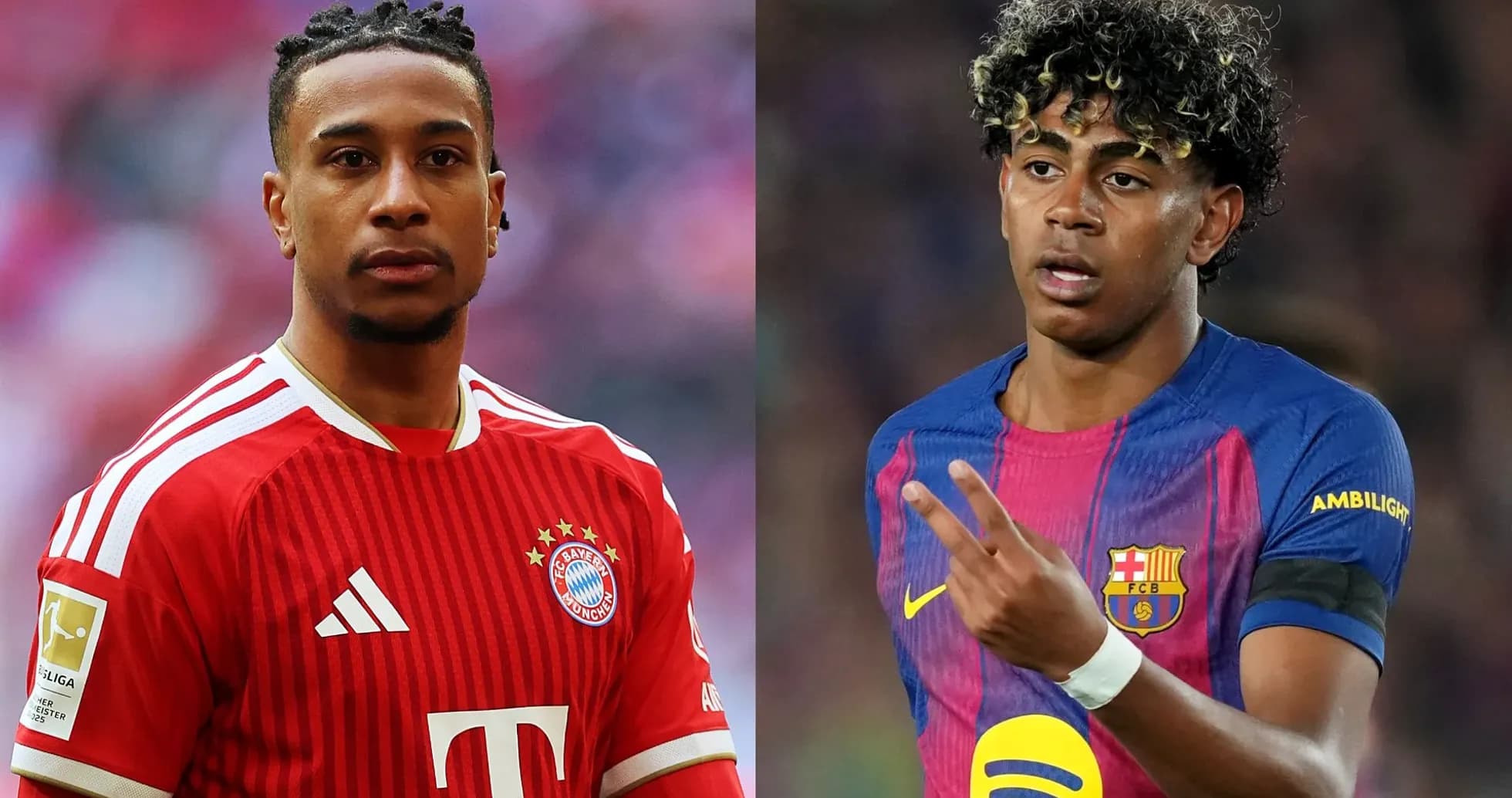
Michael Olise vs Lamine Yamal: The Future of Football Talent
Michael Olise will board the plane with France. Lamine Yamal is expected to do the same with Spain once he shrugs off an untimely injury. Two of the brightest wide talents in the game, heading to a World Cup in North America where both Les Bleus and La Roja are being tipped to go deep.
If either heavyweight is to justify that billing, the wings will matter. A lot. In tournaments of fine margins, you need players who can unpick a defence from a standing start, who can turn a cagey quarter-final with a single feint or cross. Didier Deschamps and Luis de la Fuente each have one of those in their armoury.
Olise has just completed a monstrous second season with Bayern. The Bundesliga champions watched him rack up 20 goals and 26 assists across the 2025-26 campaign, numbers that would look outrageous for a centre-forward, never mind a wide creator. In Spain, Yamal answered with a season of his own: 24 goals and 18 assists as he helped drive Barcelona to the Liga title.
The contrast lies in their journeys. Yamal is still only 18, yet already feels like the finished article in big moments, a teenager playing with the calm of a veteran. Olise is 24, his ascent more winding, a London-born France international who has climbed step by step rather than exploded onto the scene.
On paper, their output is almost neck and neck. On the pitch, under the harshest floodlights, not everyone is convinced they share the same tier yet.
Marcel Desailly, who knows something about the demands of the very top after lifting the World Cup with France in 1998, sees a gap. Speaking to GOAL, the former defender drew a clear line between the two when the question came: are Olise and Yamal operating at the same level?
His verdict was blunt. In the intensity of a higher-grade match, he believes Olise still sits a step below. For Desailly, Yamal holds a “small advance” in understanding the traps that elite opponents set, the subtle cues and pressure points that can suffocate even the most gifted winger.
The Champions League clash between Paris Saint-Germain and Bayern Munich stuck in his mind. Under that strain, Olise struggled to cope with the pressure of the opponent. The talent was obvious, the intent was there, but the performance dipped when the game demanded repeated high-intensity efforts. The pressure finally told, and Desailly left disappointed by how sharply Olise’s level dropped.
Yamal, by contrast, impresses him with how quickly he reads the rhythm of those games. He seems to know when to conserve energy, when to burst, when to drift inside to escape a double-team. For someone younger than Olise, that tactical maturity stands out. He understands, already, the relentless repetition of effort that knockout football at the highest level demands.
Desailly’s assessment is not a dismissal of Olise’s quality. Far from it. He stresses that the Bayern winger still owns a huge margin for progression. The tools are there: the goals, the assists, the flair. What he lacks, in the French great’s eyes, is the fully formed consistency and game-reading that already shape the way people talk about Yamal.
So the stage is set. One prodigy who plays as if he has seen it all before. One late bloomer whose numbers scream “world-class” but whose education in the harshest games is still ongoing.
In North America, under the weight of French and Spanish expectation, which of them bends the tournament to his will?