Messi and the New Stars Shine at the World Cup
Lionel Messi bent the World Cup to his will one last time. Around him, a new generation announced itself with outrageous goals, defiant saves and breakout performances that turned a sprawling tournament across the United States into a rolling epic.
This was a World Cup of moments. Some belonged to the old masters. Many to those determined to take their crown.
Goals that stopped time
The first crackle of electricity came from the inevitable source.
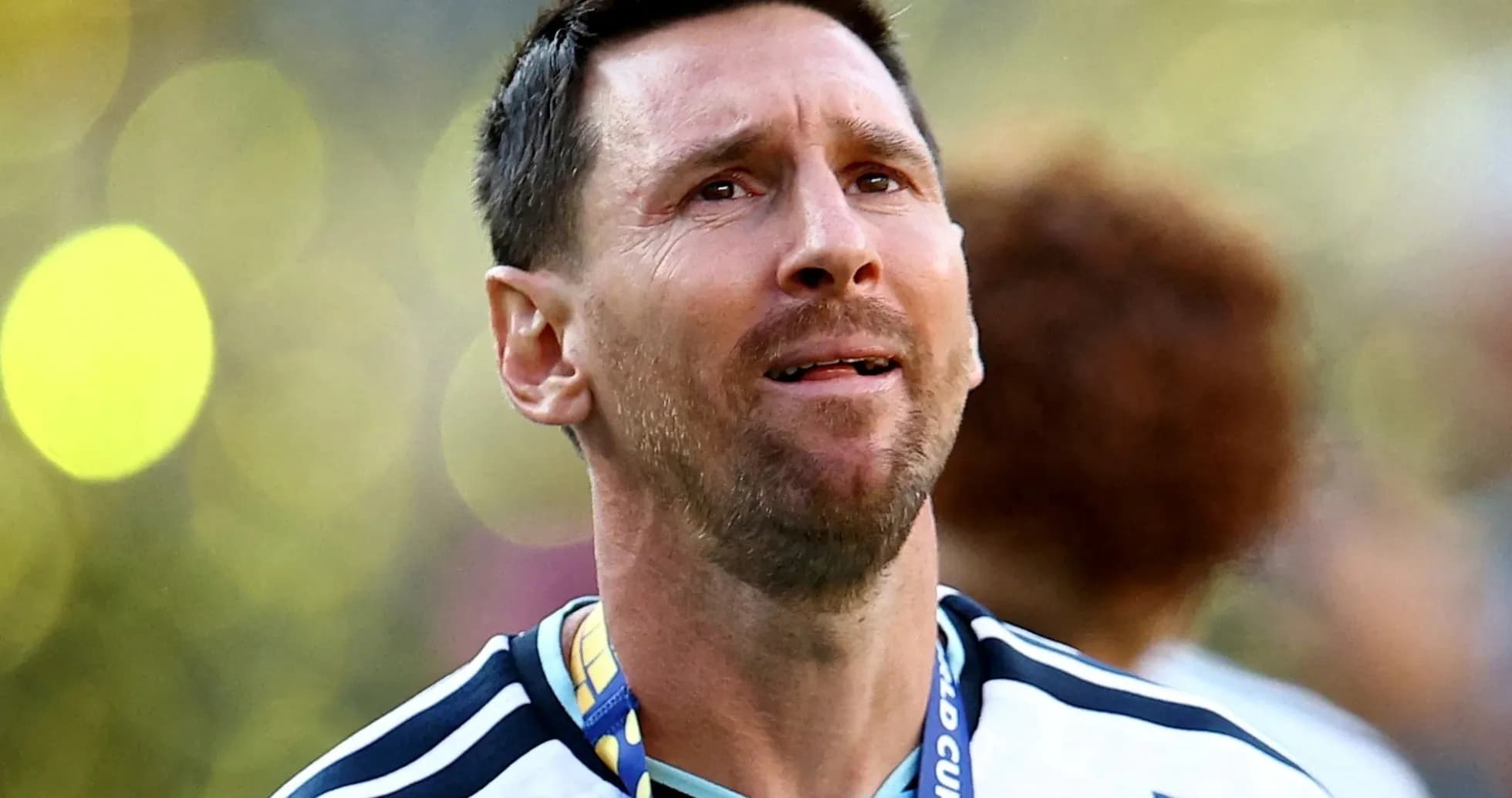
Messi’s opener for Argentina against Cape Verde was pure technique. A difficult pass, taken on the run. One touch to tame it, the second to guide it, almost gently, into the top corner from a tight angle. No backlift, no fuss. Just a 39-year-old turning a half-chance into a painting.
Cape Verde refused to play the role of extras. Deep into extra time, Sidny Cabral stepped in from the edge of the area and bent a right-foot shot into the top corner beyond Emiliano Martinez. The clock showed 103 minutes. The strike showed no mercy. The stadium didn’t roar so much as gasp. For a few seconds, Argentina were staring over the edge.
Drama lived everywhere. In the group stage, Bosnia-Herzegovina’s Kerim Alajbegovic slalomed through Qatar’s defence, a weaving solo run crowned by a rising right-foot finish that screamed into the net. One man, three defenders, no doubt.
Norway’s World Cup run crackled with individual brilliance. Erling Haaland, seemingly with a casual swing of his right boot against Brazil in the last 16, unleashed a finish of brutal power and perfect placement. It looked simple. It was anything but. It crowned a match-winning performance and sent Brazil home with their flaws exposed.
Julian Alvarez chose extra time of a tight quarter-final against Switzerland to provide his own exclamation mark. A swerving right-foot drive from distance, arrowed into the top corner, ripped open a game that had been locked in tension. A vastly under-rated attacker, delivering a moment that will live far longer than the label.
And then Antonio Nusa, another Norwegian, opened the scoring against Ivory Coast with a goal that felt like it had been drawn up on a training ground and executed in a dream. A little shimmy in the box, defender sent the wrong way, then a calm, curling finish into the top corner. Precision disguised as ease.
Keepers who refused to be beaten
If the goals lit up the tournament, the goalkeepers supplied its stubborn heartbeat.
Johny Placide’s double save for Haiti against Morocco was the kind of sequence that leaves forwards questioning their life choices. First, a block with his legs. Then, in the same breath, a sharp, one-handed stop low to his left. Two big moments, one unshakeable keeper.
At the Azteca, Jordan Pickford produced one of the standout individual displays of England’s campaign in their win over Mexico. Early on, Raul Jimenez seemed certain to score with a header low to Pickford’s left. The England goalkeeper flung himself across, clawed it away, and changed the temperature of the night.
Orjan Nyland’s best save of the tournament came not from a Brazilian, but from his own defender. Kristoffer Ajer inadvertently diverted the ball towards Norway’s net against Brazil, forcing Nyland into a desperate, scrambling retreat. He somehow twisted, leapt, and turned the ball on to the post. It was anticipation, agility and sheer refusal to accept disaster.
Aymen Dahmen did something similar for Tunisia against Japan, reacting at impossible speed to keep out Takehiro Tomiyasu’s close-range effort. The ball did everything but cross the line. Dahmen did everything to make sure it didn’t.
Patrick Beach, in Australia’s group game with Turkey, produced a classic World Cup image: a full-stretch dive to his right to touch Abdulkerim Bardakci’s rising 30-yard shot on to the post. A fingertip, a thud of ball on woodwork, and a nation exhaling.
Alireza Beiranvand’s save for Iran against Belgium was all about recovery. He couldn’t reach Kevin de Bruyne’s initial effort, but somehow adjusted in time to repel Maxim de Cuyper’s shot from inside the six-yard box. It was the kind of second action that separates good keepers from unforgettable ones.
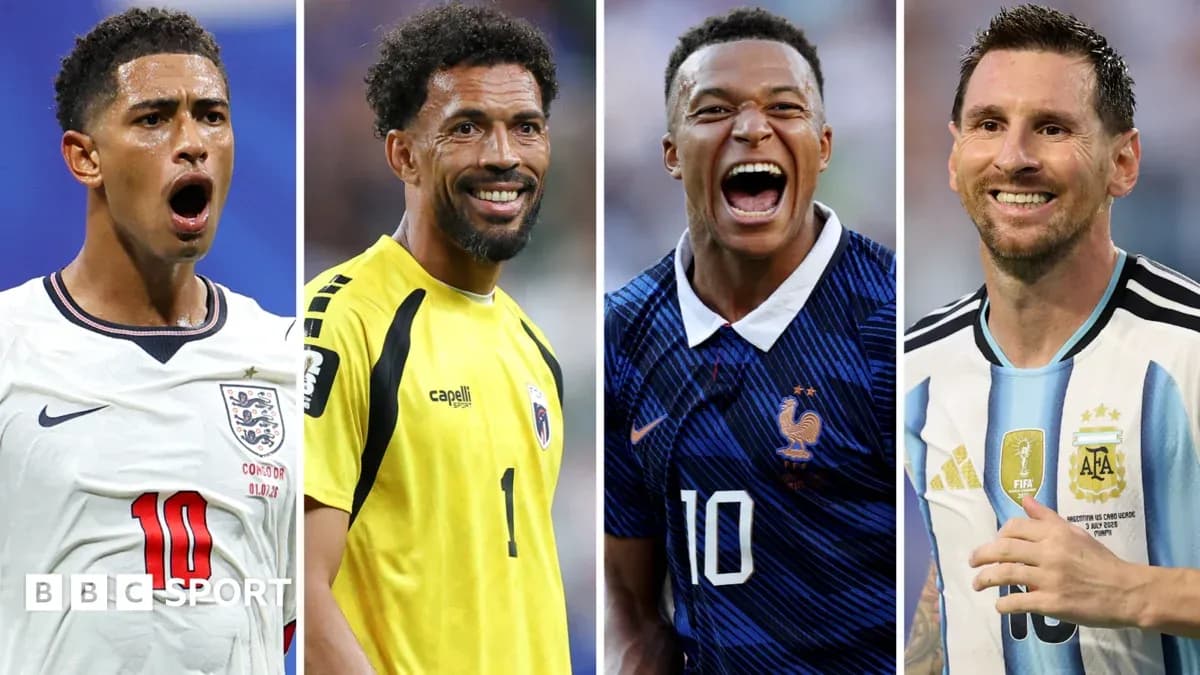
And then there was Vozinha. Cape Verde’s 40-year-old goalkeeper started his World Cup with seven saves in a 0–0 draw against Spain and finished it by making eight more against Argentina, as his team pushed Messi’s side to the brink. His heroics turned him into a global phenomenon, his Instagram following exploding from around 50,000 to more than 29 million. A cult figure, built on pure resistance.
The kings and their challengers
When Fifa handed over the Golden Ball, it went to Spain’s captain, Rodri. The award for the tournament’s best player felt like recognition of a campaign in which he once again proved irreplaceable, just as he is for Manchester City. At the heart of a Spain side that conceded only one goal all tournament, he dictated games with icy authority.
Messi took the Silver Ball, Kylian Mbappe the Bronze. Yet even in second place, Messi dominated the conversation. He pulled Argentina through tight moments, particularly in that wild semi-final against England, where his control and vision turned chaos into a script he understood.
Mbappe arrived in the US looking, to those in the room, more relaxed and assured than ever. On the pitch, that translated into leadership, goals, flair and a work rate without the ball that marked an evolution in his game. This was supposed to be his tournament. At times, it looked like it was.
For England, Jude Bellingham became the reference point. The Real Madrid midfielder dragged his country through matches by sheer force of will, then raised his level again when the stakes climbed. His equaliser against Norway in the quarter-final, arriving just after their fans taunted England with “You’re going home,” summed up his response to pressure.
Others made their mark in quieter ways. Michael Olise’s seven assists and outrageous scissor-kick against Sweden, which crashed off the post and had an entire press box on its feet, underlined his emergence. At 24, he leaves this World Cup with the sense that there is much more to come.
For many observers, though, Messi’s body of work at 39 still defied belief. Doing this at an age when most greats are long gone from the international stage only tightened his grip on the “greatest of all time” argument.
A new generation steps into the light
If this was a World Cup that extended Messi’s legend, it also launched careers.
Pau Cubarsi, Spain’s 19-year-old centre-back, played every minute of their campaign and walked away with the best young player award. Against France in the semi-final he was magnificent, reading danger, stepping in, and playing with a composure that belonged to a veteran, not a teenager.
Morocco’s Ayyoub Bouaddi, already admired by Lille fans and Ligue 1 watchers, introduced himself to the wider world with an outstanding display against Brazil at the New York New Jersey Stadium. His movement off the ball, constantly finding pockets and angles, drew comparisons to Patrick Vieira and Luka Modric. On a pitch full of stars, he looked entirely at home.
Erling Haaland hardly fits the traditional “breakout” label, but in the United States his impact shifted him again. His performances for Norway turned him from a global star into a household name in a country still learning the language of football.
Cape Verde’s Vozinha, improbably, joined that same conversation. From World Cup debutants to darlings of the neutral, his saves against Spain and Argentina turned him into one of the tournament’s most unlikely heroes.
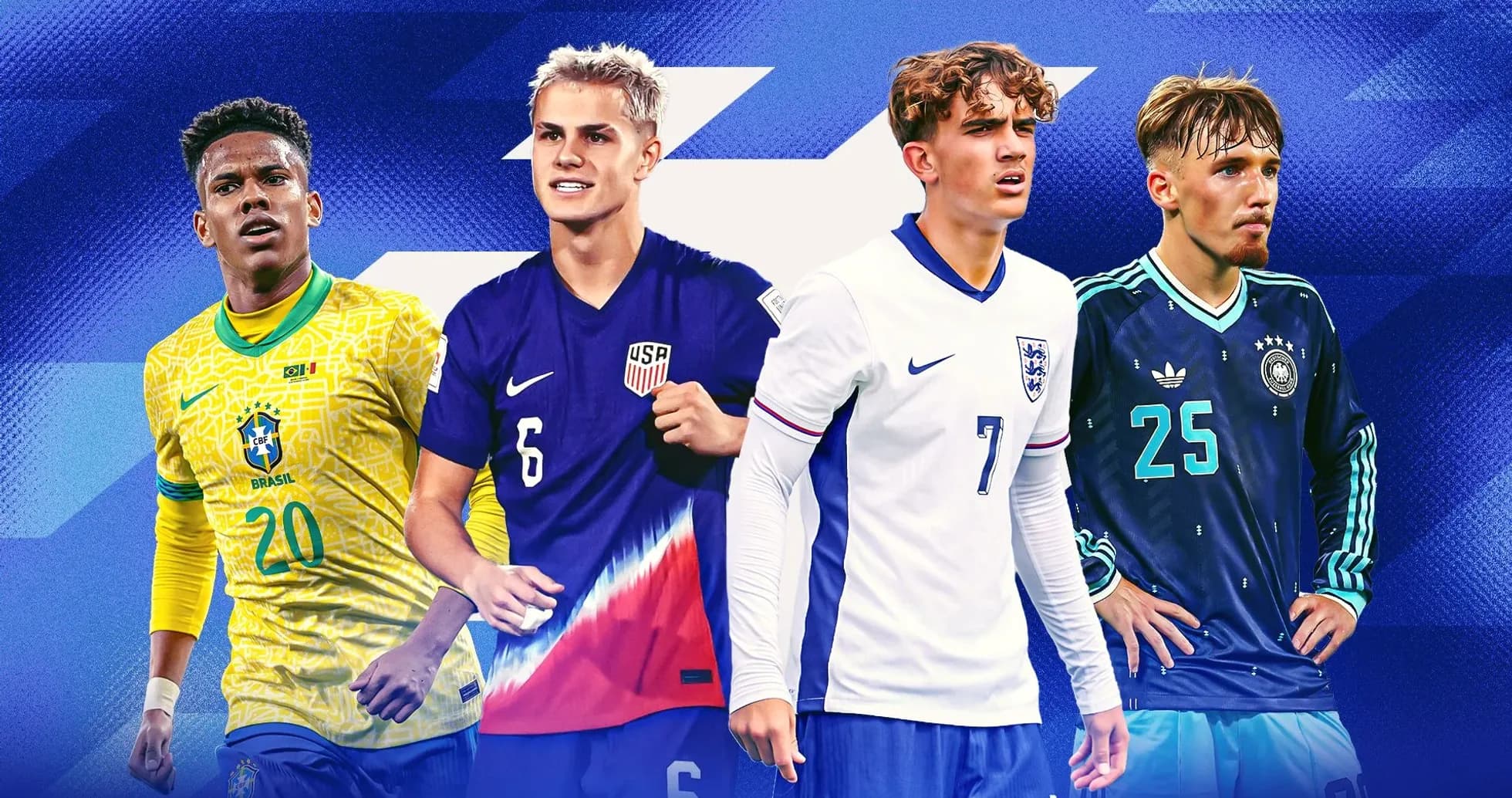
The USA’s Alex Freeman, at full-back, enhanced his reputation so much that his own national coach, Mauricio Pochettino, suggested he could become one of the best in the world in his position. Their campaign ended in the last 16, but Freeman’s future seems to be pointed firmly upwards.
Switzerland’s Johan Manzambi, just 20, played the World Cup as if it were a street game, with a smile and three goals in four matches. His tournament ended early through injury, but not before he had done enough to earn a move to Aston Villa for around £50m.
Mexico’s 17-year-old midfielder Gilberto Mora forced his way into the starting XI and carried himself with the elegance of a seasoned playmaker. Those who watched him closely saw shades of Luka Modric in his balance and vision.
Nights that will never fade
Some matches felt less like fixtures and more like events.
Mexico v England at the Azteca was one of them. The atmosphere, by seasoned World Cup standards, was described as perhaps the best in seven tournaments. The Mexican national anthem rolled around the stands in a way that shook the senses. The noise, the colour, the emotion – it was football as a full-body experience.
Outside stadiums, the stories flowed. In Boston, Paraguay fans left Germany stunned in one of the most dramatic penalty shootouts in World Cup history. A father and son, draped in their nation’s flags, stood in tears, calling it the best day of their lives. It captured what this tournament still means, even in a sport saturated with content and noise.
Messi’s hat-trick in his first game set the tone for his World Cup, a loud answer to anyone wondering if he had one more run left. For many, that was the moment they realised Argentina would not give up their crown easily.
Cabral’s equaliser against Argentina, though, might be the image that endures longest. A 103rd-minute strike from the edge of the area, flying beyond Martinez, dragging Cape Verde level at 2-2 in extra time. The defending champions eventually edged it 3-2, but the goal became an instant classic – a moment that will always be mentioned whenever this World Cup is remembered.
Across the US, the tournament became a travelling carnival. Journalists were offered beers and sausages from the back of pick-up trucks, stopped for selfies, and bombarded with one question from hopeful England fans: “Is it coming home?”
Giants who stumbled
For every new hero, there was a heavyweight left staring at the wreckage.
Brazil, under Carlo Ancelotti, trudged rather than danced. Slow, uninspired, un-Brazilian. The last-16 defeat to Norway didn’t feel like a shock by the time it arrived. Their weaknesses had been laid bare long before Haaland finished the job.
Senegal, with arguably the most talented squad in their history, saw their campaign unravel off the pitch as much as on it. Tactical missteps and poor game management turned a 2-0 lead against Belgium in the last 32 into a collapse. For a gifted generation, it felt like a wasted opportunity.
Scotland’s failure to squeeze through as one of the best third-placed teams hurt, and the delay before their elimination was confirmed only prolonged the pain.
Cristiano Ronaldo and Portugal bowed out with a 1–0 defeat to Spain in the last 16. Ronaldo scored three goals in five games, but a team tipped as one of the favourites never hit their expected level. Another World Cup ended in frustration.
The USA’s early promise evaporated amid controversy around Folarin Balogun and a limp exit to Belgium. A wave of optimism crashed hard.
The choice of the MetLife Stadium in New Jersey for the final also drew criticism. Huge, yes. But expensive, awkward to reach, and lacking the intimacy of other venues. Some would have preferred Philadelphia, with its more accessible stadium complex.
Even France, loaded with attacking talent, produced a flat, lifeless semi-final display against Spain. Their frontline, usually a force of nature, floundered badly.
The people who made it theirs
If the players wrote the story, the fans gave it its soundtrack.
Mexico’s supporters were everywhere. In Los Angeles, their presence turned the city green, fireworks crackling after victories, jerseys filling streets and bars. At the Azteca, their passion made it feel like the beating heart of the World Cup.
Curacao’s fans, from a nation of just 150,000, made a noise in Philadelphia that seemed to defy mathematics. It felt at times as if the entire island had flown in.
Brazil’s travelling support turned American cities into Rio or Sao Paulo for 48 hours at a time. They didn’t just occupy stadiums; they occupied streets, plazas and skylines.
Colombia’s fans took over Arrowhead Stadium in Kansas City, turning their match against Ghana into a rolling party. Norway’s support brought the now-famous Viking row to the world stage, thousands of fans sitting, leaning back and rowing in unison, with players joining in after matches. It became one of the tournament’s defining images.
Argentina’s followers arrived in numbers that stunned even seasoned observers. Twice, in Miami and Kansas City, more than 60,000 of them packed stadiums, singing non-stop, creating atmospheres that felt less like neutral venues and more like Buenos Aires on tour.
And then there was Mexico again. In one Mexico City restaurant, on the eve of their clash with England, a simple introduction turned into something else. When it was announced that a table of diners were from England, the rest of the room broke into spontaneous applause. Passion on the pitch, warmth off it.
Spain’s precision, Argentina’s defiance, Norway’s rise, Cape Verde’s courage, Mexico’s noise – this World Cup belonged to all of them. Messi walked away with another medal and another chapter to his legend. Rodri left with the Golden Ball. Cubarsi, Bouaddi, Manzambi, Mora and others left with careers changed forever.
The next World Cup will arrive with its own promises and predictions. The question now is simple: after a tournament like this, who dares to follow it?