MLS Seizes World Cup Momentum to Attract New Fans
“Thanks world, we’ll take it from here.”
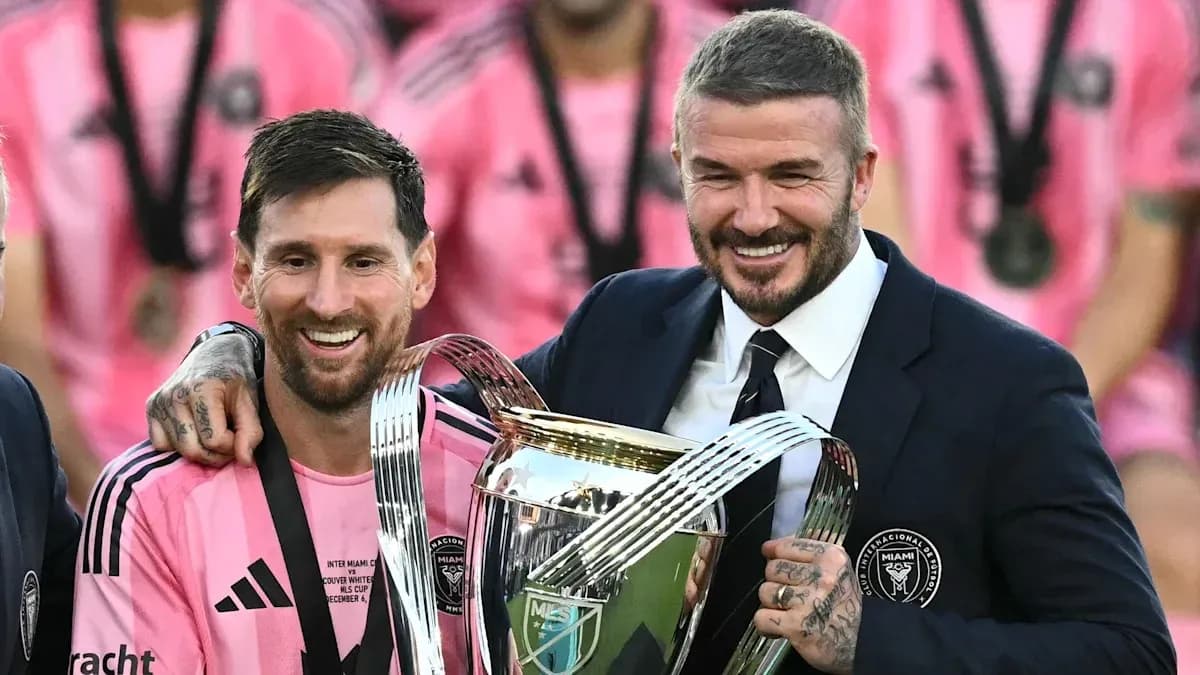
The line flashes across the screen, delivered by Lionel Messi, Son Heung-min, David Beckham and a cast of Major League Soccer stars who know exactly what they’re doing. The World Cup has just finished. Millions of new American fans have tasted the sport at its highest level. MLS is stepping straight into that space, hand outstretched.
The message is simple: don’t turn the TV off now. Come and find us.
The league has rolled out a slick campaign fronted by its biggest names, urging those fresh World Cup converts to stay with the game as the domestic season kicks back into gear. The pitch is bold. New fans are being tempted with free tickets. Come through the gate once, the league is betting, and you might not leave.
Dan Courtemanche, MLS executive vice-president and a league lifer since 1995, sees a once-in-a-generation window. “The World Cup has now exposed millions of people to Major League Soccer,” he says. “We’re going to continue to capitalise on that momentum.”
The question hanging over all of it is far bigger than a marketing campaign: could this World Cup finally shove MLS into the same conversation as the game’s elite leagues?
From 10 teams and borrowed fields to 30 clubs and packed stadiums
MLS itself is a World Cup heirloom. When the United States bid to host the 1994 tournament, Fifa demanded a professional league as part of the deal. The result was a start-up competition in 1996 with 10 teams and not a single purpose-built football stadium to call its own.
Three decades on, the landscape barely resembles that early experiment. MLS has grown to 30 clubs, backed by a network of football-specific stadiums that would have sounded fanciful in the mid-90s.
Predictions of empty seats and corporate sterility around the latest World Cup never materialised. Ticket prices soared, but so did demand. Stadiums were full. The television numbers were even more revealing: the sport didn’t vanish from the American consciousness when the US men’s national team went home.
The USA’s last-16 defeat to Belgium drew more than 33 million viewers on Fox, the most-watched football match on a single US network. England’s last-16 win over Mexico went bigger still, pulling a combined 45 million viewers across English and Spanish coverage on Fox and Telemundo – the most-watched football game in US history.
Those numbers live in the same neighbourhood as the NFL’s regular-season audiences. They still trail the colossus that is the Super Bowl, which in 2025 drew 127.7 million viewers across English and Spanish broadcasts and streaming in the US, with Kendrick Lamar headlining the half-time show. But football – the global kind – is no longer whispering in the background. It is speaking loudly, in prime time, in English and Spanish.
MLS wants to turn that volume up another notch.
“I think we’re looked at as the top, one of the top leagues commercially,” commissioner Don Garber said at a league event focused on the future and the World Cup’s legacy. “We’ve cracked that code. Now we’ve got to crack the rest of it.”
From retirement home to launch pad
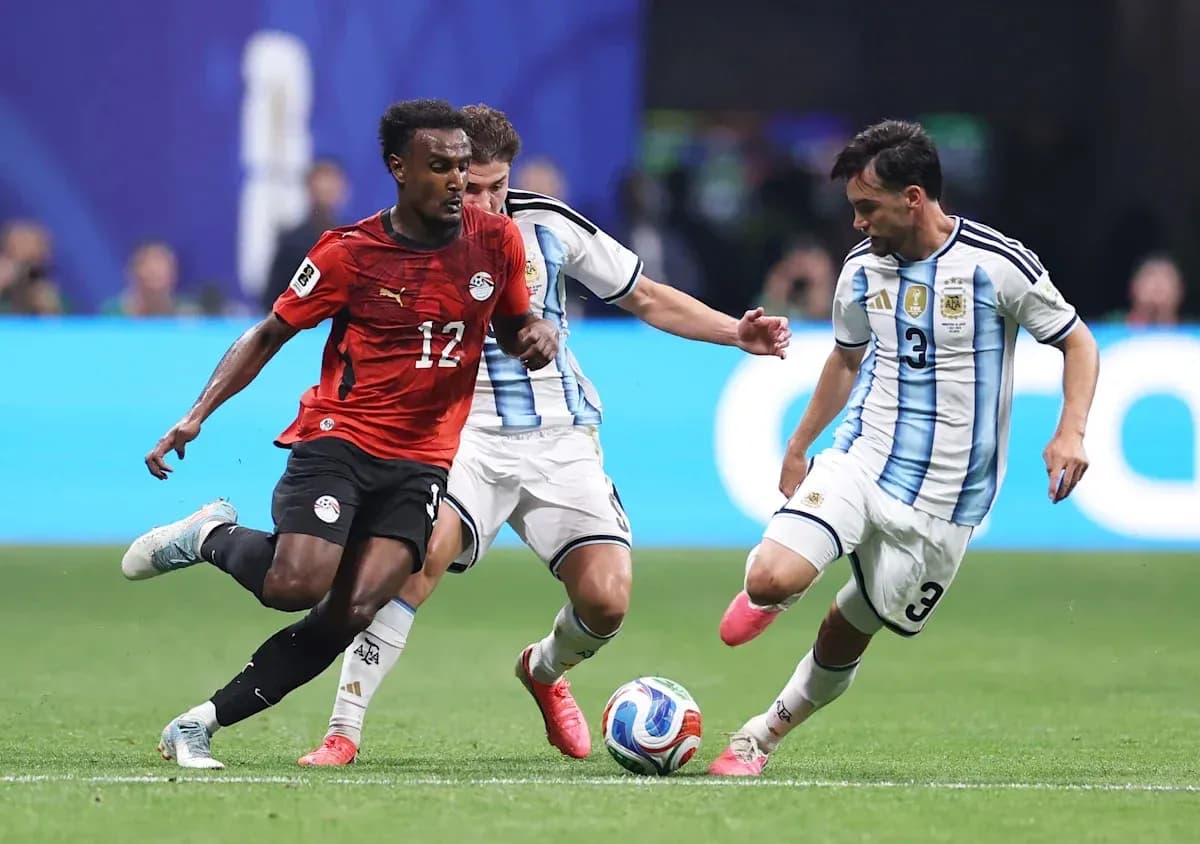
On some metrics, MLS is already rubbing shoulders with the established powers. Forty-five MLS players appeared at the 2026 World Cup, including two in the final for Argentina: Messi and Rodrigo de Paul.
For years, the league carried a reputation as a retirement home, a soft landing spot for European superstars cashing in on their name recognition. Beckham, then Messi – the narrative wrote itself.
Courtemanche insists that label no longer fits. The numbers back him up. The average age of new international arrivals is now 23.8. These are not farewell tours; these are careers in motion. Many of those players still dream of Europe, but MLS is becoming a launch pad, not just a final act.
To grease that pathway, the league will overhaul its calendar in 2027, shifting to a summer-to-spring season in line with Europe. Transfers should become smoother. Player movement more natural. The league’s leaders also see that alignment as a statement of intent: MLS is not a sideshow; it wants to be part of the main circuit.
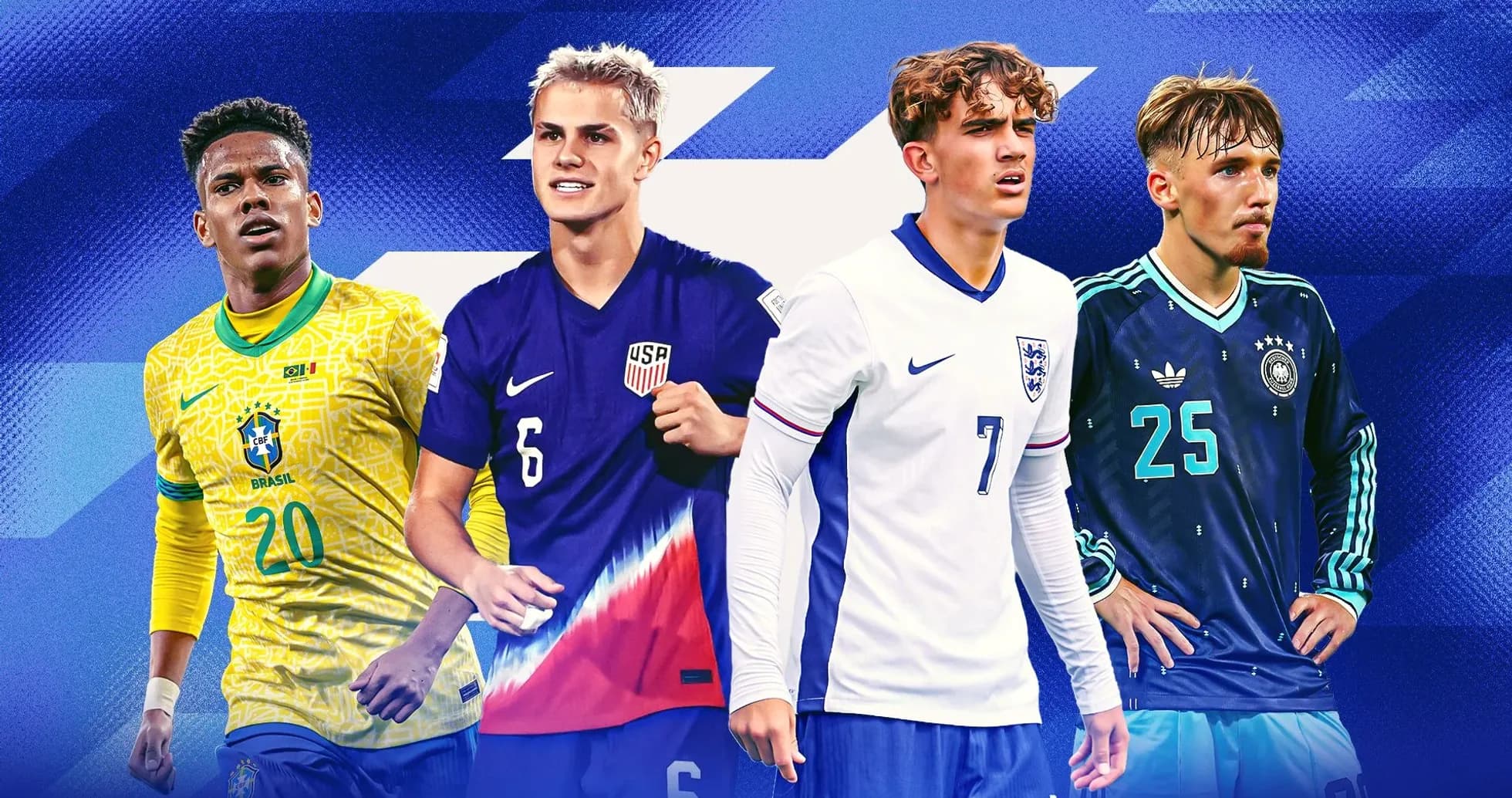
Underpinning all of this is youth. Every MLS club now runs an academy. Investment in development leagues has accelerated. The vision is clear: produce more players, earlier, and keep more of them in the system.
At an LA Galaxy viewing party for the US win over Bosnia-Herzegovina, the future was hard to miss. While the national team played on a giant screen, dozens of kids barely looked up, too busy playing their own small-sided matches on three nearby pitches. Every time a roar went up from the crowd, they’d sprint to the screen, glance at the replay, then race back into their own games.
These were not casual kickabouts in a park. The skill level was sharp. Several of the children were already in MLS youth setups.
Eight-year-old Landon – named after US legend Landon Donovan – drifted from goalkeeper to forward with the kind of joy that makes adults stop and watch. His mother, coach Jen Wing, has her children in MLS camps and travel teams back home in New Jersey. Landon doesn’t hesitate when asked where he wants to play professionally.
“LAFC,” he says.
The dream is alive. The pathway, though, remains complicated.
The pay-to-play problem that won’t go away
For all the growth, one criticism stalks every conversation about American player development: money. Until MLS can fully untangle itself from the country’s entrenched “pay-to-play” culture, many believe it will struggle to rival Europe’s conveyor belts.
At the top, MLS academies do train and develop players for free, mirroring European models. But getting noticed by those academies often demands years of investment. Families regularly spend thousands of dollars on private coaching and travel teams just to get into the right tournaments and in front of the right scouts.
It is not just a football issue; it is a staple of US youth sports. MLS officials insist their development structures are evolving, with scholarships available at every club for talented players who cannot afford the fees. The league knows that the next leap forward will be measured not just in stadiums and TV deals, but in how many gifted kids don’t fall through the cracks.
Garber talks about improvement as a constant process, not a slogan. The ambition is to produce players who can power both MLS and the US men’s national team – “more and more to the men’s national team and just be better, bigger, stronger, faster,” as he puts it. The goal is not just participation. It is impact.
Celebrity owners, billion-dollar clubs and a shifting sports culture
If Messi is the league’s most powerful magnet, he is hardly the only star drawing attention. MLS has become a playground for celebrity investors. Will Ferrell at LAFC. Reese Witherspoon at Nashville SC. Matthew McConaughey at Austin FC. Magic Johnson at LAFC. The ownership boxes now double as red carpets.
The money has followed. When Drew Carey bought into the Seattle Sounders in 2009, the expansion fee was $30m. Today, the Sounders are valued at more than $900m. David Beckham’s 2007 LA Galaxy contract famously included an option to buy an expansion team for $25m. He exercised it and now owns Inter Miami CF, a club experts value at more than $1bn.
Those numbers tell their own story. MLS is no longer a fragile start-up. It is a serious business, with serious valuations and serious expectations.
Yet the league still operates in a country where “football” usually means something else. Friday nights in American high schools belong to the gridiron – marching bands, cheerleaders, floodlights, and teenagers whose names echo over the PA system.
Brian Udovich watches that pull up close. His 12-year-old son Croil plays in an MLS Next Level league in Southern California. He has seen plenty of promising young soccer players drift away to American football as they hit their teens, seduced by the spectacle.
On Saturday mornings, soccer parents unfold camping chairs on the touchline. No marching band. No packed stands. Just the game and a few shouts from the sideline. For many families, that contrast still matters.
“It just means so much more to other cultures than us,” Udovich says.
Michael Bradley, now coaching the New York Red Bulls after his own long playing career, sees the cultural gap but also senses a shift. The United States does not have a century of football mythology to lean on. It has no Maracanazo, no Wembley 1966, no Diego Maradona weaving through five defenders in a blue-and-white shirt.
For years, that absence fed an inferiority complex, a nagging suspicion that football might always be an imported passion, never fully at home on American soil. Bradley believes this World Cup cycle has started to puncture that mindset. Pride is replacing insecurity.
“We don’t have the long, storied football history that other countries do,” he told the BBC. He remembers when that felt like a permanent disadvantage. Not anymore. The crowds, the TV numbers, the kids in MLS academies, the Messi shirts from Miami to Seattle – they all tell him something different.
“I think we can all unequivocally say in 2026, football is not going anywhere.”
The world has handed the game to America once again. This time, MLS is determined not just to keep it, but to make it its own.