Messi and Lautaro: Argentina's Epic Comeback Against England
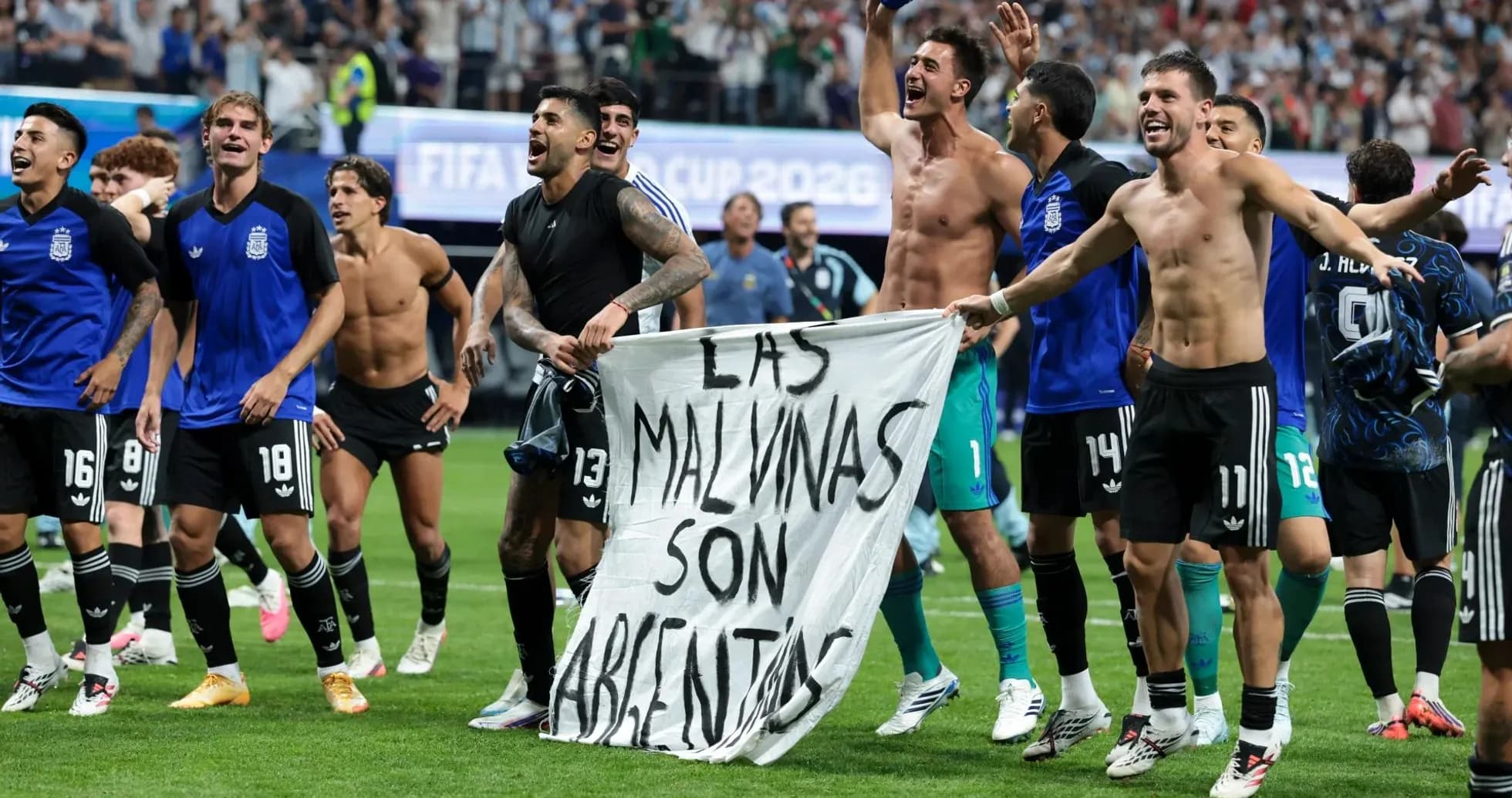
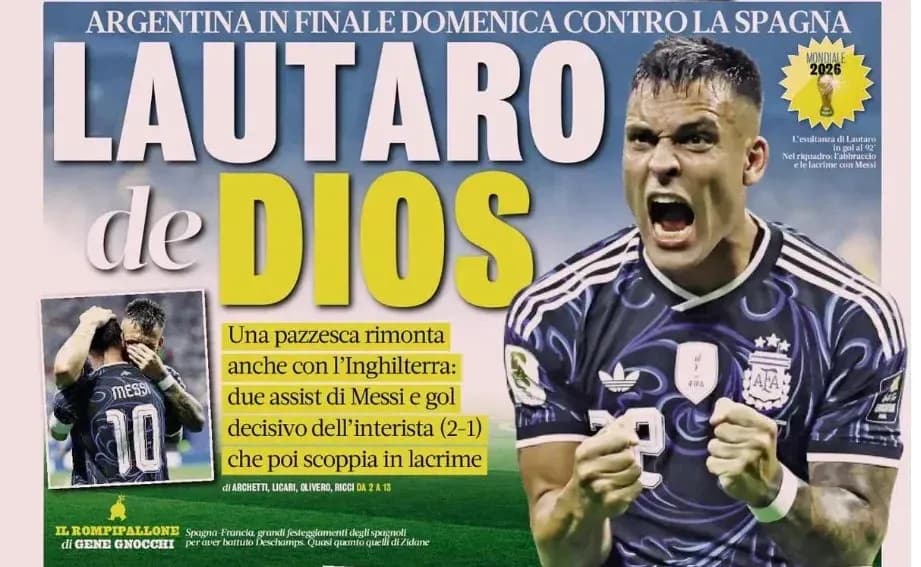
Forty years after the “Hand of God”, England watched another Argentine number 10 bend reality and another decisive touch from a South American forward shatter their hopes. Different era, different stage, same sense of fatalism. This time it was Lionel Messi threading the passes and Lautaro Martínez driving in the knife, sending Argentina into a final against Spain with a 2-1 comeback that felt ripped from a script they know by heart.
Once again, Argentina walked the edge. Once again, they refused to fall.
Messi’s late magic, Lautaro’s tears
England struck first through Anthony Gordon, believing they had finally found a way to control a game that kept slipping out of their hands in this tournament. The goal tilted the night. For long stretches, Argentina looked trapped between caution and obligation, Messi drifting, searching, measuring.
Then the pressure finally told.
Messi, still the eternal reference point, took command in the closing stages. His first decisive contribution opened the door: a precise assist that Enzo Fernández buried in the 85th minute, dragging Argentina level and igniting the stands. The equaliser did more than change the score. It changed the temperature of the match.
England, rattled, retreated. Argentina smelled weakness.
Messi found the angle again, releasing Lautaro with the kind of pass that turns defenders into spectators. The Inter striker, so often the emotional barometer of this team, struck the decisive goal for 2-1. The finish was ruthless; the reaction was anything but. Lautaro broke down in tears, overwhelmed by the weight of the moment and the path that brought them here.
For Argentina, another comeback. For Lautaro, another step into the centre of the global stage.
World champions vs European champions
The reward is a final on Sunday at East Rutherford against Spain, the reigning European champions. It is a collision of systems and stars: Argentina chasing confirmation of their World champions status, Spain arriving with the calm of a side that trusts its structure as much as its talent.
Spain do not tremble. Luis de la Fuente has built a winning machine that looks less like a romantic throwback and more like a modern evolution: intensity with the ball, aggression without it, and a depth of options that allows them to change the rhythm without losing control. Behind the names and the highlights, there is a clear set of lessons and principles that have carried them to this point.
Argentina bring something different. They live on emotion, on the bond between Messi and a group that has learned to suffer and respond. They have turned adversity into fuel. Another epic comeback, another late surge, another reminder that this group is at its most dangerous when the clock is against them.
On Sunday, something has to give.
Bench moves and goalkeeping chess
While the national team writes its drama on the pitch, Italian football moves in the shadows of the market and the dugout.
At federation level, Paolo Maldini has made his choice: he wants Andrea Pirlo as the future coach of the national team. The technical director has picked his man, a decision that carries both nostalgia and risk. Now the ball lands in the court of Giovanni Malagò and the institutional power brokers, with Serie A clubs watching carefully and nursing their doubts about the direction and timing of such a move.
On the club front, Juventus keep juggling priorities and budgets. The money for Lucumí is being lined up, while talks continue with Franck Kessié’s camp. A proposal of 4.5 million has been put on the table as the Bianconeri explore a deal that would bring the midfielder back to Italy on more favourable terms.
The goalkeeper situation is another live front. The first choice for the Azzurri remains Emiliano “Dibu” Martínez, Aston Villa’s unbreakable wall. His status, though, has pushed Italy’s staff to consider alternatives, and Guglielmo Vicario has emerged as a serious option. Contacts with the Tottenham goalkeeper have started, a sign that nothing will be left to chance if the primary plan becomes too complicated.
At the same time, Juventus are closing in on an agreement for the Parma striker, an operation that edges closer as the days pass. The club’s recruitment structure is fully engaged: Giovanni Manna’s successor, Matteo Tognozzi’s replacement in the new hierarchy, Federico Cherubini’s past work — all of it feeds into this delicate rebuild. Ottolini has picked up the phone to Pellegrino, while Massimiliano Allegri receives a symbolic embrace from Rasmus Højlund in the public arena, a nod to the gravitational pull Juventus still exert.
Ravanelli, never shy with an opinion, has thrown a grenade into the debate: “Sign Emegha, enough of Vlahovic!” A blunt line, but one that captures the impatience around Juventus’ attack.
Inter’s moves, Milan’s unease, Torino’s anger
Across the city divide, Inter move with their usual sharpness. A blitz has secured Djed Spence and Romero, adding depth and athleticism to a squad that already leans heavily on Lautaro’s brilliance. The club, however, finds itself in the eye of another storm off the pitch.
The refereeing investigation has claimed high-profile casualties: Gianluca Rocchi and Inter have been dismissed from their respective roles in this context, a decision that feeds into the constant, simmering debate about officiating, influence and transparency in Italian football.
On the transfer front, Inter have convinced Spence to say yes to Cristian Chivu’s project, a step that underlines the club’s commitment to refreshing the flanks and trusting profiles that can grow under a clear idea of play.
Milan, meanwhile, live with a different kind of tension. Christian Pulisic, one of the pillars of their new-look attack, agitates the environment simply by existing at the centre of speculation and tactical discussion. His presence forces choices: about shape, about hierarchy, about how far this Milan can go with the current mix.
Nicolò Zaniolo tempts them from the periphery, a name that always stirs debate. Talent, risk, baggage — all in one package. Milan know that one wrong move in this market could stall the project; one right move could accelerate it.
Torino’s situation feels more raw. The fans’ anger has exploded, a reaction to promises they feel have not been kept and ambitions they see slipping away. The stands speak loudly when the pitch does not, and right now the message from the Granata faithful is anything but subtle.
United, Zidane and a restless continent
Beyond Italy, the transfer carousel spins on. Rio Ferdinand has gone public: “Koné will join United.” It is a line that adds fuel to the expectation that Manchester United will land one of the most talked-about midfielders on the market, a move that would reshape their core and send another signal of intent from Old Trafford.
France, for their part, wait for Zinedine Zidane. The national team’s future hangs in that expectation, a quiet, powerful pause. When a figure like Zidane hovers over a job, everything else feels provisional.
And so the game moves forward on two levels. On the field, Argentina and Spain prepare to decide who rules the world. Off it, clubs and federations manoeuvre, argue, recruit and dream.
On Sunday night in East Rutherford, under the lights, Messi and Lautaro will try to write another chapter. Spain will try to close the book. The rest of Europe, from Turin to Manchester to Paris, will watch and wonder what kind of football world they will be waking up to next.