Marcus Rashford's World Cup Journey: From Barcelona Loan to England's Hopes
Marcus Rashford has been here before – the crossroads, the questions, the noise. This time, though, the backdrop is Barcelona sunshine, a rekindled spark, and a World Cup stage that refuses to wait for anyone.
On loan at Camp Nou for 2025-26, the Manchester United academy graduate found something that had been slipping away at Old Trafford: rhythm. Confidence. Purpose. Fourteen goals in a Barcelona side chasing – and winning – La Liga and the Spanish Super Cup alongside Lamine Yamal and Robert Lewandowski will do that for a forward whose form and focus have been picked apart for years.
Barca had a decision to make. For £26 million, Rashford could have been theirs permanently. Instead, they turned to Anthony Gordon, paying big money to prise the former Everton and Newcastle winger away and closing the door, at least for now, on a longer Catalan chapter for Rashford.
So the question lingers: what next?
A clean slate on offer, a clean break in mind
Back in Manchester, Michael Carrick is prepared to hit reset. The former interim boss, now confirmed in the job full-time, is understood to be open to offering Rashford a clean slate at United. Fresh start, fresh manager, familiar surroundings.
Rashford, though, appears to be leaning towards a clean break. After years of scrutiny at his boyhood club, the idea of planting roots elsewhere has real weight. Premier League rivals are watching. So are clubs across Europe. No agreement, no clear path yet – only possibilities.
For now, the stage is North America and the World Cup. The stakes are split: one part collective, one part personal. Play well and England benefit. Play brilliantly and his next move, wherever it is, becomes a lot more interesting.
John Barnes, though, wants none of the “shop window” narrative.
Speaking to GOAL in association with viagogo and their ‘World Cuts’ campaign, the former England playmaker cut straight through the transfer chatter and individual agendas.
“England needs to do well as a team,” he said. “If he feels he wants to do well by himself, that's not going to help England.”
Barnes laid out the danger with blunt clarity. If Rashford treats the tournament as an audition, if he starts dribbling through crowds just to look good, England lose. “That is not what's going to win the World Cup,” Barnes insisted. “So him needing to do well for himself is not important. He needs to do well for England.”
The message was as much for the wider squad as it was for Rashford. No one player, Barnes argued, can take the mantle and try to force their own storyline.
“If Thomas Tuchel feels that he's going to be a bit-part player in the squad, he can do nothing about that,” Barnes said. “So it's not a question of individual players feeling I'm going to take this mantle upon myself to do things, to put myself in the shop window. That's not going to help England.”
Help the team, not the brand. Simple passes, disciplined positioning, a role within a structure – that is what Barnes believes Tuchel will demand from Rashford.
“Thomas Tuchel isn’t worried about Marcus Rashford putting himself in the shop window,” he added. “He's worried about Marcus Rashford playing well for England, which means he just holds the position, passes it simple, plays a simple game, which maybe will help the team but not help him individually.”
For Barnes, the World Cup is not a transfer fair. “This has got nothing to do with Marcus Rashford trying to find himself a club. It's to do with England trying to win the World Cup.”
Croatia swept aside, but Barnes stays cool
England’s opening act backed up that team-first mantra. A 4-2 win over Croatia, full of attacking intent and defensive lapses, was as chaotic as it was entertaining.
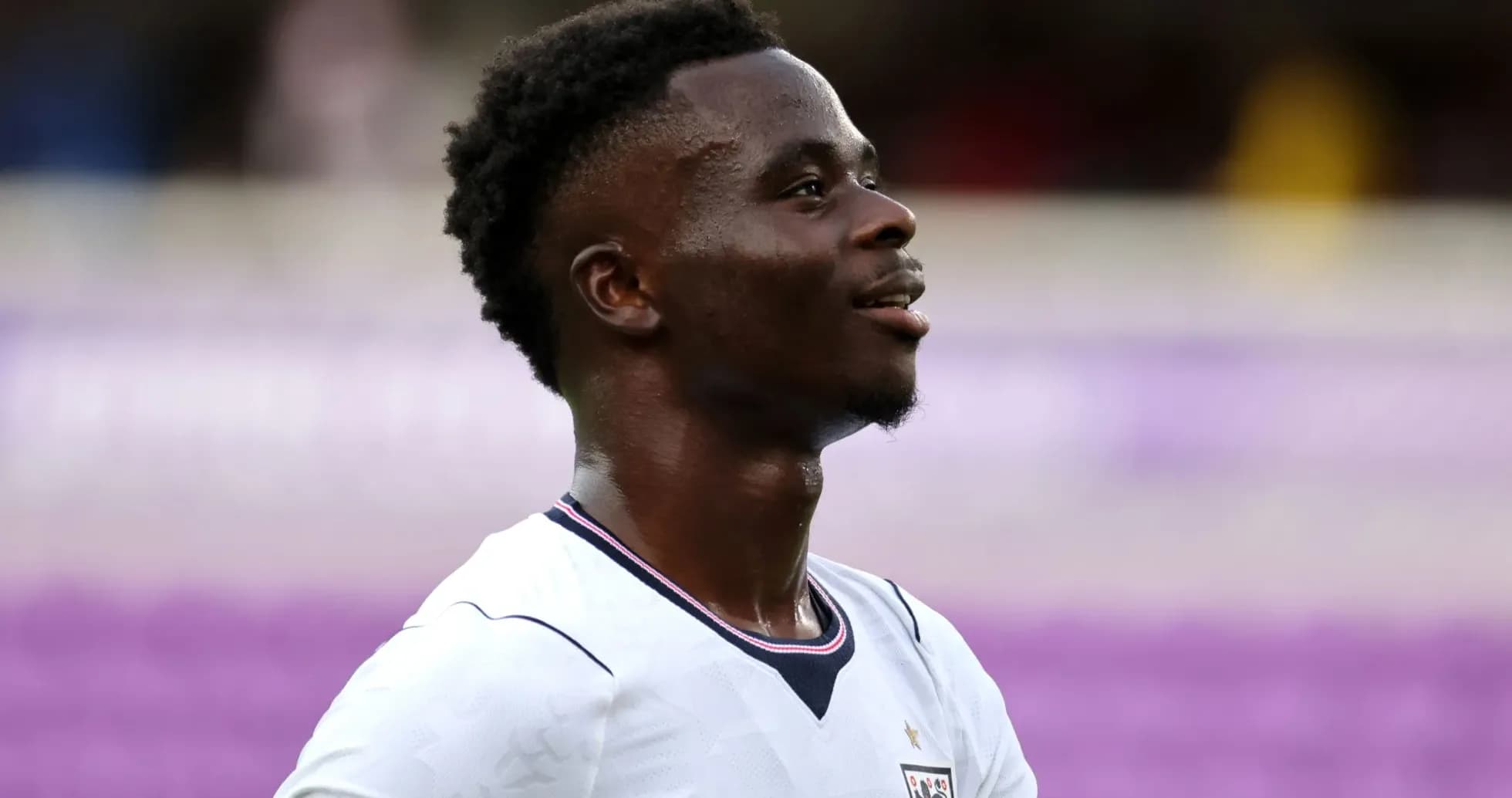
Harry Kane, the constant in every England era of the last decade, struck twice and climbed to 81 international goals, pushing records further into his slipstream. Jude Bellingham, winning the battle with Morgan Rogers for the No.10 role, scored early in the second half, stamping his authority on the game from central areas.
Then came Rashford’s moment.
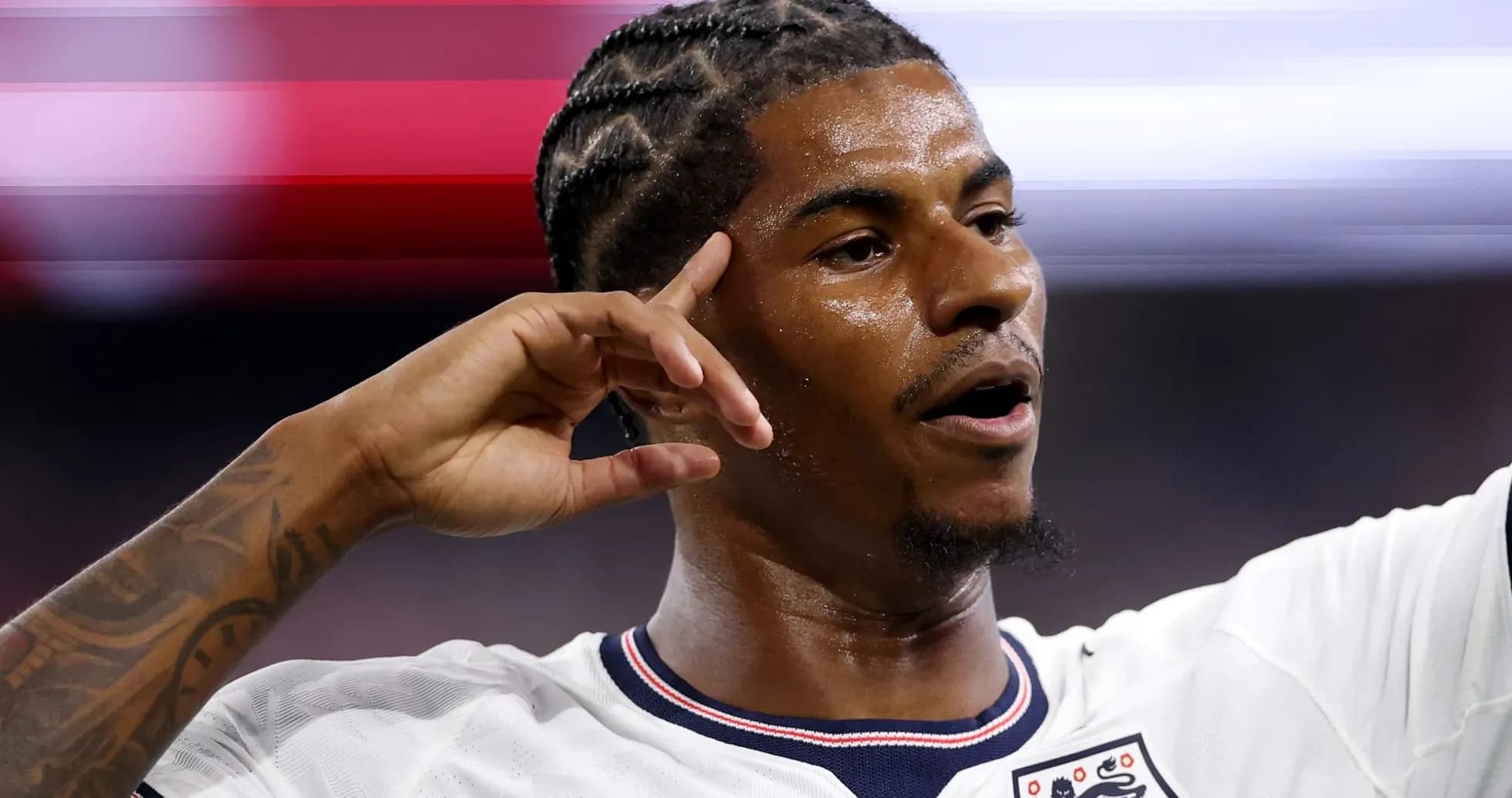
Bukayo Saka tore through space, drove at a tiring defence and slipped the ball into Rashford’s path. On the edge of the box, Rashford shifted onto his right and buried it low into the bottom corner. One touch to set, one to finish. No fuss, no hesitation. It looked like the old Rashford – head clear, body sharp, decision instant.
But Barnes refused to join the rush to declare a revival.
“Watching Marcus Rashford for 15 minutes isn't going to lead us to know whether he's back to his old self or not,” he warned. “We can't get carried away because he came on and did what he did to say, ‘OK, he's back to his old self, let's play him’.”
The same, he stressed, goes for England as a whole. One high-scoring win does not make champions.
“Very much like we can't get carried away that we've beaten Croatia 4-2 and thinking we're going to win the World Cup,” Barnes said. “I don't go from minute to minute or from game to game to make a decision as to who I think is going to do well, either individually or collectively.”
Barnes has long believed Rashford suits international football. More space, more room to run, more opportunities to exploit high lines.
“Marcus Rashford, I always felt that he'd do better for England than he does for his club,” he said. “I think international football, particularly from an attacking perspective, you get more room, you get more space. It's easier for him.”
He reached back to an older example to make the point. “I remember Darius Vassell at Villa always did better for England than he did for Villa. But I don't think that that's necessarily going to mean that Thomas Tuchel is going to put him in to start when the big games come along.”
Form in flashes is one thing. Trust in knockout football is another.
Talent vs. attitude: the long-running question
Barnes did not shy away from the long-running debate around Rashford’s make-up.
“It depends on his attitude and his commitment,” he said. “That has always been the issue with Marcus Rashford. I know he's got the talent, but in terms of his attitude, his commitment is the most important thing.”
The loan spell at Barcelona suggests something has clicked again. The goals, the trophies, the sense of belonging in a high-pressure environment – all of it has nudged his confidence back towards where it once was. Now, with England, he is trying to turn that into something lasting, something that resonates far beyond one tournament.
Sixty years without a major international trophy has hardened England’s fan base but not dulled its hope. A generation of children has grown up with Rashford as both footballer and figurehead, watching him carry social causes as well as counter-attacks. Now they want to see him carry a trophy.
No more World Cup haircuts
There is another side to World Cups: the culture, the copycat looks, the haircuts that define summers. From David Beckham’s mohawk to the bleached-blonde Gazza and Phil Foden tributes, tournaments have often spilled onto the streets and into barbershops.
Barnes doesn’t see that happening this time.
“No, those days are over,” he said when asked if fashion and football will intertwine again during this World Cup. “Footballers are sensible now. You don't let anything get in the way of football. Marcus Rashford, he has some kind braids, but haircuts don't mean much anymore. So no, I think they'll be concentrating on the football this World Cup, not the hairstyles.”
Kids might not be queuing up for World Cup trims, but they are watching. They see Rashford, Kane, Bellingham and the rest as the group that could finally end the wait that stretches back to 1966.
For Rashford, every run, every finish, every choice between the simple pass and the spectacular carries weight. Not just for his next club, but for a country still wondering whether this, at last, is the team that turns hope into history.