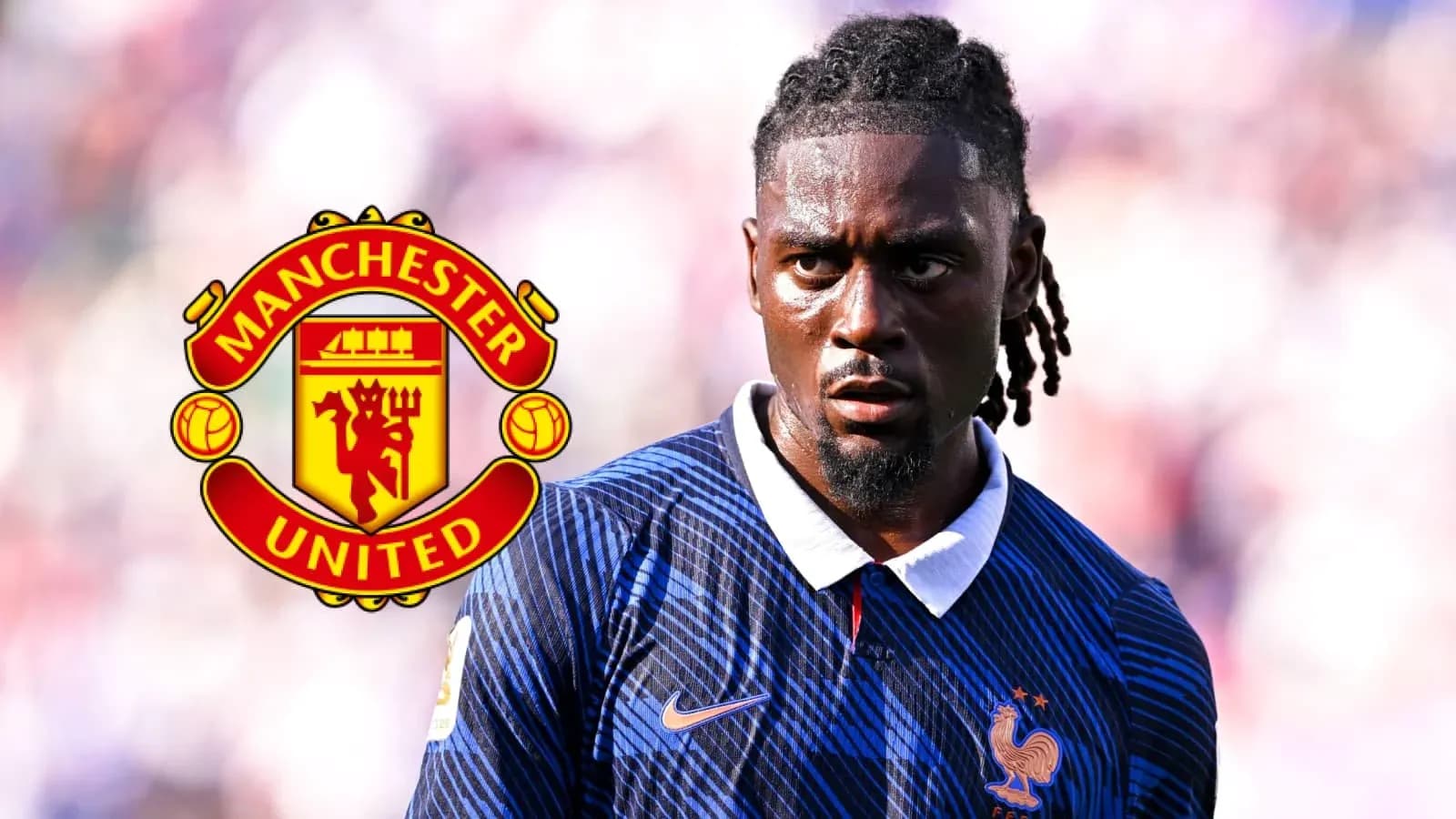
Manchester United's Midfield Dilemma: Why Manu Kone Isn't the Answer
Manchester United know what they’re missing. If they think Manu Kone is the answer, they’re asking the wrong question.
Casemiro has gone, Manuel Ugarte is sidelined, and the spine of United’s midfield has been ripped out. The response has been swift: Andrey Santos and Youri Tielemans through the door, experience and energy injected into a department that looked tired and thin. On paper, the numbers are fine again.
But this isn’t about numbers. It’s about profiles. And the one profile United still lack is the most unforgiving role in modern football: a specialist who lives in front of the back four.
Michael Carrick, now the man in the dugout, needs his own version of the player he once was. Not a destroyer in the classic sense, but a deep-lying organiser. Someone whose first instinct is to screen, to anticipate, to knit everything together from the base.
That is not Manu Kone.
A midfielder misread
Kone’s World Cup with France has sharpened the focus on him. It’s a dangerous shop window to judge a player from, but in his case the tournament has mostly confirmed what those who’ve watched him closely already knew: he is a serious talent.
At 25, he’s stepping into his prime after five seasons across Europe’s elite leagues – three with Borussia Monchengladbach in the Bundesliga, two with Roma in Serie A. In Rome, he arrived on deadline day in the summer of 2024 and immediately jolted their midfield to life. He became one of the club’s prized assets.
Not because he sat and swept up. Because he ran at people.
Kone’s standout trait in his debut Serie A season was his ball-carrying. He would surge through the middle third, shrugging off challenges, dragging his team up the pitch. His role looked far more like a No 8 than a No 6, a player who breaks lines with his legs rather than his passing from deep.
The picture shifted when Gian Piero Gasperini arrived.
Given Gasperini’s high-intensity, man-to-man blueprint honed at Atalanta, many assumed Kone would be the perfect fit to fly around the pitch. Gasperini saw something else. He often asked Kone to drop into Roma’s defensive line when they built from the back, curbing his forward runs and nudging him closer to that holding role.
Kone still had a good season. But the fireworks dimmed. His influence became more subtle, less spectacular.
Even then, the numbers underline what he really is. Last season he ranked in the 78th percentile among Serie A midfielders for the average distance of his progressive carries – and that was in a campaign where he wasn’t allowed to drive forward as often.
He thrives when he can move. When he can break out of midfield and attack space. Fix him in front of the defence and you blunt his best weapon.
United’s recurring mistake
United should know this story by now. They’ve lived it.
They tried to turn Fred and Scott McTominay into a functional double pivot. Both were honest, industrious players, but both were repeatedly pushed into roles that didn’t quite suit them. The result was a muddled partnership, a midfield that never truly convinced and a team that spent years scrambling for balance.
Casemiro briefly papered over the cracks. His first season had big moments and big performances, but he arrived at 30. The ideal version of that signing would have been five years younger. By the time he left, United were back at the same question.
Ugarte’s numbers in Ligue 1 with PSG – elite tackling, constant duels – tempted United into believing he could anchor their system. The translation hasn’t been clean.
Now, with Tielemans and Santos recruited to play as more advanced or balanced midfielders, the temptation is clear: drop Kone in as the deepest man, ask him to do a bit of everything and trust his athleticism to cover the gaps.
He can “do a job” there. But it would be a compromise. And a costly one.
Quality with clear limits
Kone is not the complete midfielder yet. If he wants to be seen as a true box-to-box force, he has a glaring issue to fix: his finishing.
Four goals in 82 games for Roma tells its own story. In the final third he often looks uncertain, lacking the conviction to match his power in the middle of the pitch. Gasperini admitted as much last December, when Kone finally scored his first goal of the 2025-26 campaign and his coach pointed to goals as the missing piece that would already have him at a higher level.
Since that strike, he has played 22 times for club and country and scored just once more. The perception lingers: if he doesn’t score and doesn’t create in volume, he must be a defensive midfielder.
He isn’t. At his best, he’s a central midfielder who can defend, not a defender who happens to play in midfield.
Off the ball, there are other details to tidy up. His movement when his team have possession can be slack. Too often he fails to drift into the right pockets to receive, or he clogs passing lanes instead of opening them. In a pure holding role, positional awareness is non-negotiable. He would need to sharpen that part of his game considerably.
The price of potential
Then comes the market. And this is where the debate gets even trickier.
Goal and assist numbers no longer tell the whole story for midfielders, and the recent window has shown how distorted valuations have become. Elliot Anderson produced fewer than 10 goal contributions last season and still moved to Manchester City for £116 million. Spurs paid £85 million for Mateus Fernandes, another player United admired before stepping back.
Against that backdrop, Roma’s stance on Kone makes sense. They turned down roughly £38 million from Inter last year and now look set to demand £50 million or more, with his World Cup performances only inflating the price.
Any club paying that fee needs absolute clarity on what they’re buying. They are not signing a pure No 6. They are signing a midfielder who wants to travel with the ball, who needs licence to go.
How he fits – and where
There is a version of this move that works for United.
Carrick’s 4-2-3-1 could soften some of the concerns. If Kone plays in a double pivot alongside Tielemans or Santos, the pair could share responsibilities: one goes, one holds. When Tielemans roams, Kone stays. When Kone breaks forward, Tielemans tucks in. Simple in theory, demanding in practice.
The key is equality. If one of them is permanently chained to the deepest role, you lose what makes them special. Kone, especially, cannot be reduced to a static shield.
France offer a useful reference point. At the World Cup he has operated alongside Adrien Rabiot and Aurelien Tchouameni, with both comfortable sitting deeper to let Kone step up when the game opens out. At Roma, Bryan Cristante often provided the platform, even if the Italian himself pushed on at times.
Drop Kone into a similar framework in the Premier League and you unlock his best version. Ask him to be a lone anchor and you risk repeating old mistakes.
That’s why other destinations might quietly appeal. At Arsenal, for instance, Martin Zubimendi’s presence as a dedicated holding midfielder could free Kone in the same way it initially liberated Declan Rice, another player too often pigeonholed as a pure No 6. Arsenal, though, seem to be looking elsewhere, with Bruno Guimaraes now in their sights.
Liverpool remain a more intriguing possibility. They tracked Kone during his Gladbach days and are again hunting for a midfielder to sit at the base. If Andoni Iraola leans into a 4-2-3-1, Kone alongside Ryan Gravenberch in a tandem role suddenly makes sense – two rangy, progressive midfielders sharing the load rather than one sacrificed to do the dirty work alone.
The right player, the wrong role?
Strip it back and the verdict is clear.
Manu Kone is a high-level midfielder with time to grow and flaws he can still iron out. He carries the ball superbly, competes physically, and has shown he can adapt to different systems without losing his edge.
But he is not the pure holding specialist United have been chasing since Carrick retired and the club lurched from one imperfect solution to the next.
If this is the summer he lands in the Premier League, someone will sign a very good player. The question is simple: will they ask him to be what he is, or what they wish he were?